


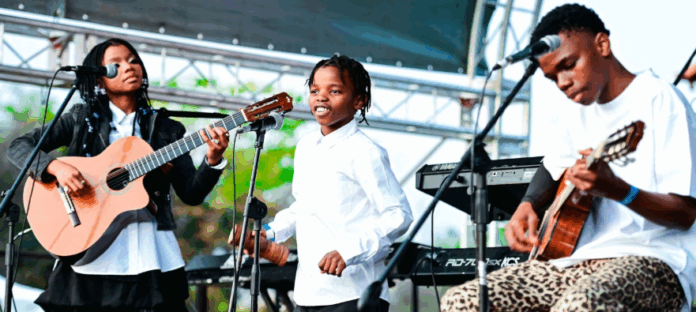
The future of South African jazz is already taking shape in school rehearsal rooms, and National School of the Arts (NSA) principal and artistic director Brenda Sakellarides believes it deserves the same spotlight as the country’s biggest stars.
Ahead of this weekend’s Jazz for Young People showcase, hosted as part of Standard Bank Joy of Jazz’s youth development programme, Sakellarides said the event has become far more than a school concert.
It is a platform that gives young musicians the professional stage, mentorship and confidence they need to imagine careers in the industry.
“What is not inspiring about seeing a whole lot of young people on a stage, sponsored by Standard Bank and curated by T-Musicman?” she told Sunday World.
‘Bold statement’
“It is such a bold and important statement to give emerging artists a platform with all the professional elegance they deserve, and hopefully one day that will simply become their reality.”
Now in its third year at the National School of the Arts, the programme has steadily expanded, becoming what Sakellarides describes as the development arm of the Joy of Jazz festival.
“Our goal is to shine a great big spotlight on youth arts and youth excellence. We want these young musicians to deliver a wonderful professional performance for an audience that loves jazz and believes in young talent.”
Preserving South Africa’s musical traditions
For Sakellarides, introducing children to jazz while they are still at school is essential to preserving one of South Africa’s richest musical traditions.
“Jazz is already a popular genre in this country, particularly South African jazz. If we don’t acknowledge it, children will find it anyway. So it is our responsibility to embrace it, amplify that attraction, and give them the tools and mentorship they need.”
That mentorship, she says, is one of the programme’s defining strengths.
Before Saturday’s performance, the young musicians spent time learning from acclaimed jazz artist Msaki (mentor for this year’s programme), following in the footsteps of last year’s mentor, singer Zoë Modiga.
‘Mentorship is everything’
“In life, and especially in the arts, mentorship is everything. Let the big people hand the baton to the younger people. Let them ask questions and learn from experience,” Sakellarides said.
She believes the programme remains relevant because today’s young musicians respond authentically to the music while still drawing inspiration from jazz’s history.
“We can only move forward by appreciating what has been. History is our greatest teacher. If young musicians want to create a new kind of South African jazz, they need to understand what came before them.”
Mentors carefully chosen
While the selection of mentors is handled by the programme’s organisers, Sakellarides praised the care taken in choosing artists willing to invest in the next generation.
“The children’s response to Msaki’s workshop showed that it was an inspired choice. For an established artist to spend time guiding young people is incredibly valuable.”
She also stressed that programmes like Jazz for Young People can only survive through strong partnerships between schools, festivals and corporate sponsors.
“Partnerships are everything,” she said.
“As a publicly funded school, we need partners. We need corporates who don’t just sponsor one project but walk a longer journey with us. We want people to come and see our challenges, understand our needs and help us continue creating opportunities for these incredibly talented children.”
‘NSA attracts exceptional young artists’
Despite financial pressures, Sakellarides said one thing the school has never struggled with is attracting exceptional young artists.
“Year after year the talent arrives at the National School of the Arts. It is our responsibility to make sure their journey is a prosperous one.”
Looking ahead, she hopes Jazz for Young People will continue to grow and eventually become a direct pathway onto the main Standard Bank Joy of Jazz stages.
“That would be the dream,” she said.
“I’ve already had students asking if one day they could perform their own music through this platform. That excitement tells me the programme is planting seeds.”
She believes the initiative could eventually become so large that it would require several days to accommodate the growing number of schools and performers wanting to participate.
“There are only so many hours in a day, but I see enormous possibilities. This started with a conversation, and now those seeds are growing into mighty oaks. When I see these creative children arrive here at 12 or 13 years old, I often think, ‘There is the next great South African artist.’
“To witness that journey and give them a stage before the rest of the country discovers them is one of the greatest privileges of my career.”
- The National School of the Arts (NSA) and its principal Brenda Sakellarides emphasize the importance of the Jazz for Young People programme as a professional platform to nurture South African youth jazz talent.
- Now in its third year, the initiative is part of the Standard Bank Joy of Jazz festival’s youth development programme, offering young musicians mentorship, confidence, and exposure.
- Mentorship from established artists like Msaki and Zoë Modiga is considered crucial for passing on jazz traditions and inspiring authentic, innovative South African jazz.
- Strong partnerships between schools, festivals, and corporate sponsors are essential for sustaining and growing the programme, especially given funding challenges.
- Sakellarides envisions the programme expanding into a major pathway for young artists to perform on main festival stages, helping to preserve and evolve South Africa’s jazz legacy.


