


It is often said that all roads lead to Rome but sometimes some paths lead to Spain. This uncharted route cannot be ignored if we are to be frank.
It was 16 years ago when host nation South Africa opened the 2010 Fifa World Cup in a dazzling affair against Central American opponents, Mexico.
Whenever 2010 is mentioned, many football-loving South Africans instinctively remember one name: Simphiwe Tshabalala. What we forget, beyond the Tshabalala thunderbolt and our heartbreaking group-stage exit, is that Bafana Bafana humbled the mighty French 2-1.
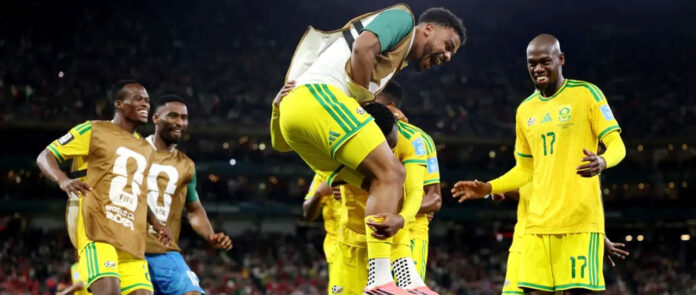
History stowed away the triumph because it was insufficient to deliver the knockout-stage ticket Hugo Broos eventually handed us in Monterrey a few weeks ago. Yesterday, Tshabalala. Today, Thapelo Maseko.
What remarkable progress for a country many scarcely afforded a second thought! This is the same country that has since left indelible wounds some 8 000km away in Prague and an additional 5 000km in Seoul. The world has quietly learnt that overlooking Bafana Bafana can be an expensive sporting habit.
Tonight, Spain faces defending champions Argentina in the teeth-gnashing 2026 Fifa World Cup final. Before the first whistle pierces the air, there are prospects worthy of contemplation.
As a Lionel Messi fan first and an Argentina supporter by default, it pains me to admit it. The last time the merciless Spaniards entered a World Cup final was at FNB Stadium in Johannesburg when Vicente del Bosque’s men lifted the much-coveted trophy under the capable stewardship of Móstoles-born captain Iker Casillas. Who could ever forget when the Dutch were forced to kiss the ring after Andrés Iniesta spilled fresh ink on football’s history books?
Once again, the two nations entrusted with opening the global spectacle in 2010 performed the same ceremonial duty in 2026. This time, Mexico hosted but the opening act remained strangely familiar. Together, the two may have unlocked something possessing enough gravity to compel the greatest sceptic into an honest conversation about fate.
Today, to my discomfort, the tiki-taka seamstresses appear to have returned to their old trade, weaving intricate footballing moves with the same ruthless precision that crowned them champions in 2010. Perhaps, they owe us a quiet note of gratitude.
Despite the proverbial writing appearing firmly on the wall that my GOAT, Messi, and his compatriots are about to do it again, we cannot ignore fate’s handwriting. From the infamous Hand of God to tonight’s MetLife Stadium in New Jersey, it sure looks like the books of history are in the hands of a different author.
I’m suspicious that Bafana and El Tri may once again have blazed a path for Spain to produce a 2010 omnibus. Such a hope-dashing outcome affirms what our Zulu compatriots have always understood: Lapho amanzi ake ama khona, aphinde ame futhi (Where water once stood, it will stand again).
If Argentina display the grit that left Ronaldo die-hards haphazardly retrieving their jaws from the floor, Messi and his mercenaries would accomplish something unseen since Brazil successfully defended the Jules Rimet in 1962 after their triumph four years earlier.
If the Argentinian Anunnaki do it tonight, he will not merely achieve another historic milestone but archive the enduring adage that what is impossible with man is perhaps possible … with a football god. Such is my wish. Yet, as the Roman road philosophically reminds us, he whom the gods love, they also punish. May the best team win.
- The article reflects on the 2010 FIFA World Cup opener in South Africa, highlighting South Africa's surprising 2-1 victory over France and Simphiwe Tshabalala's memorable goal.
- It notes the significant progress of South African football (Bafana Bafana) since 2010, referencing recent notable performances internationally.
- The 2026 FIFA World Cup final features a rematch between Spain and Argentina, echoing the 2010 final where Spain won with key players like Iker Casillas and Andrés Iniesta.
- Spain is described as returning to their tactical tiki-taka style, potentially positioning them for a repeat championship, while Argentina, led by Lionel Messi, aims for historic back-to-back titles, a feat not seen since Brazil in 1962.
- The author expresses a poetic hope for Argentina to succeed, acknowledging fate’s role in football history and wishing fair competition with "may the best team win."



Once again I will congratulate bafana bafana for reaching last 32,indeed it’s the great achievement ever, for the very first time since they qualified for world cup.And again I salute the world championship Spanish for this game plan and the road lead to the final to lift the trophy once again.stand up for the champions