


Bad Bunny, Shakira and Formula 1 are headlining Madrid’s summer this year, proving the growth of the mega-event trend.
F1 returns to the Spanish capital for the first time in 45 years, making its comeback for the 2026 Spanish Grand Prix in September but some madrileños are not convinced.
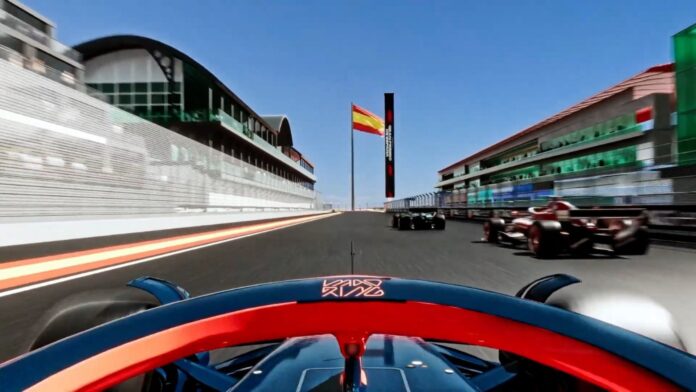
A slick promo featuring Spanish F1 legend Carlos Sainz and an immersive virtual lap around the brand-new track a couple of months before the big day had F1 fans revved up for the big show in Madrid.
Supporters are talking up the optics and the economics, with the Madrid Chamber of Commerce arguing that it will bring in more than $500 000 (R8 million) and more than 120 000 visitors a year to the city.
Outside the F1 launch there’s a small group of neighbours determined to make themselves heard, blowing whistles and chanting “No F1”.
Neighbourhood groups protest against F1 in Madrid
“We are not against F1,” one of the neighbours say, preferring not to give her name.
“We are against the F-1 circuit in this area, in our neighbourhood, because it is built just 20m, 30m away from our homes and is going to cause more than 95 decibels of noise. It’s creating a lot of chaos here in this area where we live and where we work also and 700 trees have been cut down.”
But there’s also the issue of the massive wildfires on Madrid’s doorstep. The leader of the Madrid region Isabel Ayuso and the Madrid city mayor Jose-Luis Almeida have been accused of having more interest in flitting from VIP box to VIP box at the mega events rather than taking care of real people’s problems.
Accusations are that firefighters are underpaid and departments are understaffed; some say budget cuts have left the Madrid region exposed to greater risk, while the mega events receive large sums of money from public coffers.
Ayuso and Almeida belong to the centre-right PP (People’s Party) which routinely rejects Prime Minister Pedro Sanchez’s claims that the climate crisis is supercharging the new megafires.
Nationally, the PP has rejected a call for cross-party accords on tackling the climate emergency, arguing that it is not the climate crisis but poor management of the mountains that is to blame.
Under Spanish law, however, the responsibility falls under regional government jurisdiction.
How much does hosting Formula 1 bring to a city?
It’s being held at Madrid’s Ifema convention centre to the north of the city. Organisers say they are engaging with the neighbourhood groups and that F1 is good for a city.
“I don’t need to convince them because Ifema has done that work with them now to engage with the community and explain the benefits of hosting a Grand Prix,” Louise Young, F1’s chief race promotion officer says.
“We announced $3.2 billion worth of economic impact across the first three events and you know this is the thing that host cities are really interested in. This is why people want to host Formula 1. We move the date of a race and there’s a ripple effect across the economy.
“Formula 1 is an economic driver and we actually find there’s very little resistance now. It’s much more in the vein of excitement.”
Madrid is tapping in to the “Global Mega-Event Economy”, welcoming box office draws like F1 and the Vegas-style “Residency” Model: rather than one Bad Bunny or Shakira concert, there are 10 or 12 performances, generating hundreds of millions of dollars.
And while not everyone feels they benefit from it, it’s a growing trend that looks set to accelerate.
- Formula 1 returns to Madrid for the first time in 45 years with the 2026 Spanish Grand Prix at Ifema convention centre in September.
- The Madrid Chamber of Commerce estimates F1 will bring over $500,000 and 120,000 visitors annually to the city.
- Local neighbours protest the F1 circuit's location close to homes, citing noise over 95 decibels, chaos, and destruction of 700 trees.
- Madrid regional leader Isabel Ayuso and city mayor Jose-Luis Almeida face criticism for prioritizing mega-events over addressing wildfire risks and firefighter understaffing.
- F1 organisers claim an economic impact of $3.2 billion across the first three events and highlight F1 as a significant economic driver for host cities.


