


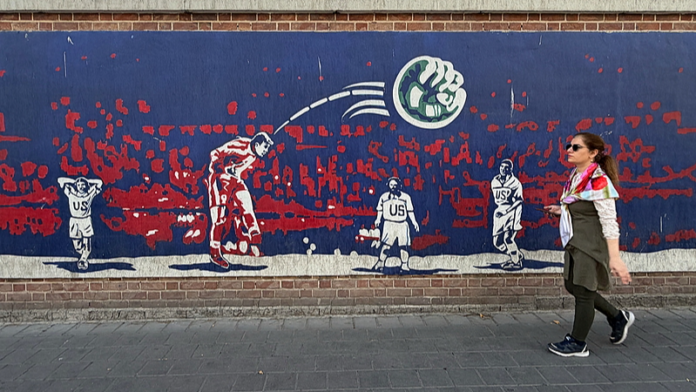
The final whistle of the 2026 World Cup will sound this evening when Spain and Argentina — two of the best-performing sides — bring the curtain down on a tournament that has delivered gripping football.
However, it will be remembered as much for its controversies as for its goals. This World Cup has been a spectacle of mismanagement, where political interference and commercial overreach have repeatedly undermined the integrity of the beautiful game.
The most egregious episode was the unprecedented intervention by US President Donald Trump in a disciplinary matter. When US striker Folarin Balogun received a red card, the unthinkable happened: Trump made a direct presidential phone call to Fifa President Gianni Infantino, leading to a suspension of the ban. This was not a review; it was an act of political pressure that Fifa shamefully succumbed to.
The governing body’s decision to invoke an obscure rule to placate a powerful host nation sent a chilling message: power and money can indeed subvert the rule of law.
The fact that Belgium, the team disadvantaged by the decision, then comprehensively defeated the US on the pitch, was a form of poetic justice.
But it was not an isolated incident. The tournament’s prelude was marred by the barring of Somali referee Omar Artan, a highly rated official who was denied entry to the US and subsequently dropped from the tournament due to his nationality. For a sport that prides itself on global unity, this was a devastating blow, robbing an African official of his rightful place on the world stage due to the political whims of the host nation.
Fifa’s internal innovations have been equally damaging. The mandatory hydration breaks, ostensibly for player welfare, have been widely criticised as a cynical vehicle for commercial advertising, breaking the game’s rhythm and turning matches into a four-quarter affair more akin to American sports. Managers, including England’s Thomas Tuchel, have lamented that the breaks “interrupt and change the identity of a football match”.
Now, the crowning controversy: a 25-to-30-minute half-time show for the final, a direct violation of the rules set down by the International Football Association Board, the independent body responsible for determining and overseeing the laws of the game, which stipulate a maximum 15-minute interval at half-time. Critics, including musician Noel Gallagher, have decried the “Americanisation” and “Super Bowl-ification” of the World Cup, a sentiment echoed by fans across the globe. The spectacle has become more important than the game itself.
Fifa, under Infantino, has shown itself to be a body willing to bend its own rules for commercial gain and political favour. For the good of football, this must stop. This World Cup has proven that the game is bigger than any one nation, politician or commercial partner.
Fifa must remember its role as a guardian of the sport’s integrity. It must reaffirm that its rules apply equally to all, its competitions are not a playground for political power and the final whistle should be the only show that matters.
If it fails to learn this lesson, the beautiful game risks losing its soul to the very forces it was meant to transcend.
- The 2026 World Cup, concluding with a final between Spain and Argentina, has been overshadowed by political interference and commercial exploitation, undermining the game's integrity.
- A major controversy involved US President Donald Trump directly intervening to overturn a red card for US striker Folarin Balogun, pressuring FIFA to suspend the ban, favoring the powerful host nation.
- Somali referee Omar Artan was banned from the tournament due to US immigration policies, highlighting political discrimination against officials and undermining football’s ethos of global unity.
- FIFA’s introduction of mandatory hydration breaks has been criticized for disrupting the flow of the game, perceived as a commercial ploy rather than a genuine welfare measure.
- The final's 25-to-30-minute halftime show broke official rules and was condemned as "Americanisation," symbolizing FIFA’s willingness to prioritize spectacle and commercial interests over the sport itself.


