


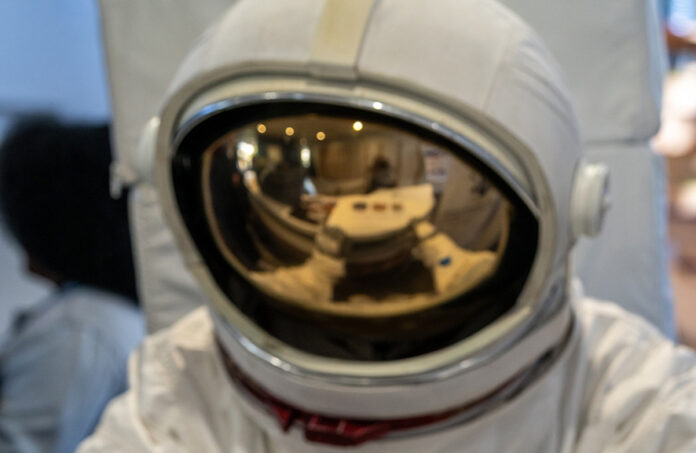
Curiosity and experiments are key elements of science education. With its combination of space-based plant science, and hands-on science, technology, engineering and mathematics (STEM) education, the Rooibos in Space project meets both requirements. Later this year, seeds of the indigenous South African plant will be sent to the International Space Station.
For several weeks, the seeds will be exposed to microgravity and space radiation before being returned to Earth, where a cohort of pupils from seven schools in the Cederberg region will compare them with seeds that never left the ground, studying their germination, growth, resilience and yield.
The pupils will gather and interpret data while collaborating with nearby Rooibos farms. Additional comparative data will be obtained from a parallel experiment at Parklands College.
The initiative, led by the South African Rooibos Council (SARC) in partnership with MaxIQ Space and supported by the South African National Space Agency (Sansa), is about much more than agriculture. It is bringing space science into classrooms and showing young South Africans that world-class research can begin in their own communities.
For Grade 7 pupil Jowaygen Engelbrecht from Graafwater Primary School, the experiment has sparked dreams of a career in science. “It made me think that I would like to work in science one day because I enjoy learning new things and solving problems.”
His classmate, Justin Maarman, said he had never imagined that Rooibos and space could be connected. “I was excited. I felt lucky to be part of this project.”
Behind the pupils’ excitement are teachers determined to prove that science belongs in every classroom. “Science is not about knowing all the answers; it’s about being curious enough to ask questions,” said Graafwater Primary School mathematics teacher and STEM Club member, Rozanne Steenkamp.
Science teacher Yolané Damonze believes pupils’ exposure to authentic scientific research can transform the way they think about their futures.
“I want to continue creating exciting learning experiences that expose learners to real-world science and encourage them to dream beyond what they think is possible.”
The project’s broader significance lies in showcasing South Africa’s growing role in the global space sector.
According to Thandile Vuntu, Manager: Science Engagement at Sansa, “Rooibos is a uniquely South African crop, grown almost exclusively in the Cederberg region, so using space-derived knowledge such as satellite climate monitoring and space weather research to support Rooibos farming demonstrates how Sansa connects cutting-edge science to the country’s own agricultural heritage.”
For Kimberley-born astrophysicist Dr Kelebogile Gasealahwe, the initiative also inspires more girls and young people from under-represented communities that a career in space science is possible regardless of where you come from.As the countdown for the October launch begins, the mission is already proving that its greatest achievement may not be what happens hundreds of kilometres above Earth but the dreams taking shape in classrooms across the Cederberg.
- The Rooibos in Space project will send indigenous South African Rooibos seeds to the International Space Station to study effects of microgravity and radiation on their growth.
- Pupils from seven Cederberg region schools will compare space-exposed seeds with earth-bound ones, collecting and analyzing data alongside local Rooibos farms and Parklands College.
- Led by the South African Rooibos Council, MaxIQ Space, and supported by Sansa, the project integrates space science with STEM education, inspiring students in science careers.
- Teachers emphasize curiosity and real-world scientific research to transform students' perspectives on science and future possibilities.
- The initiative highlights South Africa’s growing role in global space science and encourages under-represented youths, especially girls, to pursue space science careers.
Curiosity and experiments are key elements of science education.
For several weeks, the seeds will be exposed to microgravity and space radiation before being returned to
For Grade 7 pupil Jowaygen
His classmate, Justin Maarman, said he had never imagined that Rooibos and space could be connected. “I was excited. I felt lucky to be part of this project.”
Science teacher Yolané Damonze believes pupils’ exposure to authentic scientific research can transform the way they think about their futures.
“I want to continue creating exciting learning experiences that expose learners to real-world science and encourage them to dream beyond what they think is possible.”
For


