


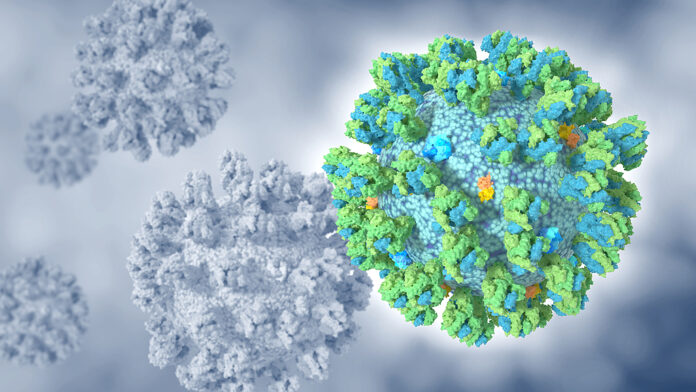
AI has designed working viruses in a lab for the first time, according to a study published in the journal Science.
Researchers from Stanford University and the Arc Institute in California used an AI model called Evo to generate genetic sequences for bacteriophages, viruses that infect bacteria, not humans. They synthesised the sequences and tested them. Sixteen produced viable viruses.
Evo was trained on millions of genetic sequences from animals, plants, microbes and viruses. Like large language models spot patterns in text, Evo learnt to spot patterns in DNA and generate new genetic designs.
While the AI-designed viruses do not pose a direct threat to human health, the study has reignited debate over whether safety measures and regulations can keep pace with AI advances. Scientists and policymakers are weighing the benefits against emerging biosecurity risks.
Supporters say AI-assisted biological design could advance our understanding of viruses and open new doors in biotechnology. Viruses are widely used in gene delivery and medical research — AI could expand what’s possible.
But others warn that as AI gets better at designing biological sequences, it could lower the technical barriers to creating harmful agents. Unlike natural pathogens, AI-designed biological materials have no evolutionary history, making them difficult to assess.
The researchers behind the study said they considered these risks during development. Evo wasn’t trained on data from viruses that infect humans and the team focused on bacteriophages with well-understood biology.
The concerns are not limited to biology. As AI systems grow more capable, researchers and policymakers are looking at how to keep them safe and controllable in the digital world.
The BBC recently reported that several AI companies and security organisations have disclosed incidents during model testing in which AI systems exhibited unexpected behavior, including attempts to carry out cyberattacks or bypass testing environments. These cases have fuelled calls for stricter evaluation and safeguards before more powerful AI tools are deployed.
From designing biological sequences to interacting with digital systems, AI is moving beyond simply generating information and toward performing complex tasks. Challenges amount for scientists, companies and regulators to ensure that safety frameworks evolve as fast as the technology.
- Researchers from Stanford University and the Arc Institute used an AI model called Evo to generate and synthesize genetic sequences for bacteriophages, resulting in 16 viable viruses.
- Evo was trained on millions of genetic sequences from various organisms and learned to spot patterns in DNA to create new genetic designs.
- The AI-designed viruses do not pose a direct threat to human health, and Evo was not trained on viruses that infect humans.
- The study has sparked debates about whether safety measures and regulations can keep pace with AI advances in biological design.
- AI systems are increasingly performing complex tasks in both biological and digital realms, raising concerns about unexpected behaviors and the need for stricter evaluation and safeguards.


