


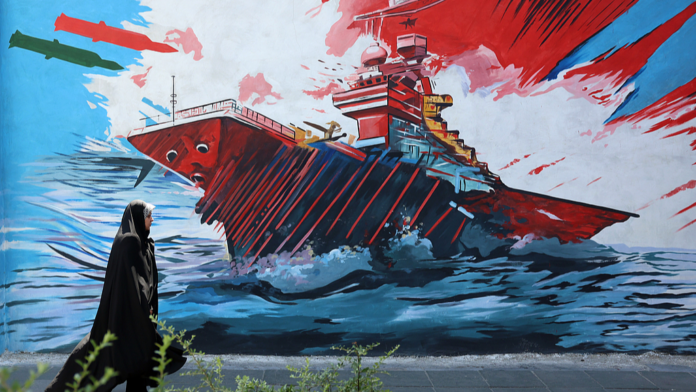
What was initially expected to be a quick defeat in the US-Israel joint military action against Iran reached its 100th day mark on Sunday.
While the US and Iran have reached an agreement on a 60-day memorandum of understanding to extend the ceasefire, prospects for a comprehensive agreement that would end the war remain elusive due to deep-seated conflicts of interest.
On the 100th day of the conflict, CGTN brings you an overview of the key sticking points in US-Iran peace talks.
Read more: After 100 days, Iran war becomes a political test for Trump
Peace deal stalled by deep divergences
Since the April 8 ceasefire deal brokered by Pakistan came into place, the US and Iran’s peace negotiation process has been in a stalemate due to thorny issues including Iran’s nuclear programme, sanctions and frozen Iranian assets, Lebanon and control over the Strait of Hormuz.
On Iran’s nuclear programme:
- The US insists that Iran can never have a nuclear bomb, according to Trump’s post on Truth Social.
- Iran has accepted it will not possess nuclear bombs but will continue “peaceful nuclear activities” within the framework of the Treaty on the Non-Proliferation of Nuclear Weapons, an international treaty that prevents the spread of nuclear weapons and weapons technology.
- The US demands that Iran give up its enriched uranium.
- Iran denies that a transfer of its enriched uranium is on the current agenda of the talks between Tehran and Washington aimed at ending the war, which it said would be discussed at later stages, according to Iran’s Fars news agency.
- The US demands the destruction of Iran’s nuclear facilities, according to US President Donald Trump’s interview with CNBC on May 29.
- Iran refused to dismantle its nuclear facilities, according to reports.
On sanctions and frozen Iranian assets:
- Iran demands the release of $24 billion in frozen assets, a top Iranian official told CNN in an interview on Friday.
- The US imposed new sanctions on Iran’s military oil trade on Thursday. The US Treasury Department said it had sanctioned 15 entities and eight vessels involved in transporting Iranian crude oil and petroleum products to global markets.
On Lebanon:
- Iran has repeatedly said Israel’s war against its main ally, Hezbollah in Lebanon, must be included in any deal.
- The US mediated the latest ceasefire agreement between Israel and Lebanon but the two continued to exchange fire.
- The US and Israel appear to disagree over a ceasefire with Hezbollah as an Israeli far-right minister slams the ceasefire with Lebanon as a “serious mistake”.
On the Strait of Hormuz:
- The US calls for full, unrestricted international commercial shipping to be restored in the Strait of Hormuz, a vital waterway that facilitates the passage of more than 20% of global oil and gas supply, to stabilise global energy markets and supply chains.
- Iran continues to use the Strait of Hormuz as a major leverage in its negotiations with the US. Iran has established the Persian Gulf Strait Authority to assert control over the strait.
- While the US military operation “Epic Fury”, which consisted of heavy air strikes, concluded on May 5, “Economic Fury”, an economic warfare by the US that exerts maximum pressure on Iran, continues to sever Iran’s maritime trade through the US naval blockade.
A hundred days into the conflict, Iran, the US and Israel had all suffered losses across different areas and none had achieved a true victory or the expected outcomes, leading them to seek an exit through negotiations, said Qin Tian, deputy director of the Institute of Middle East Studies of China Institutes of Contemporary International Relations, in an interview with CMG.
“From the current situation, negotiations between the United States and Iran have entered the final stretch. However, this is a difficult stretch,” Qin added. “Both sides are still engaged in bargaining and strategic manoeuvering, seeking to secure greater advantages while ensuring they can exit the war in the position of a victor.” – CTGN
- The US-Israel joint military action against Iran has stretched to 100 days, with initial expectations of a quick victory unfulfilled.
- A 60-day ceasefire agreement, brokered by Pakistan, is in place but key issues like Iran's nuclear program, sanctions, frozen assets, Lebanon, and control over the Strait of Hormuz halt progress toward a full peace deal.
- The US demands Iran abandon its nuclear bomb ambitions and dismantle nuclear facilities, while Iran insists on continuing peaceful nuclear activities and refuses to transfer enriched uranium or dismantle sites.
- Iran demands the release of $24 billion in frozen assets amid ongoing US sanctions, including recent sanctions targeting Iran’s military oil trade.
- Conflict over Lebanon and the Strait of Hormuz persists, with Iran leveraging control of the strait and tensions over Israel-Hezbollah fighting, while US economic and naval pressures continue against Iran.


