


The International Aerospace Exhibition has opened in Berlin, bringing together aerospace companies, defence manufacturers, researchers and government leaders from across the world.
Military aircraft, transport planes and drones are among the biggest attractions at this year’s event.
However, the exhibition is taking place against the backdrop of a major development in Europe’s defence industry.
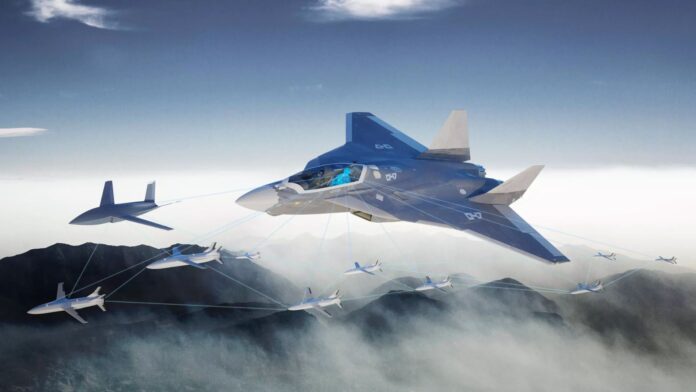
Days before the show opened, Germany and France agreed to abandon plans for a joint next-generation fighter jet programme, ending years of cooperation on one of Europe’s most ambitious defence projects.
Opening the exhibition, German Chancellor Friedrich Merz sought to emphasise continued European defence cooperation despite the setback.
“Together, we are strengthening Europe’s defence and also Europe’s defence industry,” Merz said.
“This is essential for our security and our sovereignty. Not least, it is also good for our shared industry.”
The decision to end the fighter jet project followed years of disagreements between the companies involved. Yet even as that chapter closes, German industry is looking ahead.
At the air show, an Airbus-led alliance of eight defence companies launched the Team Gen 6 initiative, aimed at developing a future European combat aircraft and preserving Europe’s position in military aviation technology.
But defence is only one part of the story at this year’s exhibition.
Across the exhibition halls, attention is also turning beyond Earth’s atmosphere, with companies and research organisations showcasing technologies designed for future missions to the Moon and Mars.
International cooperation remained essential if the ambitions were to become reality, Andreas Schütz, the head of communications and spokesperson at the German Aerospace Centre, said.
“What we need is the cooperation between the nations to reach our goals, to reach the moon and Mars,” Schütz told CGTN.
“That’s what we need for rockets like this, for space stations, for spacecraft and infrastructure on our moon and other planets.”
China is also represented at the exhibition, particularly in rapidly developing sectors such as drone technology and the country’s growing low-altitude economy.
Among the exhibitors is Qingdao Jinhuan Fuyao Machinery, which manufactures precision components used in drone applications.
Company representative Molly said Europe and China each brought different strengths to the sector.
“Europe is strong in system integration. China is strong in efficiency and cost,” she said.
“Through cooperation and exchange, both sides can complement each other’s strengths.”
From next-generation fighter aircraft and military drones to lunar exploration and future aerospace technologies, this year’s Berlin Air Show highlights the opportunities and challenges facing an industry evolving at remarkable speed.
- The International Aerospace Exhibition in Berlin showcases military aircraft, transport planes, drones, and space exploration technologies amid evolving defense challenges.
- Germany and France have ended their joint next-generation fighter jet program due to longstanding disagreements, marking a setback in European defense collaboration.
- Despite this, German Chancellor Friedrich Merz emphasized ongoing European defense cooperation as crucial for security, sovereignty, and industry.
- An Airbus-led alliance launched the Team Gen 6 initiative to develop future European combat aircraft, aiming to maintain Europe's leadership in military aviation technology.
- The exhibition also highlights international cooperation in space exploration and features China's presence in drone technology, emphasizing complementary strengths between Europe and China.


