


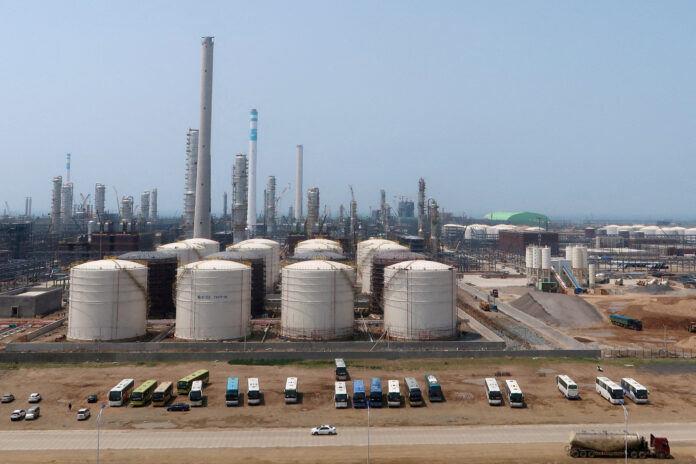
China’s Hengli Petrochemical, sanctioned by the U.S. for allegedly purchasing Iranian oil, has bought at least 2 million barrels of West African crude and is seeking further mainstream supply, several trade sources said, as the refiner looks to get off the U.S. blacklist.
Hengli, which was penalised by Washington in April and has denied buying Iranian oil, is looking to source entirely non-sanctioned oil, six of the people said.
Privately owned Hengli, which operates a 400,000 barrels-per-day refinery in the northeastern city of Dalian, has recently inquired about buying cargoes of West African and non-Iranian Middle Eastern crude for delivery from June onward, multiple sources said.
It bought at least 2 million barrels of West African crude for China delivery around late June or July, three of the sources said.
Hengli and the U.S. Treasury did not respond to requests for comment. All of the sources spoke on the condition of anonymity due to the sensitivity of the matter.
While China rejects unilateral sanctions, such a designation can deter counterparties from dealing with sanctioned companies for fear of being penalised by the U.S. government.
A company can seek removal from the sanctions list by providing information “that establishes that an insufficient basis exists for the listing or that the circumstances resulting in the listing no longer apply,” according to the U.S. Treasury’s Office of Foreign Assets Control.
Seeking sanctions removal
Hengli said in late April it would seek a legal path for removal from the sanctions list, and that it held crude inventories to feed at least three months of processing and would continue buying oil using China’s renminbi currency.
Several trade sources said that supplying Hengli with non-sanctioned oil would be complicated as sellers would not want to be exposed to potential secondary sanctions, meaning any such transactions would be made through a chain of middlemen.
By contrast, another private Chinese refiner, Shandong Yulong Petrochemical, became even more reliant on Russian crude after it was sanctioned by the United Kingdom and the European Union last year over Russian oil purchases, making it difficult to buy mainstream crude, sources said.
Yulong did not immediately respond to a request for comment on its oil purchases.
Chinese independent refineries, the main buyers of Iranian oil, face dwindling supply from the Middle East producer as the U.S.-Israeli war on Iran enters a fourth month and a U.S. naval blockade in place since April 13 curtails Iranian exports.
Hengli had since late 2024 been heavily reliant on Iranian oil and had also purchased Russian crude, according to multiple traders.
Falling crude inventories have forced Hengli to reduce its June processing rates to slightly below 70% from just over 80% last month, two of the people said.
Last month, Reuters reported that Hengli’s former Singapore-based trading arm planned to cease operations in the wake of U.S. sanctions.
China’s imports of Iranian crude fell to 1.19 million barrels per day last month, the lowest since September, Kpler data showed.
Read more: Oil gains as Hormuz shipping constraints persist despite hopes for US-Iran talks
- China's Hengli Petrochemical, sanctioned by the U.S. for allegedly buying Iranian oil, has purchased at least 2 million barrels of West African crude and is seeking more mainstream non-sanctioned oil to exit the U.S. blacklist.
- Hengli denied buying Iranian oil and plans to source non-sanctioned crude primarily from West Africa and non-Iranian Middle Eastern suppliers starting June onward.
- The company is pursuing legal avenues to be removed from U.S. sanctions, while managing crude inventories for at least three months of refinery operations.
- Due to U.S. sanctions risks, suppliers are cautious, making non-sanctioned oil deals complicated and often involving intermediaries; this contrasts with another sanctioned Chinese firm, Shandong Yulong, which turned to Russian crude.
- Falling inventories and sanctions have forced Hengli to cut refinery processing rates below 70%, with China's Iranian crude imports dropping to the lowest levels since September amid U.S.-Israeli tensions and a naval blockade on Iranian exports.


