


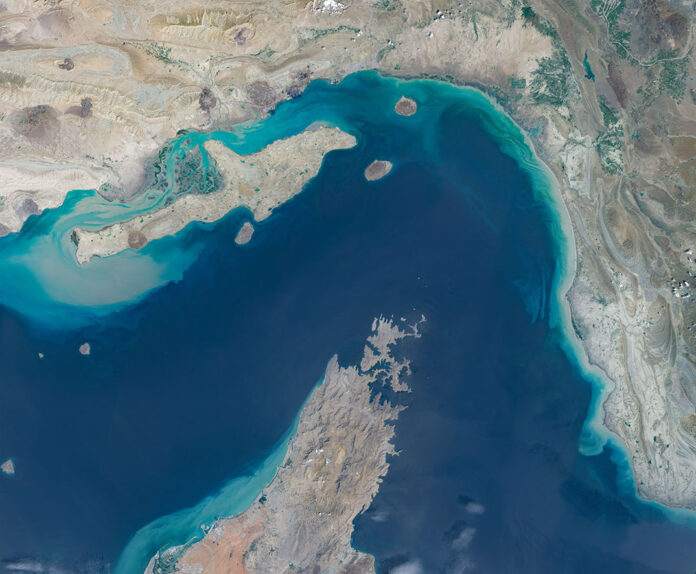
Secretary of Iran’s Supreme National Security Council Mohsen Rezaei has said that his country would announce a restricted zone outside the Strait of Hormuz in the coming days and place any ship attempting to transit the area on Tehran’s sanctions list.
In an interview with state-run IRIB TV, which was broadcast Sunday night, Rezaei said that the zone would extend from “the line where the U.S. naval blockade begins to the Strait of Hormuz region and inside the Persian Gulf on the other side (of the strait).”
Ships that enter the zone without coordination with Iran, he added, would face sanctions affecting their insurance coverage and future passage through the waterway.
Rezaei framed the move as part of a broader strategic shift in Iran’s approach to war and diplomacy, aiming at increasing pressure on Washington.
The security official stressed that the Strait of Hormuz is completely closed, dismissing the U.S. claim that ships and oil tankers are crossing the waterway as a “lie.”
READ: US, Iran trade oil tanker strikes as Hormuz confrontation escalates
While acknowledging that some vessels attempt to cross the strait via a route near Oman, often switching off their navigation systems to evade detection, Rezaei said most of those ships “receive blows.”
Yet he added that Iran does not intend to sink them for now due to environmental concerns.
Rezaei further revealed that Iran had test-fired for the first time a domestically developed anti-destroyer missile above a U.S. aircraft carrier 48 hours ago, describing it as a warning that the U.S. naval blockade is vulnerable.
“The special missile created a hell for the Americans, and they fled,” he said.
Rezaei said the Strait of Hormuz would remain closed unless the United States takes practical steps to fulfill its obligations under a peace memorandum of understanding signed between Tehran and Washington in June.
READ: Shockproof South Africa before oil strikes again
In the coming days, he added, a new international corridor designated by Iran and Oman for passage through the strait would be announced, emphasizing that the corridor would be under Iran’s management.
Following U.S.-Israeli strikes on Iran on Feb. 28, Tehran restricted passage through the Strait of Hormuz, while U.S. forces imposed a naval blockade targeting vessels traveling to or from Iranian ports and coastal areas.
- Iran will soon announce a restricted zone outside the Strait of Hormuz, sanctioning any ships transiting without coordination.
- The restricted zone extends from the U.S. naval blockade line to the Strait of Hormuz region and inside the Persian Gulf on the opposite side.
- Iran claims the Strait of Hormuz is completely closed and accuses the U.S. of lying about ships and oil tankers crossing.
- Iran test-fired a domestically developed anti-destroyer missile above a U.S. aircraft carrier 48 hours prior, calling it a warning about the U.S. blockade's vulnerability.
- A new international corridor will soon be announced by Iran and Oman for passage through the strait, with management under Iran's control.


