


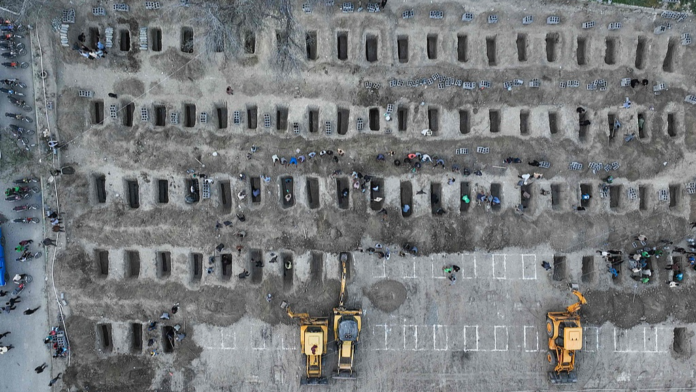
Faulty intelligence, outdated satellite imagery, staffing cuts and heavy reliance on artificial intelligence contributed to a US strike that killed around 120 children at a school in the Iranian city of Minab, Bloomberg reported on Saturday, citing officials involved in a Pentagon internal investigation.
The officials described the tragedy as a cascade of preventable failures rather than the result of a single catastrophic decision. The strike followed a series of smaller errors and missed opportunities to prevent the attack, they said, speaking on condition of anonymity.
The scale and pace of the US air campaign also left personnel with less time to finalise targets. More than 1 000 targets were struck during the operation’s first 24 hours, after an order for an extensive air assault in the final days of February, according to the officials.
The investigation found that several factors contributed to the deadly error, including outdated intelligence, reductions in Pentagon personnel responsible for mitigating civilian harm and an overreliance on artificial-intelligence tools.
The Minab site had been identified years earlier as a military compound but officials said there was clear evidence that its function had changed. Satellite imagery showed physical modifications and new construction dating from nearly a decade, while the site had been operating openly as a school.
Some personnel at US Central Command, which conducted the strike, relied heavily on artificial intelligence embedded in Palantir’s Maven Smart System, expecting the system to identify outdated or inconsistent intelligence, according to officials involved in the investigation.
In previous conflicts, preparing proposed target lists, including assessing whether individual targets were consistent with an operation’s objectives, could take staff hours. Before the US attack on Iran, much of that work was condensed into minutes with the help of Maven, according to people familiar with the Pentagon’s review.
Palantir said it “is not responsible for the underlying data nor identifying intelligence deficiencies” and that there was no evidence its software was at fault, Bloomberg reported.
After the Minab strike, Palantir added new capabilities to Maven that could “re-review underlying intelligence to identify factors that would disqualify a target and flag inconsistencies and inaccuracies that human review may have missed”, according to a person familiar with the matter. The person said the new capabilities had identified some anomalies.
The investigation also highlighted cuts to the Pentagon’s civilian harm mitigation (CHM) teams, which are responsible for mapping civilian environments, assessing the presence of noncombatants and developing lower-risk alternatives for military strikes. No CHM team member reviewed the Minab site before the attack, according to officials involved in the investigation.
The Bloomberg report came shortly after a UN-backed fact-finding mission said Thursday that there were reasonable grounds to believe the United States had committed war crimes in two February airstrikes in Iran, including the strike on the Minab school.
The mission concluded that the strike amounted to an indiscriminate attack that caused civilian deaths and damage to civilian infrastructure, constituting a war crime under international law.
The Pentagon declined to comment on the UN report. “Our investigation remains ongoing and we have nothing to announce at the moment,” it said in a statement.
White House spokesperson Anna Kelly, responding to the report, said the UN Human Rights Council had “accomplished nothing for human rights”. She added that Iran was the only party in the conflict that “had committed war crimes”.
- The US strike on a school in Minab, Iran, which killed around 120 children, was caused by faulty intelligence, outdated satellite imagery, staffing cuts, and heavy reliance on artificial intelligence, according to a Pentagon internal investigation cited by Bloomberg.
- The strike followed a rapid air campaign with over 1,000 targets struck in the first 24 hours, leaving personnel less time to finalize targets.
- The Minab site had been identified years earlier as a military compound, but evidence showed it had been operating as a school for nearly a decade, with physical modifications visible in satellite imagery.
- The investigation highlighted cuts to the Pentagon's civilian harm mitigation teams, with no team member reviewing the Minab site prior to the attack.
- A UN-backed fact-finding mission concluded that the strike was an indiscriminate attack causing civilian deaths and damage, constituting a war crime under international law.


