


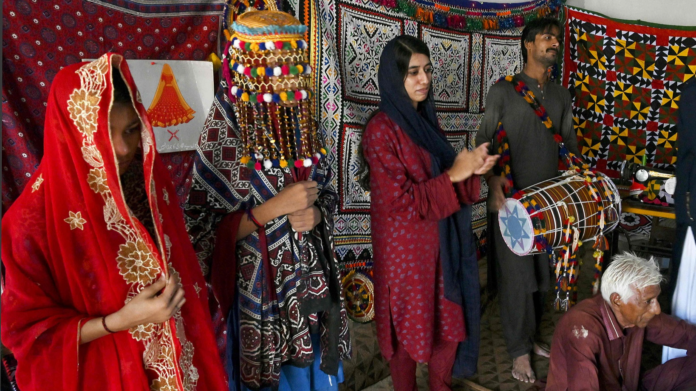
The United Nations General Assembly has adopted a resolution establishing November 27 as the International Day to End Child, Early and Forced Marriage, in a move aimed at accelerating global efforts to protect children and advance gender equality.
The resolution, led by Sierra Leone and backed by 42 co-sponsors, creates an annual platform for governments, civil society, communities and international organisations to strengthen efforts to prevent child marriage and address its impact on children’s health, education and rights.
The initiative follows a call by child-rights activist Bhuwan Ribhu, founder of Just Rights for Children, for a dedicated international day to mobilise governments and communities around ending the practice.
Sierra Leone’s First Lady, Fatima Maada Bio, played a leading role in advancing the initiative internationally.
Speaking after the resolution was adopted, Ribhu said the decision demonstrated global recognition that child marriage must end and called on countries to translate the commitment into national action plans.
He also urged governments and other stakeholders to use the annual observance to strengthen policies, institutional accountability, community awareness and economic support for vulnerable children.
The UN resolution comes as child marriage remains widespread despite decades of efforts to reduce the practice.
Unicef estimates that about 650 million women and girls alive today were married before the age of 18, while around 12 million girls become child brides every year. Globally, about one in five young women aged 20 to 24 were married in childhood.
Progress is also uneven. In sub-Saharan Africa, about 35% of young women are married before turning 18, compared with 38% a decade earlier.
Unicef says the pace of progress is far too slow to meet the Sustainable Development Goal of ending child marriage by 2030.
Child marriage is associated with early pregnancy, school dropout, social isolation, limited economic opportunities and a higher risk of violence, according to Unicef.
Sierra Leone remains among the countries where child marriage is a significant child-protection concern, although prevalence has declined over time.
UNICEF’s latest country profile says 30% of women aged 20 to 24 in Sierra Leone were married before the age of 18, down from 51% in 1994. About 9% were married before age 15, compared with 21% in 1994.
UNICEF also reported in 2026 that the Global Program to End Child Marriage had expanded opportunities for 164,613 adolescent girls in Sierra Leone since 2016, while supporting efforts to strengthen national systems and challenge harmful social norms.
The UN resolution is expected to provide a recurring global platform to assess progress, strengthen national strategies and mobilize resources towards the 2030 target.
Ribhu said the next step should be for countries to develop and implement national action plans, arguing that the new international day should translate global political commitment into concrete action to protect children.
- The United Nations General Assembly adopted a resolution establishing November 27 as the International Day to End Child, Early and Forced Marriage.
- The resolution was led by Sierra Leone, backed by 42 co-sponsors, and aims to accelerate global efforts to prevent child marriage and address its impacts.
- UNICEF estimates about 650 million women and girls alive today were married before age 18, with around 12 million girls becoming child brides annually.
- In Sierra Leone, 30% of women aged 20 to 24 were married before 18, down from 51% in 1994, and 9% were married before age 15, down from 21% in 1994.
- The Global Program to End Child Marriage expanded opportunities for 164,613 adolescent girls in Sierra Leone since 2016 and supported strengthening national systems and social norms.


