


The Ebola outbreak in the Democratic Republic of Congo has spread to a sixth province, with confirmed cases rising to 4 727 and deaths to 2 214, according to the latest report by the DRC’s health authorities.
The report, which was released on Friday, said the outbreak has affected 55 health zones across Bas-Uele, Haut-Uele, Ituri, North Kivu, South Kivu and Tshopo provinces, with Ituri remaining the epicentre.
Buta health zone in Bas-Uele was newly affected. Africa Centres for Disease Control and Prevention (Africa CDC) Director-General Jean Kaseya said on Thursday that one person had travelled from Isiro in neighbouring Haut-Uele to Buta and later died there.
A total of 976 people have recovered since the start of the epidemic. Health authorities warn that persistent community transmission and gaps in contact tracing could prolong what is the world’s second-largest Ebola epidemic on record.
Community transmission continues
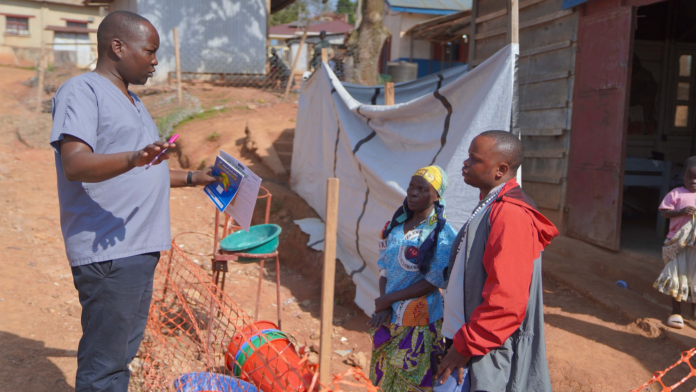
Kaseya said more than 63% of the Ebola deaths were occurring in communities rather than treatment centres or hospitals.
Community deaths further complicated response efforts because health authorities might not know who came into contact with infected people before or after death, making contact tracing and safe and dignified burials more difficult, he said.
The latest government report put the contact follow-up rate at 82.6%.
However, Africa CDC said the proportion of registered contacts being followed did not by itself reflect the effectiveness of contact tracing if many contacts were never identified in the first place. The figures indicated that community-based surveillance and contact identification needed to be strengthened, Kaseya said.
World Health Organisation (WHO) Director-General Tedros Adhanom Ghebreyesus said on Wednesday that a high proportion of deaths continued to occur in communities and that many new cases were being detected among people who were not on contact lists, indicating that some transmission chains had yet to be identified.
“It’s moving faster than any previous Ebola outbreak,” Tedros told a media briefing in Geneva. “At its current pace, it’s on track to eclipse the West African Ebola outbreak of 2014 to 2016.”
The 2014-2016 Ebola epidemic in West Africa, the largest Ebola outbreak recorded, infected more than 28 600 people.
True scale unclear
The DRC declared the outbreak on May 15 but Kaseya said studies examined by Africa CDC suggested that transmission might have begun around February.
“We have no clue about what happened from February to May,” he said, adding that figures collected since the declaration should not necessarily be regarded as a complete picture of the epidemic.
Africa CDC is pushing for a more village-based response that would also seek to reconstruct the outbreak’s early stages.
Kaseya said communities would be asked to help identify people who had died or fallen ill with Ebola-like symptoms between January and May. Where laboratory confirmation was no longer possible, such information could help authorities estimate the extent of transmission before the outbreak was detected.
Chikwe Ihekweazu, the executive director of the WHO Health Emergencies Programme, said investigations suggested the virus could have been circulating for two to three months before the outbreak was detected. However, the exact start of transmission remained under investigation.
Outbreak could last a year
Abdirahman Mahamud, the WHO director for health emergency alert and response operations, said on Wednesday that response planning was based on a moderate scenario under which the outbreak could continue for about six months.
“There’s a worst-case scenario where this outbreak may last nine months to 12 months,” Mahamud said, adding that efforts were under way to shorten the duration of the epidemic.
Africa CDC has issued an even stronger conditional warning. “If we don’t stop this outbreak,” Kaseya warned, “it could last more than a year and ultimately become the largest Ebola epidemic ever recorded.”
Kaseya said reversing the trajectory would require a combination of measures, including shifting more responsibility for surveillance and response to villages, ensuring access to essential health services, strengthening the referral of suspected cases, deploying additional medical tools and improving the coordination of response resources.
- The Ebola outbreak in the Democratic Republic of Congo has spread to six provinces with 4,727 confirmed cases and 2,214 deaths.
- The outbreak affects 55 health zones across Bas-Uele, Haut-Uele, Ituri, North Kivu, South Kivu, and Tshopo provinces, with Ituri as the epicentre.
- Community transmission accounts for over 63% of Ebola deaths, complicating contact tracing and safe burials.
- Studies suggest Ebola transmission may have started around February, months before the official outbreak declaration on May 15.
- The outbreak could last between six months to over a year, potentially becoming the largest Ebola epidemic if not controlled.


