


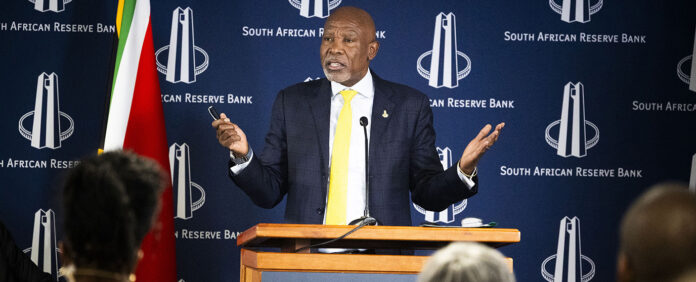
The South African Reserve Bank (SARB) has warned that monetary policy may need to remain restrictive for longer and could be tightened further if inflation risks intensify, as persistent fuel-price shocks threaten to become embedded in the broader economy.
The central bank stated this in the Monetary Policy Review October 2026, after it had already increased the repo rate by a cumulative 50 basis points between April and October 2026, taking the benchmark rate to 7.25%, in response to mounting inflationary pressures linked largely to global energy-market disruptions.
The Reserve Bank said the key threat was the growing risk of so-called second-round effects, where higher fuel costs feed into wages, business costs and inflation expectations, creating more persistent inflation that is harder to reverse. Policymakers argued that waiting for clear evidence of these pressures could leave monetary policy behind the curve because interest-rate changes affect the economy with a delay.
Read more: Reserve Bank appoints seventh monetary policy committee member
“Policy must remain forward-looking,” the report said, warning that allowing supply-driven inflation to persist could undermine confidence in the central bank’s 3% inflation target and weaken long-term growth prospects.
Inflation outlook remains elevated
Headline inflation has risen sharply this year, climbing from around 3% early in 2026 to levels above 4%, driven mainly by higher fuel and transport costs. The SARB now expects inflation to average 4.4% in 2026 and remain elevated into 2027 before returning to the 3% target.
The Reserve Bank identified several risks that could force a tighter policy response, including prolonged conflict in the Middle East, elevated refinery margins, stronger global food prices and the possibility of a severe El Niño weather event. A significant depreciation of the rand or tighter monetary policy in advanced economies could also add pressure through higher import costs.
Read more: Reserve Bank keeps interest rates unchanged
While the MPC described the current stance as only “moderately restrictive”, it stressed that its immediate priority was to stop temporary fuel-driven inflation from becoming entrenched in wage setting and price formation across the economy. The report noted that, in the absence of decisive action, higher fuel and food costs could lift inflation expectations further and require even larger rate increases later.
Financial markets are already anticipating additional policy tightening. According to the review, market pricing suggests scope for about two further 25-basis-point rate increases over the next six months.
Despite the tighter monetary stance, the SARB maintained that economic growth should remain positive, forecasting GDP growth of 1.2% in 2026, although this is lower than previously expected due to the impact of higher energy costs and weaker confidence.
The central bank concluded that inflation risks remain skewed to the upside and reiterated its commitment to returning inflation sustainably to its 3% target, signalling that further policy tightening remains a possibility should inflation expectations deteriorate or external shocks worsen.
- The South African Reserve Bank raised the repo rate to 7.25% in October 2026 after a cumulative 50 basis point increase since April 2026 to combat inflation driven by fuel-price shocks.
- The bank warned that monetary policy might need to stay restrictive longer and could be tightened further if inflationary risks, such as second-round effects from fuel price increases, intensify.
- Inflation rose from about 3% early in 2026 to over 4%, largely due to higher fuel and transport costs, with a projected average inflation of 4.4% in 2026 before returning to the 3% target in 2027.
- Risks that could require tighter policy include prolonged Middle East conflict, high refinery margins, rising global food prices, El Niño weather impacts, rand depreciation, and tighter policy in advanced economies.
- Despite the restrictive stance, economic growth is expected to remain positive at 1.2% in 2026, but inflation risks remain tilted to the upside, with further rate hikes possible if conditions worsen.


