


Something unusual is happening in global markets.
It is not just the volatility that is expected in times of geopolitical tension. It is the timing of that volatility that should give us pause.
Markets are no longer reacting only to events. Increasingly, they appear to be reacting just before the events. A statement is made – oil drops. A threat escalates – markets sell off. A hint of peace – risk assets rally.
That, in itself, is not new. What is new is how often markets seem to position ahead of these announcements. In recent weeks, as tensions between the United States and Iran have intensified, global markets have become hypersensitive to political signalling. Oil, equities, bonds – everything moves, often sharply, based on a single statement or even a shift in tone.
But here is where it becomes more uncomfortable. There is growing scrutiny – at the highest levels – around unusually well-timed trades in global markets. Regulators in the US are reportedly examining significant oil futures positions placed just before major geopolitical announcements, while lawmakers have called for formal investigations into trading activity ahead of key developments.
In one instance, hundreds of millions of dollars were traded in oil markets shortly before a ceasefire-related announcement – timing that is difficult to ignore. This is not proof of wrongdoing. But it is enough to raise a more fundamental question: Are markets still operating on broadly equal information, or are they increasingly being shaped by those who know first?
Because if it is the latter, then we are dealing with a shift in how markets function. Markets, at their core, are meant to price in publicly available information. They are supposed to be efficient, competitive, and, critically, fair. But geopolitical events create a different environment. Information is concentrated; decisions are made behind closed doors, and timelines are known to a small number of individuals before they become public.
And in that window, minutes, hours, sometimes days, there are opportunities. Opportunity to position. Opportunity to profit. Opportunity to move ahead of the market. The line between anticipation and access becomes blurred, and that is where trust begins to erode.
At the same time, the broader market reaction tells us something equally important.
Markets today are not waiting for outcomes, they are trading expectations.
Oil prices rise not only when supply is disrupted but also when disruption is possible. Equity markets fall not only on bad news, but also on the fear of bad news. Volatility spikes not because of what has happened but because of what might happen.
We are no longer in a reactive market environment; we are in an anticipatory one, and that makes the system more fragile.
Because when markets move on expectations, they can reverse just as quickly. A single statement can unwind billions in positioning. A shift in tone can reprice entire sectors.
This creates a feedback loop, where politics drives markets, and markets amplify political impact.
For South Africa, this matters more than it may appear. We are not passive observers. We are participants in a global financial system that transmits these shocks rapidly and directly.
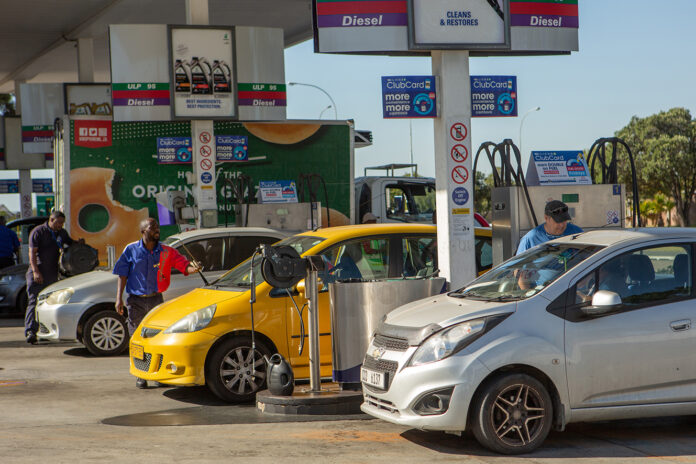
When oil spikes, our fuel price rises. When markets price in inflation, our interest rates respond. When global risk sentiment shifts, our currency moves. We import volatility. And in an environment where that volatility may be influenced not just by events, but by who knows those events in advance, the risk becomes more complex.
So what should we take from this moment? First, that markets are becoming more sensitive, more reactive, and more dependent on geopolitical signals. Second, that information asymmetry – who knows what, and when – is becoming a more important driver of outcomes, particularly in times of conflict.
And third, that the assumption of perfectly “fair” markets is being tested in real time.
This does not mean markets are broken, but it does mean they are evolving, and those changes require awareness.
Because the real risk is not just that markets move. It is that they move before you understand why.
- Van Doesburgh is an economist and a regular commentator on South Africa’s economic landscape, focusing on financial markets, policy, and business strategy. vandoesburghm@cput.ac.za
- Global markets are increasingly reacting ahead of geopolitical events rather than just responding afterward, showing hypersensitivity to political signals, especially amid US-Iran tensions.
- Regulators and lawmakers are scrutinizing suspiciously well-timed large trades, such as massive oil futures transactions before key announcements, raising concerns about information inequality.
- This trend threatens market fairness and efficiency as privileged access to insider information may allow some to profit before events become public, eroding trust in market integrity.
- Markets today trade heavily on expectations and anticipations, making them fragile and prone to rapid reversals and amplified volatility following geopolitical developments.
- For countries like South Africa, global market volatility driven by geopolitics and information asymmetry directly impacts local fuel prices, interest rates, and currency stability, increasing economic risk.


