


The recent escalation of conflict involving Iran has added a new layer of complexity to the global investment landscape. Periods such as this naturally heighten investor anxiety, as uncertainty feeds into market volatility. Yet history shows that geopolitical shocks are not new, and while each episode feels unique in the moment, the underlying dynamics of markets remain consistent.
Our role is not to react to every headline, but to interpret these developments through a disciplined investment lens.
Markets are driven by sentiment in short term, but anchored by value over time
In the near term, market behaviour is shaped more by sentiment, news flow, and shifting perceptions of risk than by fundamentals. This often leads to sharp dislocations between price and intrinsic value. While geopolitical events amplify this effect, they also create opportunity. For long-term investors, volatility can provide access to quality businesses at more attractive valuations, provided one has the patience and discipline to act.
Attempting to predict the outcome of geopolitical events is inherently unreliable The situation in the Middle East remains fluid, with rapidly evolving strategies and responses. Rather than trying to forecast these outcomes, we focus on what is within our control: identifying high-quality businesses trading below our assessment of intrinsic value. Over time, markets tend to correct these mispricings, even if the path is uneven.
Consistency of process matters more than reacting to headlines
Periods of heightened uncertainty often tempt investors to respond tactically to the latest developments. However, reacting to the news cycle typically results in decisions that lag market movements rather than anticipate them. Human behaviour plays a role here, as the instinct to conform becomes stronger under stress.
Our approach is deliberately different. We prioritise consistency over reaction, relying on a proven investment process that navigates a range of market environments. Portfolios are constructed to withstand unexpected shocks, not to optimise for a single scenario. This philosophy has been tested through events such as the Covid-19 pandemic and the Russia-Ukraine conflict, and continues to guide our decision-making today.
Diversification remains a critical defence against the unknown
In an increasingly interconnected world, unforeseen risks are inevitable. Even the most rigorous analysis cannot account for every variable. Diversification is therefore a central component of our risk management approach.
By allocating capital across sectors and industries, we aim to reduce the impact of any single adverse event on the portfolio as a whole. This is particularly important during periods of geopolitical tension, where second-order effects can be difficult to anticipate. Diversification does not eliminate risk, but it helps to manage it more effectively.
Resilient positioning supported by selective exposures
Despite the challenging backdrop, our portfolios have demonstrated resilience, outperforming their benchmarks during both the current period of conflict and the volatility leading up to it. This reflects the strength of our positioning and the benefits of maintaining a disciplined approach.
Several key exposures have supported performance. Our overweight position in Sasol has benefited from the sharp rise in Brent crude oil prices, while we also expect tighter global supply conditions to support chemical prices. Sappi has benefited from a weaker rand, which has boosted exporters’ earnings. Prosus has provided stability, with limited direct exposure to the conflict and continued strength in its global consumer internet portfolio.
A more uncertain macro environment reinforces the need for discipline
The broader economic backdrop has shifted meaningfully in a short space of time. Expectations of stable growth and easing inflation have given way to concerns around higher inflation, weaker global growth, and rising interest rates. This rapid change reinforces a key principle: markets are inherently unpredictable, and conditions can evolve quickly.
In this environment, maintaining discipline becomes even more important. By staying focused on intrinsic value and preserving diversification, we believe portfolios are well-positioned to navigate uncertainty while continuing to capture long-term opportunities.
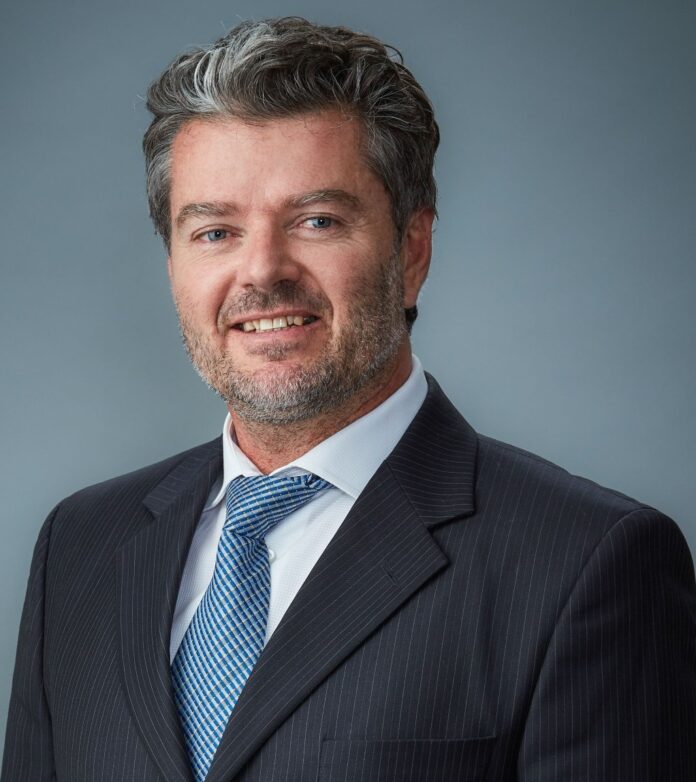
- Mark Ansley is head of equities at Argon Asset Management
- The recent Iran conflict has increased market volatility and investor anxiety, but long-term market dynamics remain consistent despite short-term sentiment-driven dislocations.
- Predicting geopolitical outcomes is unreliable; the investment focus should be on identifying undervalued high-quality businesses and maintaining a disciplined, patient approach.
- Reacting impulsively to headlines often leads to poor timing; a consistent, process-driven investment strategy has proven effective across various crises.
- Diversification across sectors and industries is essential to managing risks from unforeseen geopolitical and economic events.
- Argon Asset Management’s resilient portfolio, with selective exposures (e.g., Sasol, Sappi, Prosus), has outperformed benchmarks despite conflict-driven volatility, emphasizing the importance of discipline amid economic uncertainty.


