


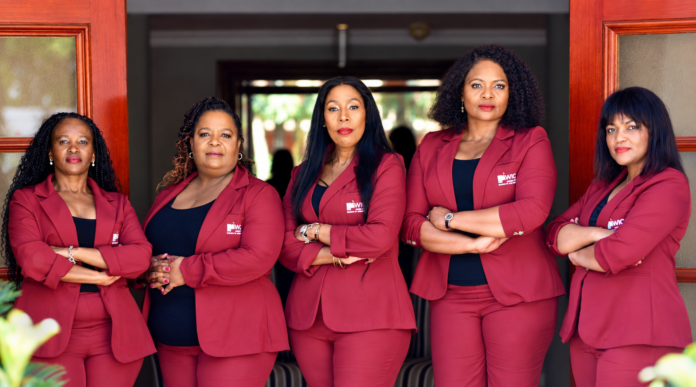
Women contractors are demanding a bigger share of South Africa’s construction billions as controversy over millionaire businessman Lawrence Chamurwa Mudzinganyama’s public-sector contracts has thrown the spotlight on who really benefits from major government infrastructure projects.
The South African Women in Construction and Built Environment (SAWIC & BE) has challenged the South African National Roads Agency SOC Limited (SANRAL), municipalities and other public entities to disclose how major construction contracts are awarded and how much of the money ultimately reaches women-owned businesses.
Its intervention follows a viral video of an altercation involving Mudzinganyama and two women at a Sandton restaurant, which has triggered scrutiny of his Moriel Infrastructure Group and its government work.
Sanral has confirmed that it has two contracts with Moriel involving projects on the N1 and N2 national roads. The roads agency has also announced an investigation, requested by Transport Minister Barbara Creecy, into whether Moriel was lawfully appointed and whether it is fulfilling its contractual obligations.
READ: Lawrence Mudzinganyama ‘put a bullet’ in his business, Moriel under investigation
Show us where the billions go
SAWIC & BE said it was not making any finding about allegations concerning Mudzinganyama or companies associated with him. Instead, it wants the controversy to trigger scrutiny of the broader public construction procurement system and its transformation outcomes.
The organisation wants Sanral and other public entities to disclose contract values, procurement methods, tender requirements, ownership structures, B-BBEE compliance and CIDB gradings.
It also wants them to reveal how many women-owned construction businesses benefited from subcontracting and enterprise-development requirements and what percentage of the total project value actually reached them.
“We cannot continue talking about women empowerment while women remain excluded from the main contracts that create wealth, assets, jobs and sustainable construction businesses,” SAWIC & BE national president Thembeka Mnisi said on behalf of the organisation’s national office bearers.
Mnisi said women contractors had registered businesses, obtained CIDB registrations, complied with Central Supplier Database requirements, secured B-BBEE certificates and participated in government enterprise-development programmes.
Yet many still struggle to obtain meaningful direct contracts.
Women want main contracts
Mnisi said subcontracting could provide valuable opportunities but should not become the limit of women’s participation in the industry.
“Subcontracting can provide valuable opportunities, but it cannot become the permanent ceiling for women-owned construction companies,” she said.
SAWIC & BE wants women contractors to become principal contractors, project leaders and joint-venture partners instead of remaining recipients of small portions of major projects awarded to larger companies.
The latest confrontation over economic access comes just over a year after the organisation exposed a darker battle facing women trying to survive in the construction industry.
In August 2025, Mnisi told Sunday World that women contractors were being targeted by construction mafias, with some allegedly subjected to sexual exploitation in exchange for protection.
“Most women end up being victims of gender-based violence in terms of being sexually assaulted in exchange for protection,” Mnisi said at the time.
READ MORE: ‘Construction mafias demand sex for protection’
From sexual violence to economic exclusion
Those revelations were made during a dialogue with Mpumalanga Premier Mandla Ndlovu, where women spoke about intimidation, extortion and the difficulties they faced operating in the male-dominated industry.
Now SAWIC & BE has widened the battle to the economic architecture of the construction industry itself.
It wants public institutions to reveal the number and value of contracts awarded directly to women-owned businesses and mechanisms used to ensure women and black-owned companies are not simply included to meet compliance requirements while the bulk of the economic benefit goes elsewhere.
Mnisi also called for reviews where credible procurement concerns arise and consequences where procurement, tax, labour, B-BBEE or CIDB requirements have been breached.
“South African women have spent decades being told that the construction industry is opening up,” she said.
But after years of empowerment programmes, workshops and compliance requirements, Mnisi said women were still asking one fundamental question whenever billions were released for infrastructure:
“Where is our share of the actual work?”
- The South African Women in Construction and Built Environment (SAWIC & BE) is demanding transparency on how major public construction contracts are awarded and how much benefits women-owned businesses receive.
- SAWIC & BE's call for scrutiny follows controversy involving Lawrence Chamurwa Mudzinganyama and his company's government contracts, with SANRAL confirming two contracts with Moriel Infrastructure Group and launching an investigation.
- SAWIC & BE wants disclosure on contract values, procurement methods, B-BBEE compliance, CIDB gradings, and how many women-owned businesses benefit from subcontracting and enterprise development.
- SAWIC & BE national president Thembeka Mnisi emphasized that while subcontracting offers opportunities, women contractors should become principal contractors and project leaders instead of being limited to small portions of projects.
- Previously, SAWIC & BE revealed that women in construction face sexual exploitation and violence by construction mafias, highlighting broader challenges of intimidation, extortion, and economic exclusion in the male-dominated industry.


