


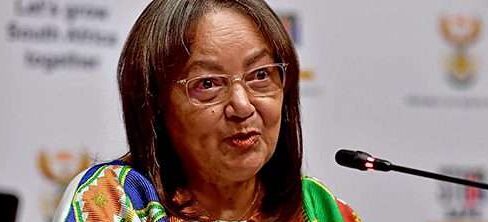
Tourism Minister Patricia de Lille has called on South Africans to explore their own country as the government seeks to grow tourism through digital innovation, while KwaZulu-Natal (KZN) has warned that the province must do more to capture the growing international tourism market.
De Lille officially launched Tourism Month 2026 in Durban on Thursday under the theme ‘Growing South Africa’s Tourism Sector in the Digital Era’. Limpopo was announced as the province of focus for this year’s campaign.
Between January and June 2026, South Africa welcomed close to 5.6 million tourists, a 12% increase compared with the same period last year.
De Lille stressed that tourism must begin at home, pointing to a rise in domestic travel during the first half of the year.
South Africans took 21.2 million overnight trips, up 4% from 20.4 million during the same period last year. Holiday trips increased even more sharply, reaching 5.2 million, a 36% increase year on year.
The minister urged South Africans to take advantage of Sho’t Left Travel Week, which will offer discounts and travel packages aimed at making domestic tourism more affordable.
Read: Gastronomy is becoming a new driver of African tourism
The campaign will also be supported by South African Parks Week, offering free entry to national parks for day visitors, as well as provincial Mahala Weeks. September also coincides with Heritage Month, creating an opportunity for South Africans to combine travel with discovering the country’s history and culture.
Attracting visitors through KZN’s main gateway
But while domestic tourism remains a major focus, KZN’s latest figures show the province faces a challenge in attracting international visitors directly through its main gateway.
The province’s MEC for Economic Development, Tourism and Environmental Affairs, Rev Musa Zondi, said almost 1.5 million international tourists arrived through South Africa’s three major international airports between January and June 2026, representing 5.7% year-on-year growth.
However, King Shaka International Airport recorded only 12,433 international tourist arrivals, compared with 20,218 during the same period last year.
Zondi stressed that the King Shaka figures did not capture all international tourists visiting the province, as some travellers enter South Africa through Johannesburg or Cape Town before making their way to KwaZulu-Natal.
Nevertheless, he said the figures showed that KZN needed to capture a greater share of South Africa’s growing tourism market.
“This means strengthening destination marketing, air access and connectivity, while ensuring that our tourism offering remains competitive,” Zondi said.
He identified African markets as a key area for growth, with Zimbabwe currently the strongest African market for King Shaka, while direct arrivals from Zambia, Malawi, Ghana and Nigeria remain comparatively low.
Read: South Africans wrongly priced out of the bush, says tourism boss
Connected southern African tourism destination
The province is also hoping the SADC Summit, which takes place in Durban from August 16 to 17, will provide an opportunity to showcase KwaZulu-Natal as part of a connected Southern African tourism destination.
Zondi said stronger regional cooperation, improved air and road connectivity and easier movement between countries could help open new tourism markets for the province.
The KZN MEC said connectivity was no longer only about roads and air routes but also about digital visibility. He said a small tourism operator in rural KwaZulu-Natal should be discoverable by travellers in Johannesburg, Harare, Lagos, London or Mumbai.
Accommodation establishments, tour guides, township experiences, community tourism enterprises and emerging attractions must become increasingly visible, searchable and bookable, he said.
Importance of digital platforms
De Lille echoed the importance of digital platforms, saying travellers increasingly discover destinations through social media, online reviews and travel content before making bookings.
She highlighted TikTok’s participation in the Tourism Month programme and said artificial intelligence (AI) was already influencing how travellers search for destinations, develop itineraries, compare experiences and make travel decisions.
However, both officials stressed that technology should not leave smaller tourism businesses behind.
De Lille said digital transformation must benefit SMMEs, while Zondi said technology should reduce barriers to entry rather than create new ones.
For Zondi, the success of Tourism Month cannot simply be measured by campaigns or visitor numbers.
He said the real test would be whether tourism businesses grow, jobs are created, emerging enterprises enter the tourism economy and communities benefit from the tourism assets around them.
‘Technology the means, not the destination’
“Technology is the means, not the destination,” Zondi said, arguing that the digital era should ultimately be used to grow markets, open opportunities, support businesses and create jobs.
De Lille similarly positioned tourism as an economic sector rather than simply a leisure activity, saying it could create jobs, support entrepreneurs, preserve heritage and strengthen communities.
On Limpopo as the province of focus, de Lille challenged South Africans to venture beyond familiar destinations.
“Take that Sho’t Left. Go to Limpopo,” she said, urging travellers to share their experiences online and inspire others to explore the country.
With global international travel expected to surpass two billion journeys annually by 2030, de Lille said South Africa could not assume that its share of the market would automatically grow.
- Tourism Minister Patricia de Lille launched Tourism Month 2026 in Durban, focusing on digital innovation to grow South African tourism, with Limpopo as the campaign's province of focus.
- South Africa welcomed nearly 5.6 million tourists in the first half of 2026, a 12% increase year-on-year, with domestic overnight trips rising 4% to 21.2 million and holiday trips up 36% to 5.2 million.
- KwaZulu-Natal's King Shaka International Airport saw a decline in international arrivals to 12,433 in the first half of 2026 compared to 20,218 last year, despite overall growth in international tourists at major airports.
- Both De Lille and KZN MEC Musa Zondi emphasized the importance of digital platforms for tourism promotion and ensuring small tourism businesses benefit from digital transformation.
- The KZN MEC highlighted the SADC Summit in Durban as an opportunity to showcase the province and stressed that tourism growth should lead to business development, job creation, and community benefits.


