


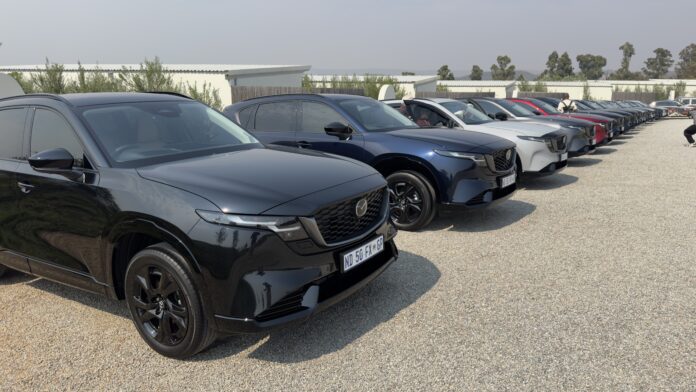
Japanese automotive brand Mazda is strengthening its presence in South Africa with the introduction of the third-generation CX-5, bringing a larger, more technologically advanced offering into one of the country’s most hotly contested SUV segments.
I attended the local launch in Gauteng last week, where myself and other motoring media drove the new CX-5 through the Cradle of Humankind and towards the Hartbeespoort area.
The new CX-5 arrives at a time when established Japanese, Korean and European manufacturers face increasingly strong competition from Chinese brands. Some of its key rivals include the Toyota RAV4, Volkswagen Tiguan, Hyundai Tucson and Kia Sportage, alongside the Haval H6 and Chery Tiggo 8 Pro.
READ: Jetour refreshes best-selling SUV as competition intensifies
For now, Mazda is keeping the powertrain offering relatively straightforward. Under the bonnet is a naturally aspirated 2.5-litre petrol engine producing 132kW at 6,000rpm and 240Nm at 4,000rpm.
During our approximately 80km drive, which was shared with a co-driver, the CX-5 delivered a generally comfortable and composed experience. Ride quality was one of its stronger attributes, although some minor floatiness occasionally crept in before settling again.
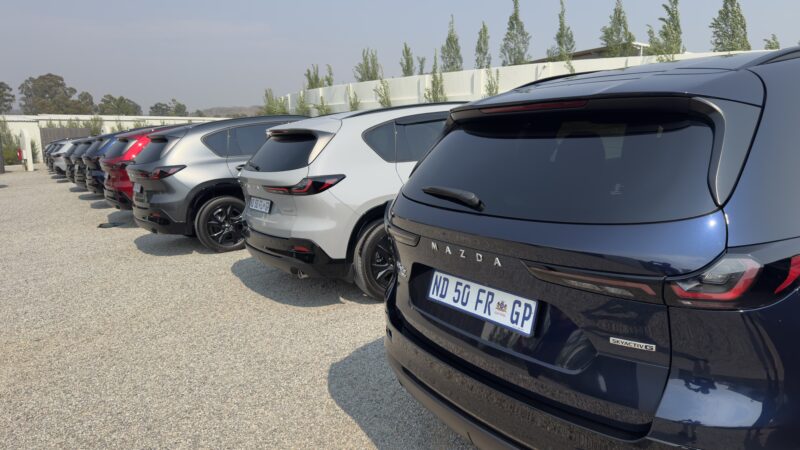
The engine proved adequate for everyday driving, but the transmission tended to hold onto revs longer than I would have preferred when stronger acceleration was called for. Our indicated fuel consumption hovered around 9L/100km, although a relatively short launch route is hardly sufficient to establish a representative real-world figure.
Mazda says it has further refined the CX-5’s ride and handling through model-based damper development, with the aim of balancing stability with greater comfort across varying road surfaces.
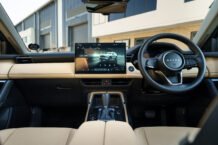
The cabin represents a noticeable step forward. My Homura test car featured tan leather upholstery and a larger 15.5-inch central display, helping give the interior a more contemporary appearance. Wireless Apple CarPlay and Android Auto are available, alongside a digital instrument cluster and driver personalisation functions.
Rear legroom also impressed during my brief encounter with the car, while practicality has received attention. The rear seats use a 40:20:40 split-folding arrangement and luggage capacity expands to 964 litres with the seats folded. Luggage-area seat-release levers and a hands-free tailgate should also make loading easier.
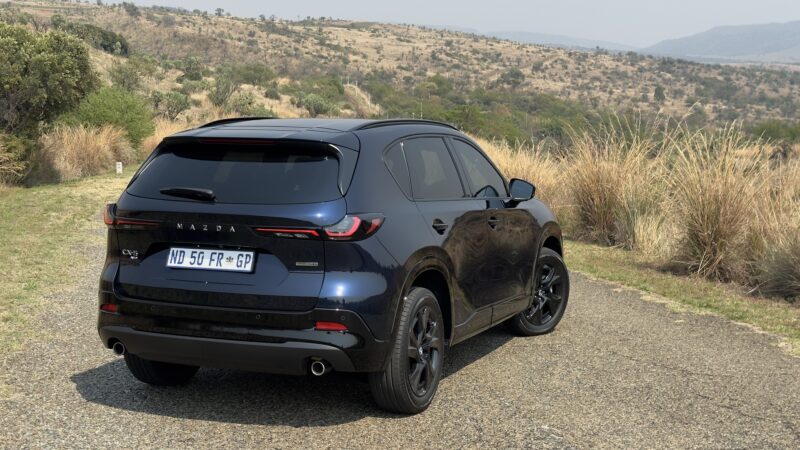
My Homura was finished in the new Navy Blue Mica exterior colour and rode on 19-inch black metallic alloy wheels, giving the CX-5 a smart but relatively understated appearance.
Safety technology includes a 360-degree camera, blind-spot monitoring, lane-change assistance, radar cruise control and Mazda’s broader i-Activsense suite. The CX-5 has also achieved a five-star Euro NCAP rating under the organisation’s 2025 testing protocol, scoring 90% for adult occupant protection, 89% for child occupants, 93% for vulnerable road users and 83% for safety assistance systems.
South African buyers can choose between four derivatives. The range starts with the Active at R578,250, followed by the Dynamic at R636,000 and Individual at R717,000. The flagship Homura tested here costs R749,100.
Those prices place the CX-5 squarely into a segment where buyers have no shortage of alternatives.
READ: Can the sixth-generation Toyota RAV4 keep its challengers at bay?
My limited time behind the wheel was enough to suggest that Mazda has made meaningful improvements to the CX-5’s comfort, interior technology and practicality. But with only around 80km shared between two drivers, it would be premature to draw definitive conclusions about fuel economy, long-distance comfort and everyday usability.
A week-long test will provide a better opportunity to determine whether the new CX-5 has enough substance to distinguish itself in South Africa’s increasingly crowded family SUV market.
- Japanese automotive brand Mazda is strengthening its presence in South Africa with the introduction of the third-generation CX-5, bringing a larger, more technologically advanced offering into one of the country’s most hotly contested SUV segments.
- I attended the local launch in Gauteng last week, where myself and other motoring media drove the new CX-5 through the Cradle of Humankind and towards the Hartbeespoort area.
- The new CX-5 arrives at a time when established Japanese, Korean and European manufacturers face increasingly strong competition from Chinese brands.
- Some of its key rivals include the Toyota RAV4, Volkswagen Tiguan, Hyundai Tucson and Kia Sportage, alongside the Haval H6 and Chery Tiggo 8 Pro.
- READ: Jetour refreshes best-selling SUV as competition intensifies For now, Mazda is keeping the powertrain offering relatively straightforward.


