


South Africa’s new vehicle market started the second half of 2026 on a positive note, with domestic sales rising by almost 12% in July as lower fuel prices and growing demand for electrified vehicles boosted consumer confidence despite ongoing economic challenges.
According to Naamsa, South Africa’s automotive business council, aggregate domestic new vehicle sales increased to 57,708 units in July, up by 6,150 vehicles, or 11.9%, from the 51,558 units sold in the corresponding month last year.
Passenger vehicles continued to drive the market, with 40,912 units sold during the month, the strongest monthly passenger car performance since September 2014. This represents a 12.5% year-on-year increase from the 36,354 units sold in July 2025.
Best-selling vehicle brand in July
Toyota remained South Africa’s best-selling vehicle brand in July, recording 14,142 sales. It was followed by Suzuki Auto (5,994), Volkswagen Group South Africa (5,799), Hyundai Automotive South Africa (3,058), Ford Motor Company (2,927), Chery Auto South Africa (2,709), GWM South Africa (2,504), Isuzu Motors South Africa (2,435), Jetour South Africa (2,034) and Kia South Africa (1,920), rounding out the country’s top 10 best-selling brands for the month.
Light commercial vehicles, including bakkies and minibuses, also posted solid growth, increasing by 10.6% to 13,710 units. Medium commercial vehicles recorded the strongest percentage gain, rising 19.4% to 843 units – their best monthly performance since March 2023 – while heavy trucks and buses climbed 7% to 2,243 units.
Among commercial vehicle manufacturers, FAW Trucks led the market with 649 units sold, followed by Toyota (392), Isuzu Motors South Africa (271), Scania (231), Daimler Truck Southern Africa (224), Volvo Group Southern Africa (210), UD Trucks Southern Africa (190), MAN (157), Powerstar (109) and Foton South Africa (96).
The encouraging commercial vehicle performance suggests businesses are beginning to invest in fleet renewal and freight capacity, although it remains too early to describe it as a broad-based recovery, according to National Automotive Dealers Association (NADA) Commercial Vehicle Executive Martin van den Berg.
Naamsa attributed the improved market performance partly to significant fuel price reductions introduced in July, which provided relief to motorists and businesses by easing operating costs despite the full reinstatement of the General Fuel Levy.
Dealer sales remained the dominant sales channel, accounting for 84.8% of all new vehicles sold, while the rental industry contributed 11.2%.
‘Consumer confidence improving’
The strong dealer performance reflects improving consumer confidence, with dealerships reporting increased showroom activity as buyers respond to easing fuel prices, stable interest rates and attractive finance offers.
“The July results clearly indicate that consumer confidence is improving. With 84.8% of all new vehicles sold during July being retailed through dealerships, these figures are an outstanding endorsement of the resilience of South African consumers and the strength of the retail motor industry,” said NADA chairperson Brandon Cohen.
Exports, however, continued to face pressure from weaker global demand, declining 11.6% to 32,801 units compared with 37,114 units exported in July last year.
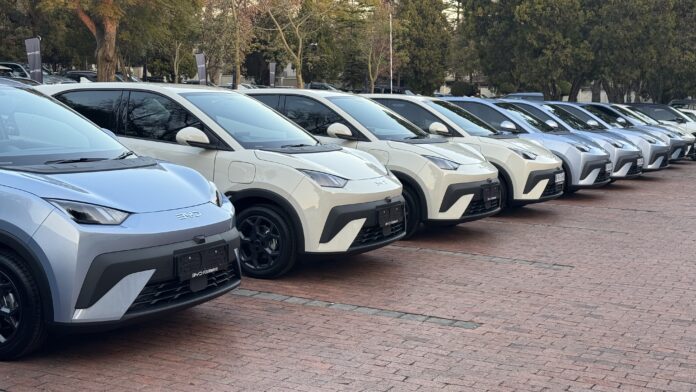
The industry also reported continued momentum in South Africa’s new energy vehicle (NEV) market. During June, 3,045 electrified vehicles were sold, more than double the 1,491 units recorded in the same month last year, giving NEVs a 6% share of the domestic new light vehicle market.
Popularity of hybrid electric vehicles
Hybrid electric vehicles remained the most popular electrified option, accounting for 1,488 sales, followed by plug-in hybrid electric vehicles with 990 units and battery electric vehicles with 419 units.
NADA said dealerships are also experiencing stronger demand in the pre-owned vehicle market, with higher customer enquiries and finance applications, while interest in both new and pre-owned Chinese vehicle brands continues to grow as consumers seek greater value for money.
Commenting on the latest market performance, naamsa Interim CEO Shinny Gobiyeza said the results reflect an automotive industry that continues to adapt successfully to changing market conditions while responding to evolving consumer preferences.
“The continued growth in domestic vehicle sales, coupled with record levels of New Energy Vehicle adoption, demonstrates the resilience of South Africa’s automotive industry. While export markets remain under pressure from global economic conditions, the domestic market continues to provide an important foundation for industry growth.”
Naamsa said affordability will remain a key factor shaping vehicle purchasing decisions as consumers increasingly prioritise fuel-efficient vehicles, lower running costs and flexible financing options in an environment of elevated inflation and unchanged interest rates.
Read More: Springbok star Faf de Klerk joins Toyota as brand ambassador
- South Africa's new vehicle sales increased by 11.9% in July 2026, reaching 57,708 units, driven by lower fuel prices and increased demand for electrified vehicles.
- Passenger vehicles led growth with a 12.5% rise, marking the strongest monthly performance since 2014, while light and medium commercial vehicles also showed significant gains.
- Toyota remained the top-selling brand, followed by Suzuki, Volkswagen, and Hyundai, with commercial vehicle sales indicating early signs of fleet renewal investment.
- New energy vehicles (NEVs) sales more than doubled year-on-year, accounting for 6% of the light vehicle market, with hybrids being the most popular type.
- Despite strong domestic sales, vehicle exports declined by 11.6% due to weaker global demand, but improved consumer confidence and attractive financing boosted dealership sales.


