


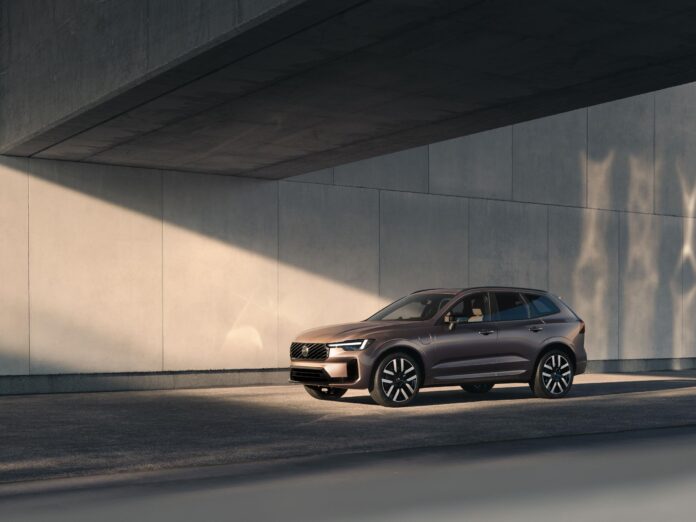
Volvo Cars has unveiled new long-range plug-in hybrid (PHEV) versions of its XC60 and XC90 SUVs, capable of travelling up to 200km and 160km respectively on electric power, with both models expected to reach South Africa during the first half of 2027.
The substantially longer electric ranges are more than two-and-a-half times those offered by the existing PHEV derivatives, according to the Swedish manufacturer.
READ: Volvo’s electric truck range wins International Truck of the Year 2026
Volvo has achieved the increase through a larger floor-integrated battery and more powerful electric motor. A petrol engine remains available for longer journeys, addressing one of the practical limitations of fully electric vehicles where charging infrastructure is limited.
The XC60 and seven-seat XC90 will continue to be offered with mild-hybrid powertrains. Volvo positions its longer-range PHEVs as a bridge towards full electrification, allowing shorter everyday journeys such as commuting and school runs to potentially be completed without using the petrol engine, provided owners regularly recharge the battery.
The XC60 also receives a substantial design and technology update. Changes include a redesigned grille, bumper, bonnet and front wings, new wheels and revised Thor’s Hammer Matrix LED headlights. Updates at the rear include redesigned LED lights, tailgate and bumper.
Inside, Volvo has introduced a redesigned dashboard and door panels, while an 11.2-inch touchscreen runs the company’s latest infotainment interface. Google Gemini artificial intelligence integration enables occupants to use conversational voice commands for functions including journey planning and messaging.
Safety and driver-assistance technology has also been upgraded, with cameras, radars and other sensors supporting functions including automatic emergency braking and steering, lane-change assistance and a 360-degree camera with 3D view.
The larger XC90 retains its seven-seat configuration and has also gained Google Gemini following more recent design and technology updates.
When they arrive locally, the two Volvos will compete in increasingly electrified premium SUV segments. Key XC60 rivals include the BMW X3, Mercedes-Benz GLC, Audi Q5 and Lexus NX, while the XC90 competes with larger luxury SUVs such as the BMW X5, Mercedes-Benz GLE, Audi Q7 and Lexus RX.
READ: Premier carmakers BMW and Mercedes-Benz look to the future
Volvo has not yet announced South African specifications or pricing. Orders have opened in selected international markets, with production scheduled to begin later this year as Volvo seeks to maintain demand for combustion-assisted models alongside its expanding fully electric vehicle range.
- Volvo has launched new long-range plug-in hybrid versions of the XC60 and XC90 SUVs with electric ranges of up to 200km and 160km respectively.
- These new PHEVs feature larger floor-integrated batteries and more powerful electric motors, offering more than 2.5 times the electric range of previous models.
- The XC60 includes significant design updates such as a redesigned grille, bumper, bonnet, front wings, new wheels, and updated headlights, along with a refreshed interior featuring an 11.2-inch touchscreen with Google Gemini AI integration.
- Both models maintain petrol engines to support longer journeys and continue to be offered with mild-hybrid powertrains as part of Volvo's strategy towards full electrification.
- The updated XC60 and XC90 are expected to arrive in South Africa in the first half of 2027, with production starting later this year and orders currently open in selected international markets.


