


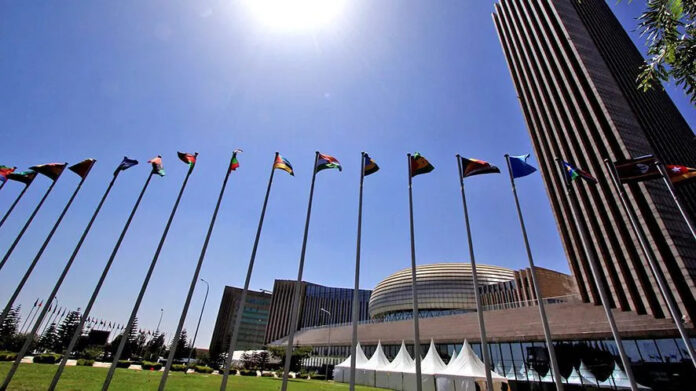
Every so often, a statement emerges from the African Union (AU) that makes one pause and wonder whether the institution has finally found its voice.
The recent call by the chairperson of the AU Commission for governments to move beyond anti-corruption laws and focus instead on implementation was one such moment. It sounded refreshingly candid. More importantly, it acknowledged what ordinary Africans have known for decades: the continent’s greatest governance challenge has never been a shortage of treaties, protocols, or declarations. It has been a shortage of political will.
For an institution that has too often been accused of mistaking rhetoric for results, the remarks were a welcome departure.
A perception problem
The AU has spent years battling a perception problem. Across the continent, many citizens no longer see it as the decisive guardian of Africa’s interests but as a well-intentioned institution that too often issues carefully worded communiqués while crises deepen. Summit after summit, leaders reaffirm their commitment to democracy, constitutional rule, transparency, accountability, and good governance. Yet corruption flourishes, conflicts multiply, and institutions weaken.
For many Africans, those commitments have become little more than diplomatic ritual.
It is not difficult to understand why confidence has waned.
The African Standby Force was conceived as one of the continent’s boldest security initiatives – a mechanism capable of responding rapidly to conflict before violence spiralled out of control. Yet Sudan continues to burn. Eastern Democratic Republic of the Congo remains trapped in recurring violence. The Sahel has witnessed repeated military coups and the spread of extremist insurgencies. Libya remains politically fractured, while instability persists in parts of the Horn of Africa.
Lack of implementation
The problem is not that the African Union lacks frameworks. It has plenty. The problem is that implementation almost always gives way to political caution.
The same pattern has defined the fight against corruption.
Africa has conventions. It has peer-review mechanisms. It has governance charters. It has anti-corruption declarations. National governments have established commissions, enacted legislation, and launched integrity campaigns. Yet Transparency International’s corruption rankings continue to expose deep structural weaknesses across much of the continent.
Citizens have grown weary of hearing leaders declare “zero tolerance for corruption” while politically connected individuals continue to evade accountability.
This is why the chairperson’s remarks matter.
For perhaps the first time in a long while, the leadership of the African Union has openly recognised that passing laws is not enough. Institutions matter. Enforcement matters. Political courage matters.
Speeches are not reform
But speeches, however refreshing, are not reform.
The uncomfortable reality is that the chairperson operates within a structural constraint that has long limited the African Union’s effectiveness. He serves with the confidence of the Assembly of Heads of State and Government – the very leaders whose governments would be expected to embrace stronger scrutiny and accountability.
That raises an unavoidable question.
Can the head of the AU genuinely challenge those who ultimately determine his political future?
This is not a criticism of the current chairperson personally. It is a question about the design of the institution itself.
The AU was created as an organisation of sovereign states. Consensus has always been one of its guiding principles. Yet consensus often becomes paralysis when difficult decisions require confronting member states over governance failures, corruption, or democratic backsliding.
Perhaps this is the conversation Africa has postponed for too long.
Does the AU need institutional renewal?
Should continental institutions have greater operational independence in areas relating to governance, corruption, constitutional order, and conflict prevention? Should the African Peer Review Mechanism be strengthened with clearer follow-up obligations? Should governance scorecards be published annually, allowing African citizens—not just governments—to assess whether commitments are being honoured?
These are no longer academic questions.
Africa is changing.
More than 60% of the continent’s population is under the age of 25. This generation is digitally connected, politically aware, and increasingly impatient with institutions that promise transformation but deliver incremental change. They are not asking for more declarations. They are demanding results.
A conference organiser for presidents
The AU cannot afford to be seen merely as a conference organiser for presidents.
It must become a trusted institution capable of defending the interests of African citizens as vigorously as it protects the sovereignty of African states. Those two objectives need not be in conflict. Indeed, lasting sovereignty depends on accountable governance.
The chairperson’s intervention has created an opening.
Whether it becomes a turning point will depend on what follows.
Will the AU begin publishing measurable implementation reports? Will it call out member states that repeatedly ignore their governance commitments? Will anti-corruption become a continental priority backed by action rather than annual commemorations?
Or will this speech join countless others – welcomed for a few days before quietly disappearing into the archives of unrealised intentions?
Africa’s citizens are watching.
They have heard the promises before.
This time, they are waiting for proof that the continent’s premier institution is prepared not merely to speak differently, but to govern differently.
If that happens, history may well remember this moment as the beginning of the AU’s renewal.
If it does not, the accusation that the AU is a giant with little bite will only grow louder.
- The African Union (AU) chairperson recently emphasized that African governments should move beyond anti-corruption laws and focus on actual implementation, highlighting the continent’s biggest governance challenge: lack of political will.
- The AU faces a credibility crisis as many Africans view it as ineffective, issuing statements without resolving conflicts or curbing corruption, despite numerous frameworks and commitments.
- The AU’s institutional structure, based on consensus among sovereign states, limits its ability to hold governments accountable for governance failures, corruption, and democratic backsliding.
- A key question raised is whether the AU needs institutional reform to grant greater independence in governance oversight and stronger enforcement mechanisms like enhanced peer reviews and public scorecards.
- Africa’s youthful and connected population demands tangible results over declarations, pushing the AU to transform from a passive conference organizer to an active institution capable of enforcing accountability and defending citizens’ interests.


