


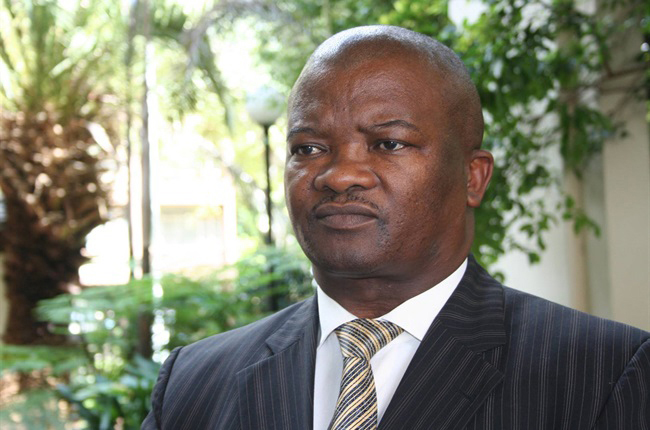
Deputy Defence Minister Bantu Holomisa has proposed using South Africa’s vast military land holdings to attract private investment into soldiers’ housing, hospitals and military infrastructure without surrendering state ownership of the strategic properties.
Holomisa told the Defence Industry Lekgotla on Tuesday that the South African National Defence Force (SANDF) controlled approximately 500,000 hectares of state-owned land, which could be used more intelligently to arrest the decline of military infrastructure.
Instead of selling the land, private investors could provide capital, construction expertise and technology to develop military housing, health facilities, logistics centres and selected bases.
Using existing assets more intelligently
“The question is not whether we should commercialise the defence estate,” Holomisa said.
“The question is whether we can use our existing assets more intelligently to support the defence mission.”
The proposal places Holomisa, the United Democratic Movement (UDM) leader and retired military general, firmly within South Africa’s land debate, but through a practical rather than populist prism.
Although the UDM has not matched the political volume of parties such as the Economic Freedom Fighters (EFF) and the African People’s Convention on land, it has consistently argued that state land must be converted into housing, productive economic activity and secure ownership.
Its land policies have previously called for vacant and idle government land to be released, while suitable state land should be made available to emerging farmers and communities.
The party argues that South Africa’s land crisis is prolonged by administrative failure, red tape and maladministration rather than a shortage of ideological declarations.
Its approach has largely treated land not only as a symbol of historical dispossession, but as an instrument for housing, collateral, infrastructure and economic participation.
Land as foundation for rebuilding military
Holomisa’s latest proposal carries that thinking into the defence portfolio, where land could become the foundation for rebuilding a military struggling with deteriorating bases, inadequate accommodation and shrinking resources.
He stressed that the plan did not amount to selling military land or handing strategic state assets to the highest bidder.
“When I speak about public-private partnerships, I am not speaking about selling off the assets of the Department of Defence,” he said.
“I am not speaking about selling military land to the highest bidder. I am not speaking about compromising national security.”
Under the proposed model, the state could provide access to appropriate land while property developers, financial institutions or institutional investors finance construction.
The state would retain ownership and control while making structured payments over an agreed period, provided the projects offered value for money and satisfied security requirements.
Urgent intervention
Holomisa said military housing required urgent intervention because some SANDF members lived far from their formations or in informal settlements due to a shortage of suitable accommodation.
“A soldier who serves the Republic should not be expected to live indefinitely in conditions that undermine his or her dignity,” he said.
“This is not only a housing issue. It is a military readiness issue.”
He said poor accommodation affected morale, discipline, operational availability and the relationship between soldiers and the institution they served.
The proposals could extend beyond residential developments to military hospitals, training facilities, logistics and maintenance centres, and the modernisation of selected bases.
Holomisa also floated the creation of a modern military city or integrated defence precinct in Pretoria.
He said defence institutions were currently scattered across several locations while the state continued spending heavily on rented office space.
An integrated precinct could consolidate suitable administrative, training, housing and support functions on defence-owned land, although sensitive military operations would remain separated where necessary.
Holomisa said artificial intelligence-enabled design tools could assist in planning infrastructure that was sustainable, secure and fit for a modern defence force.
Underfunding challenges
The proposal comes as the defence department faces mounting pressure from years of underfunding.
The department received approximately R57.6-billion for the 2026/2027 financial year, while its responsibilities include border protection, foreign deployments, infrastructure, military health services and the maintenance of ageing equipment.
Holomisa warned that the department could no longer assume National Treasury would fund every backlog and modernisation project through additional allocations.
However, he said limited funding could not be accepted as permission for military bases, equipment and soldiers’ living conditions to deteriorate indefinitely.
“At the same time, we cannot accept the gradual deterioration of strategic defence capabilities as inevitable,” he said.
Holomisa proposed that defence officials prepare a detailed list of infrastructure and capability requirements suitable for partnerships.
The projects would have to pass tests involving affordability, national security, procurement law, ownership, risk allocation and local industrial participation.
He also called for a practical public-private partnership action plan detailing actual projects, potential investors, funding structures, risks and implementation deadlines.
“The Department of Defence is not going anywhere. The SANDF is not going anywhere,” Holomisa said.
“As long as South Africa exists as a sovereign state, it will require a defence capability.”
ALSO READ: Cabinet approves SANDF rescue plan after years of military embarrassment
- Deputy Defence Minister Bantu Holomisa proposed leveraging South Africa’s 500,000 hectares of military land to attract private investment for developing soldiers’ housing, hospitals, and military infrastructure while retaining state ownership.
- The initiative aims to address the decline in military infrastructure by using public-private partnerships where private entities provide capital and expertise without selling strategic defence assets or compromising national security.
- Holomisa emphasized the urgent need to improve military housing conditions to boost soldiers’ morale, discipline, and operational readiness, highlighting that many currently live far from bases or in informal settlements.
- The plan also includes creating an integrated defence precinct in Pretoria to consolidate defense institutions, reduce costs on rented office space, and modernize training and logistics facilities using AI-enabled design tools.
- Facing chronic underfunding, Holomisa called for a detailed infrastructure partnership plan to enhance defence capabilities sustainably, stressing that the SANDF remains essential to South Africa’s sovereignty despite budget constraints.


