


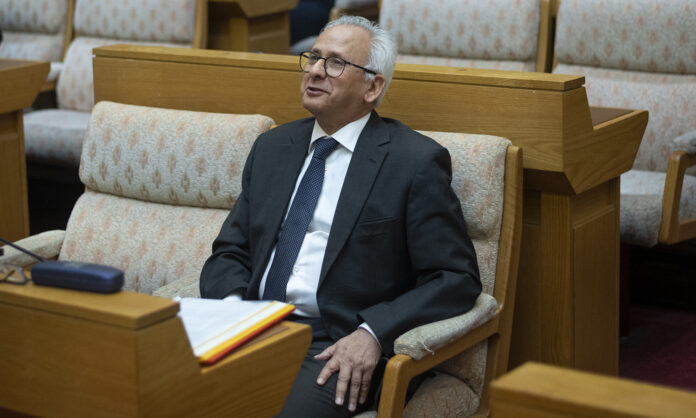
Acting Police Minister Firoz Cachalia has defended the cost of Tuesday’s nationwide security operation, saying the deployment prevented a repeat of the deadly July 2021 unrest, while warning that police will now pursue those accused of inciting violence.
After demonstrations against illegal immigration were held across South Africa on June 30, Cachalia dismissed criticism over the cost of the heightened police deployment, stating that maintaining public order is a costly exercise.
“Any police operation like Shanela, dealing with illegal migration or any increased mobilisation of police officers and resources across the country, costs money. We have to pay overtime; we have to accommodate police officers across the country. All of that costs money,” he said.
Cachalia stressed that the R600-million figure reported widely in the media did not represent a once-off expenditure on a single day, but rather the cost of deploying officers and resources nationally during periods of heightened security.
“There is no additional budget for these costs. These are not once-off costs… Our people have to understand that when there are periods of instability and threats of shutdowns, the right thing for the police is to take preventative action and make the resources available for maintaining peace and security.”
‘Chaos averted’
He argued that the operation had achieved its objective by preventing widespread violence despite concerns that Monday’s protests could descend into chaos.
“We’ve seen the value of that today. There was lots of anxiety in our society that we’re going to have a repeat of July 2021. That hasn’t happened.”
Cachalia described the operation as a success, saying demonstrations across the country were largely peaceful.
“South Africa has had a good day today, and I’m hoping that we can maintain the peace in the weeks and months ahead.”
The minister also revealed that police are now turning their attention to those suspected of breaking the law before and during the protests.
“You can expect to see, after June 30, action being taken by the police to ensure that those who are guilty of incitement and other forms of criminality will be arrested and prosecuted.”
He said accountability would be central to preventing future unrest.
‘Consequence management important’
“That form of consequence management is particularly important.”
On the issue of traditional weapons carried during demonstrations, Cachalia reiterated that the Constitution protects peaceful and unarmed assembly, while acknowledging that some communities regard traditional weapons as cultural symbols.
“The legislation governing protest action makes it very clear that illegal weapons during a demonstration are unlawful… There are those in our community who consider certain kinds of instruments to be part of their identity. The law is very clear, but we have to have a conversation.”
While welcoming the largely peaceful demonstrations, Cachalia suggested the campaign may have evolved beyond concerns over illegal immigration after the organisers announced plans to continue marching every Thursday until the 2026 local government elections.
“That suggests to me that there is a political dimension… It may be part of a project to mobilise politically as a lead-up to the local government election.”
He maintained that the government recognised public frustration over illegal immigration but warned against allowing it to divide the country.
“It’s a genuine grievance, but there also appears to be a political agenda.”
Cachalia said police would remain on heightened alert as South Africa approaches the local government elections, particularly in light of recent incidents of political violence.
“The police are going to maintain peace and order in this period.”
- Acting Police Minister Firoz Cachalia defended the R600-million security operation cost, emphasizing it covered extended police deployment and was necessary to prevent violence similar to the July 2021 unrest.
- The nationwide operation largely ensured peaceful demonstrations against illegal immigration on June 30, avoiding widespread chaos and violence.
- Police will now focus on prosecuting individuals accused of incitement and lawbreaking related to the protests as part of accountability measures.
- Cachalia highlighted the need to balance cultural respect for traditional weapons with legal prohibitions on carrying illegal arms during demonstrations.
- The protests are viewed as potentially having a political motive ahead of the 2026 local elections, with police preparing to maintain order amid rising political tensions.


