


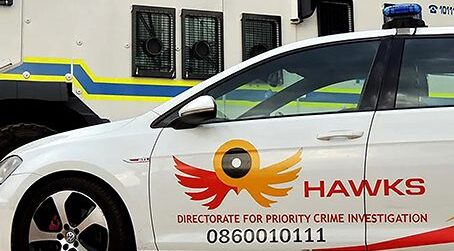
South African investigators probing the assassination of anti-apartheid activist and journalist Joe Nzingo Gqabi have told the Truth and Reconciliation Commission (TRC) Cases Inquiry that years of attempts to secure cooperation from Zimbabwean authorities have yielded virtually nothing.
More than four decades later, one of apartheid’s most notorious cross-border killings remains unresolved.
Hawks Captain Freddy Sewele, the lead investigator attached to the Hawks’ Crimes Against the State unit, said every diplomatic and legal avenue pursued since 2021 had failed to unlock crucial evidence from Zimbabwe.
Assassination
The inquiry heard that Gqabi, the African National Congress (ANC)’s chief representative in Zimbabwe, was assassinated outside his Harare home on the evening of July 31, 1981.
Having survived a failed assassination attempt months earlier when a bomb planted beneath his vehicle was discovered before it exploded, Gqabi remained a marked man, but his luck eventually ran out.
As he reversed out of the driveway of his Ashdown Park home in Harare, apartheid operatives opened fire, riddling him with 19 bullets in an execution that robbed the liberation movement of one of its most respected political organisers, investigative journalists and Robben Island prisoners.
The killing reverberated across southern Africa.
ANC president Oliver Tambo, speaking at Gqabi’s state funeral in Zimbabwe, described the assassination as a painful blow to the liberation struggle.
Requests for mutual legal assistance unfruitful
Testifying before the commission on Wednesday, Siwele said he inherited the investigation in 2021 after taking over from another officer assigned to unresolved TRC-related cases.
He interviewed Gqabi’s widow, Aurelia Gqabi, and witness Shadrack Ganda in May that year. Aurelia later died in 2025 before seeing the investigation concluded.
Sewele said requests for mutual legal assistance (MLA) were sent to Zimbabwe through the National Director of Public Prosecutions office, but no meaningful response followed.
By March 2022, he escalated the matter to the Department of Justice and Constitutional Development after repeated attempts failed.
He said efforts to secure assistance through Interpol also came to nothing.
“This too did not yield positive results,” Sewele testified.
Another attempt through the Department of International Relations and Cooperation likewise failed to unlock cooperation.
“The request for the MLA from the Zimbabwean authorities remains unresolved to date,” he said.
Tension between Sewele and Ganda
The inquiry also heard of tensions between Sewele and Ganda, who the captain said wanted to be involved in every aspect of the investigation because he possessed information relating to events preceding Gqabi’s assassination.
“It’s for the first time in my service to investigate a case where a witness will block me from communicating directly with the family members,” Sewele said.
“I have never experienced such. It is for the first time.”
He accused Ganda of intimidating him and frustrating the investigation.
“I think there is something that he knows that he doesn’t want to tell me. I felt that he just wanted to manage the investigation himself and that I must take instructions from him,” Sewele told the commission.
Despite the setbacks, Sewele insisted there was no political interference in his work.
“I have never been threatened or instructed by anyone to delay the investigation into the death of Mr Gqabi or any other TRC case,” he said.
His evidence forms part of the commission’s broader inquiry into whether political interference over successive democratic administrations delayed or frustrated investigations into apartheid-era crimes recommended for prosecution by the Truth and Reconciliation Commission.
ALSO READ: Fikile Mbalula tells commission he never meddled in TRC cases
- Joe Nzingo Gqabi, an anti-apartheid activist and ANC representative in Zimbabwe, was assassinated in Harare in 1981, with apartheid operatives killing him in a cross-border attack still unresolved after 40 years.
- South African Hawks investigators, led by Captain Freddy Sewele since 2021, have struggled to obtain cooperation and evidence from Zimbabwean authorities despite numerous diplomatic and legal requests.
- Requests for mutual legal assistance through South African legal and diplomatic channels, as well as Interpol, have all failed to yield results in advancing the investigation.
- There have been tensions between investigator Sewele and witness Shadrack Ganda, who has attempted to control aspects of the investigation and restricted communication with Gqabi’s family.
- Sewele maintains that there has been no political interference in the investigation, which is part of a broader Truth and Reconciliation Commission inquiry into possible delays or frustrations in prosecuting apartheid-era crimes.


