


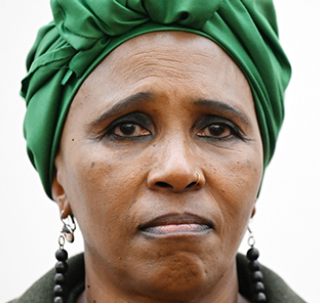
The MK Party used the Presidency Budget Vote debate on Tuesday to launch a scathing attack on President Cyril Ramaphosa’s economic policies, accusing his administration of pursuing a neoliberal agenda that has failed ordinary South Africans.
MK Party MP Khanyisile Litchfield-Tshabalala, the first opposition speaker to respond to the Presidency’s budget vote in the National Assembly, urged Ramaphosa to embrace what she described as a more Afrocentric economic approach.
“Get in touch with your Afrocentric side. I know you lost it a long time ago, but it is not a lost cause, you can still get it back,” Litchfield-Tshabalala told Parliament.
‘Lofty appeals’ condemned
She said the party could not support a budget built around what she characterised as “lofty appeals” to economic growth while relying on policies that prioritise foreign direct investment.
“You cannot grow the economy under a liberal economy. It requires foreign direct investment which will shut down local industries,” she argued.
Her criticism was directed at Ramaphosa’s assertion earlier in the debate that South Africa’s economy was recovering and that investment remained central to the government’s growth strategy.
Ramaphosa highlights investment pledges
In his budget vote speech, Ramaphosa pointed to improved public finances, stabilising debt levels and recent upgrades to South Africa’s credit outlook by ratings agencies. He also highlighted investment pledges worth more than R890-billion secured at the sixth South Africa Investment Conference earlier this year.
The president said the government’s growth strategy was centred on attracting investment, protecting jobs in distressed industries, expanding export markets and rolling out what he described as the largest infrastructure programme in South Africa’s history.
Over the next three years, government plans to invest R1 trillion in roads, dams, schools, hospitals, energy projects and logistics infrastructure as part of efforts to stimulate economic growth and create jobs.
Economic liberalisation ‘not working’
Using the textile sector as an example, Litchfield-Tshabalala argued that economic liberalisation had instead contributed to the decline of local manufacturing.
“Let’s look at the textile industry. That is what raised us in the [19]80s. Our mothers worked in the factories from Braamfontein to Doornfontein, but all these places are now ghost towns,” she said.
She further criticised the government’s reliance on macroeconomic indicators such as GDP growth and inflation, arguing that they do not reflect the realities faced by poor and working-class South Africans.
“We are told the GDP is growing and inflation is steady. The dilemma of a macroeconomy is that it works for multinational corporations, because despite the GDP and inflation figures, the cost of living is increasing,” she said.
‘Ease tax burden for individuals’
Litchfield-Tshabalala said government should focus instead on reducing the tax burden on individuals.
“Talk to us about lowering the taxation of individuals, then we shall stand here and say the African in ANC is still alive,” she said.
The MK Party MP also questioned Ramaphosa’s commitment to tackling organised crime and corruption, arguing that criminal networks had become embedded within state institutions.
Phala Phala jabs
“You tell us that you are going to dismantle criminal syndicates. How? When the criminals are in your house. They are in your living room, they are under the sofa, they are in the constitutional and legal system, they are in the municipalities, in the police and in the South African National Defence Force where cash goes missing,” she said.
Her remarks appeared to reference the controversy surrounding the undeclared foreign currency discovered at Ramaphosa’s Phala Phala game farm, which became the subject of parliamentary and legal scrutiny.
The comments prompted a point of order from another member, who objected to what was interpreted as a suggestion that criminal syndicates were operating from the president’s home.
However, National Assembly Speaker Thoko Didiza dismissed the objection and allowed Litchfield-Tshabalala to continue with her speech.
Ramaphosa is expected to respond to the debate on Wednesday.
- MK Party MP Khanyisile Litchfield-Tshabalala criticized President Ramaphosa's economic policies during the Presidency Budget Vote debate, accusing his administration of pushing a neoliberal agenda harming ordinary South Africans.
- She urged Ramaphosa to adopt a more Afrocentric economic approach and condemned reliance on foreign direct investment, arguing it shuts down local industries and fails to grow the economy inclusively.
- Ramaphosa highlighted investment pledges worth over R890 billion, improved public finances, and government plans to invest R1 trillion in infrastructure to stimulate growth and job creation.
- Litchfield-Tshabalala cited the decline of the textile industry as evidence that economic liberalisation is failing and called for tax relief for individuals instead of focusing solely on macroeconomic indicators like GDP growth.
- She questioned Ramaphosa's commitment to tackling corruption and referenced the Phala Phala scandal, alleging that criminal syndicates are entrenched within state institutions, a claim that sparked controversy in Parliament.


