


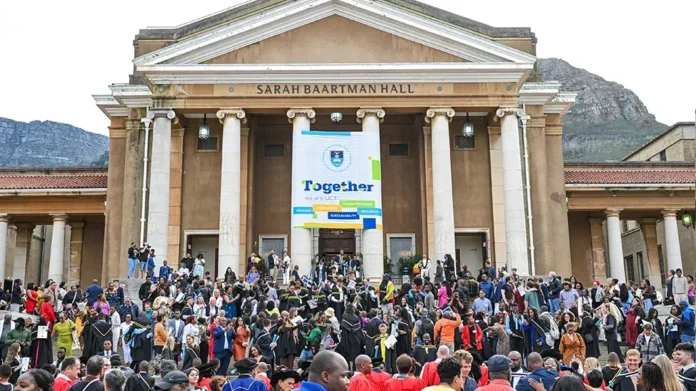
Parliament’s Higher Education Committee has demanded answers from universities and government officials after learning that foreign national professors outnumber African, coloured and Indian professors at some public institutions, despite decades of state investment aimed at developing local academic talent.
The issue surfaced sharply on Wednesday when the Portfolio Committee on Higher Education and Training received updated figures on the employment of foreign academics across the country’s 26 public universities and technical and vocational education and training colleges.
What began as a routine briefing quickly evolved into a pointed discussion about transformation, accountability and whether billions of rands invested in developing South African academics have delivered the intended results.
Committee chairperson Tebogo Letsie said lawmakers were troubled by what the numbers appeared to reveal.
‘Disproportionately high number’
“The committee is concerned that, despite substantial public investment in higher education, research development and academic support programmes, some institutions continue to employ a disproportionately high number of foreign academics at senior academic levels,” Letsie said.
“We must honestly assess whether these investments are producing the desired outcomes.”
The concerns come at a politically sensitive moment, with immigration dominating national discourse ahead of the June 30 demonstrations planned by a coalition of 27 civic organisations calling for stricter enforcement of immigration laws.
Intervention not attack on foreign nationals
Letsie, however, repeatedly stressed that the committee’s intervention was not an attack on foreign nationals.
Instead, he framed it as a question of transformation and whether South Africa’s higher education system is producing enough local scholars to occupy the country’s most prestigious academic positions.
“Twenty years later, the numbers have not improved. Government has spent a lot of money, yet there are no tangible results from the investments made,” he said.
“We need to ask whether we have produced enough South Africans to occupy these positions, especially now that we have made this investment.”
Among the figures presented to Parliament were statistics showing that at some institutions, including the University of Cape Town, foreign national professors outnumber African, coloured and Indian professors combined.
Similar trends, according to the committee, were identified at the universities of Pretoria, Free State and Venda.
Letsie singled out UCT as an example of what he believes is a deeper structural problem.
“To use UCT as an example, saying that there are more foreign national professors than African, Indian and coloured professors combined may not tell the full story,” he said.
“The full picture is this: 39.7 percent of professors at UCT are white, 39.3 percent are foreign nationals, and only 22.6 percent are African, Indian and coloured professors combined.”
“These statistics should shock all of us.”
‘We must invest in developing SA’
The committee chairperson suggested that previous attempts to raise the matter had been met with hostility and accusations of xenophobia, something he rejected.
“When we raised this issue last year, we knew we would be attacked. This is not about xenophobia. We must invest in developing South Africans and creating pathways for them to reach professor level,” he said.
The debate touches on a longstanding tension within higher education.
Universities often argue that international recruitment strengthens research output, attracts global partnerships and helps fill scarce-skills gaps. Critics, however, contend that the continued reliance on foreign academics at senior levels may signal failures in succession planning, mentorship and the development of local talent.
For Parliament, the concern is particularly acute because government has spent decades funding postgraduate scholarships, research chairs, academic development programmes and initiatives aimed at broadening participation in the sector.
The committee now wants answers on whether those investments are translating into professorships for South Africans.
Letsie said he was especially concerned that foreign academics outnumber black South Africans in at least four institutions.
The committee has resolved to revisit the matter during the final quarter of the year, setting the stage for what could become one of the most closely watched transformation debates in higher education.
As the country wrestles with broader questions about immigration, jobs and economic opportunity, Parliament’s message to universities is increasingly clear: the conversation is no longer only about who enters South Africa, but also about who rises to the top of its institutions.
- Parliament's Higher Education Committee is concerned that some South African public universities employ more foreign national professors than African, coloured, and Indian professors combined, despite decades of investment in local academic development.
- Updated employment figures presented to the committee revealed these trends at institutions including the University of Cape Town, University of Pretoria, Free State University, and University of Venda, with UCT having nearly 40% foreign nationals among its professors.
- Committee chair Tebogo Letsie emphasized the need to assess the effectiveness of government investments in developing South African academics and stressed this issue is about transformation, not xenophobia.
- Universities argue that foreign recruitment enhances research output and fills skill gaps, while critics see it as a failure in developing local academic talent and succession planning.
- Parliament plans to revisit the issue later in the year, highlighting growing scrutiny on who attains senior academic positions in South Africa amid broader debates on immigration and economic opportunities.


