


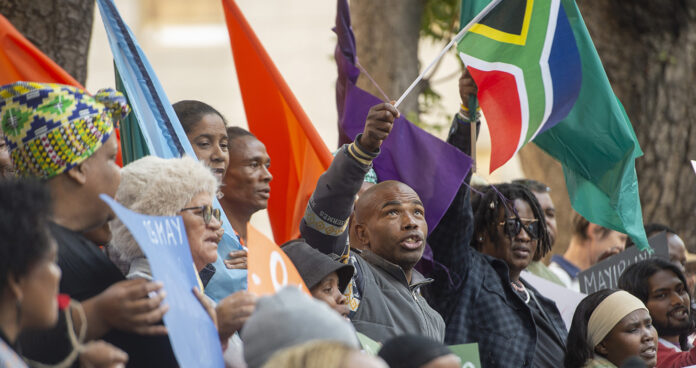
Annually, Africa Day celebrations across the continent are filled with reminders of the promises of unity and solidarity for the continent. In South Africa, the day is commemorated by a diversity of commemorative activities propagating the idea of unity — started by the Organisation of African Unity, the precursor to the African Union, on May 25, 1963.
In the South African higher education milieu, the celebrations continued this year despite the tension of Afrophobia marking the relevance of universities as places of continued reflection in the context of conflict.
Some of the debates rightfully focused on African solidarity amid the opportunities offered by multipolarity and finding solutions to the “scramble for Africa”, growing geopolitical conflicts and technological shifts. While the debates are important for shifting the needle towards generic unity, what is not showing up is the position of women in this work to develop and unite the continent.
This is disturbing as African women, both women and girls, make up more than 50% of the continent’s population. Thus, half the population dividend that many proponents of Africa’s development emphasise is made up of a group seldom centred in formal African development initiatives — women and girls.
While we recognise that gender does not act the same everywhere, gender development research shows that women the world over experience development disproportionately.
This is even more so for women in Africa. This is because development is not neutral; it is as gendered as it is racial.
The African Gender Development index illustrates that women are under-represented in education, economic participation and political participation.
While the numbers throughout the continent vary, what remains constant is that African women remain an addendum in African development programmes, on its platforms and as beneficiaries of its projects, while they carry an unequal burden of the failures of the
development.
For example, according to the UN’s Food and Agriculture Organisation, African women in Sub-Saharan Africa hold a disproportionate share of food production labour while they hold lower levels of land ownership and are less likely to inherit land.
While South Africa shows progress in terms of access to education for girls and women compared to other African countries, this is not translated into access to jobs and leadership once women enter the workplace.
What research argues is that the discrepancy is a result of the patriarchal dividend.
It has become the norm that men defer to other men, even when women are more qualified and experienced and even when they hold leadership positions. Similarly, powerful men will defer to other men, sometimes to the most junior and unqualified men in the room.
The patriarchal dividend leads to experiential contradictions for women leaders because they are then rewarded for self-erasure while being treated as disposable.
The architectures of patriarchal power work tirelessly to rattle and provoke women leaders, who are then forced to act in ways that the system will call “irrational”.
Feminist researchers like Bell Hooks have written extensively about the tactics and how they minimise women leaders’ achievements and impose respectability politics on them. For example, when women leaders resist dehumanisation, the resistance is defined as aggression. Thus, women are often defined as angry, aggressive and difficult.
If African unity is to be achieved, African women and their interests should be at the centre of it. Their voices, presence and experiences are indispensable, otherwise the shared aspirations of the continent will remain a pipe dream.
- Professor Khunou is the executive director of leadership and transformation at Unisa.
- Africa Day in South Africa honors continental unity with events highlighting solidarity, especially in higher education despite underlying tensions like Afrophobia.
- Debates focus on African unity amid geopolitical challenges but often exclude the critical role and position of African women in development.
- African women make up over 50% of the population but remain underrepresented in education, politics, and economic participation, facing disproportionate development challenges.
- Patriarchal norms limit women’s leadership and job opportunities, rewarding self-erasure and labelling resistance as aggression, which undermines women leaders.
- For genuine African unity and progress, women’s voices, interests, and leadership must be central to development initiatives and continental aspirations.


