


This weekend I boarded a flight to California for the Presidential AI Learning Visit to the United States. President Cyril Ramaphosa will lead this high-level delegation of business and government leaders.
The programme opens on Monday at Semafor’s Silicon Valley & The World in Menlo Park, California, where the people building AI meet the governments and investors who will live with its consequences.
Some will ask what a mining man is doing among the founders of frontier AI. My answer is simple: everything Silicon Valley builds sits on something someone dug out of the ground.
READ: Ageing tech under scrutiny after communications failure grounds US flights
The AI boom is a minerals boom. Every AI model runs in a data centre that requires copper, steel, and enormous amounts of reliable power. Every chip and data centre depends on metals such as uranium, palladium, and platinum. Strip away the glamour, and AI is a story about rock, energy, and engineering.
South Africa is home to many of these critical minerals, and SSC Group invests in and operates across the extraction value chain. The question we face in every commodity cycle is this: will we export ore and import the intelligence built on it, or will local companies take a seat in the value chain? Taking that seat is why I am going.
My first student wage was R110 a week as a grease attendant at a factory in Tulbagh in the Western Cape, where I grew up. I entered mining in 1995, and in 2005 I started SSC Group from my garage in Sandton. We named it Siyakhula Sonke, meaning “together we grow”.
Today, it is a 100% majority Black-women-owned group spanning contract mining, exploration drilling, rehabilitation, engineering, automation and control systems, and energy.
I have watched technology arrive in mining communities before. Too often, the people at the bottom of the shaft were the last to benefit. AI must not become another chapter in that story.
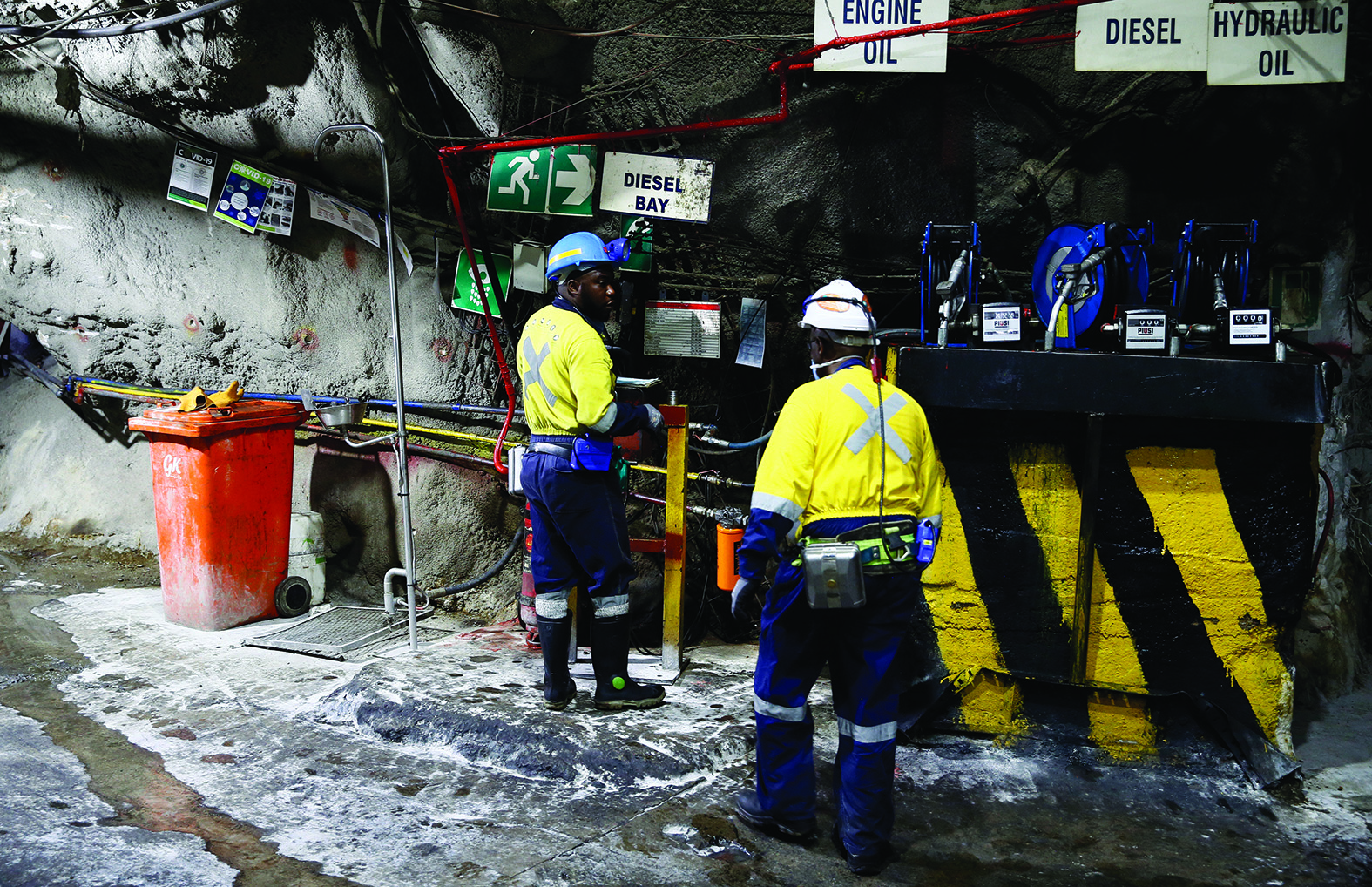
I am travelling with practical questions. Can AI make mining safer? We believe you can never put a price on safety. If AI can analyse seismic, ventilation, and equipment data early enough to bring one more miner home safely, it earns its place.
Can AI find the next orebody faster? Exploration is part of our daily work. AI that interprets drill core and geophysical data in weeks rather than years changes the economics for smaller players.
Can our automation business, MineSolve, become the bridge? Machines underground generate vast amounts of data. We want to turn that data into decisions using local engineers, rather than renting that capability from abroad indefinitely.
Can AI help us heal the land? Better monitoring of land and water after mining would make our rehabilitation commitments measurable and transparent.
READ: Stale intelligence, AI reliance cited in US strike on Iranian schoolHuawei challenges women to build businesses with artificial intelligence
A good part of this week is devoted to cybersecurity and the protection of critical infrastructure, and I am glad of it. A connected mine is also a vulnerable mine. A ransomware attack on a hoist or ventilation system is not an IT inconvenience. It is a life-safety emergency.
As president of the Junior Mining Council, I worry that AI could widen the gap between major mining companies with innovation budgets and junior miners without them. Equally, it could level the playing field by putting world-class analysis in reach of smaller operators.
I will ask investors direct questions: what do you need before committing to South Africa, and how do we move from pilot projects to real deployment?
In a country facing painful unemployment, any honest conversation about AI must start with people. President Ramaphosa told BRICS leaders in September that we should “neither fear AI nor approach it recklessly”. That is the right posture.
For SSC Group, AI must make the miner safer and more skilled, not redundant. Every SSC Group business should emerge from this transformation with people doing higher-value work.
I do not want to come home with business cards and photographs. I want relationships that become working projects.
The boy who sold vetkoek door to door in Tulbagh could not have imagined this week. But the distance between a small town and the frontier is shorter than it looks if you show up, ask hard questions, and bring others with you.
Siyakhula Sonke. Together we grow.
This time, “together” must include the people at the rock face.
• Arendse is the founder and CEO of SSC Group and president of the Junior Mining Council.
- President Cyril Ramaphosa is leading a high-level delegation, including SSC Group CEO Arendse, to the Presidential AI Learning Visit in California focused on AI and its implications.
- The AI boom is directly linked to a minerals boom, as data centres and AI chips require critical metals like copper, steel, uranium, palladium, and platinum, many of which are found in South Africa.
- SSC Group, a 100% majority Black-women-owned company, operates across the mining value chain and seeks to integrate AI to improve safety, exploration, automation, and environmental rehabilitation.
- Concerns discussed include AI’s potential to improve miner safety through data analysis, accelerate orebody discovery, support local engineering via automation, and enhance land rehabilitation monitoring.
- The delegation will also address cybersecurity risks in connected mines and aim to foster investment in South African mining by transitioning AI from pilot projects to real deployments for all operators.
This weekend I boarded a flight to California for the Presidential AI Learning Visit to the United States. President Cyril Ramaphosa will lead this high-level delegation of business and government leaders.
The programme opens on Monday at Semafor’s Silicon Valley & The World in Menlo Park, California, where the people building AI meet the governments and investors who will live with its consequences.
Some will ask what a mining man is doing among the founders of frontier AI. My answer is simple: everything Silicon Valley builds sits on something someone dug out of the ground.
READ: Ageing tech under scrutiny after communications failure grounds US flights
The AI boom is a minerals boom. Every AI model runs in a data centre that requires copper, steel, and enormous amounts of reliable power. Every chip and data centre depends on metals such as uranium, palladium, and platinum. Strip away the glamour, and AI is a story about rock, energy, and engineering.
South Africa is home to many of these critical minerals, and SSC Group invests in and operates across the extraction value chain. The question we face in every commodity cycle is this: will we export ore and import the intelligence built on it, or will local companies take a seat in the value chain? Taking that seat is why I am going.
My first student wage was R110 a week as a grease attendant at a factory in Tulbagh in the Western Cape, where I grew up. I entered mining in 1995, and in 2005 I started SSC Group from my garage in Sandton. We named it Siyakhula Sonke, meaning “together we grow”.
Today, it is a 100% majority Black-women-owned group spanning contract mining, exploration drilling, rehabilitation, engineering, automation and control systems, and energy.
I have watched technology arrive in mining communities before. Too often, the people at the bottom of the shaft were the last to benefit. AI must not become another chapter in that story.
I am travelling with practical questions. Can AI make mining safer? We believe you can never put a price on safety. If AI can analyse seismic, ventilation, and equipment data early enough to bring one more miner home safely, it earns its place.
Can AI find the next orebody faster? Exploration is part of our daily work. AI that interprets drill core and geophysical data in weeks rather than years changes the economics for smaller players.
Can our automation business, MineSolve, become the bridge? Machines underground generate vast amounts of data. We want to turn that data into decisions using local engineers, rather than renting that capability from abroad indefinitely.
Can AI help us heal the land? Better monitoring of land and water after mining would make our rehabilitation commitments measurable and transparent.
READ: Stale intelligence, AI reliance cited in US strike on Iranian schoolHuawei challenges women to build businesses with artificial intelligence
A good part of this week is devoted to cybersecurity and the protection of critical infrastructure, and I am glad of it. A connected mine is also a vulnerable mine. A ransomware attack on a hoist or ventilation system is not an IT inconvenience. It is a life-safety emergency.
As president of the Junior Mining Council, I worry that AI could widen the gap between major mining companies with innovation budgets and junior miners without them. Equally, it could level the playing field by putting world-class analysis in reach of smaller operators.
I will ask investors direct questions: what do you need before committing to South Africa, and how do we move from pilot projects to real deployment?
In a country facing painful unemployment, any honest conversation about AI must start with people. President Ramaphosa told BRICS leaders in September that we should “neither fear AI nor approach it recklessly”. That is the right posture.
For SSC Group, AI must make the miner safer and more skilled, not redundant. Every SSC Group business should emerge from this transformation with people doing higher-value work.
I do not want to come home with business cards and photographs. I want relationships that become working projects.
The boy who sold vetkoek door to door in Tulbagh could not have imagined this week. But the distance between a small town and the frontier is shorter than it looks if you show up, ask hard questions, and bring others with you.
Siyakhula Sonke. Together we grow.
This time, “together” must include the people at the rock face.
• Arendse is the founder and CEO of SSC Group and president of the Junior Mining Council.


