


It is a tragedy beyond words when a nation not only tolerates the death of its young but celebrates it, even going so far as to raise money for the alleged killer’s bail.
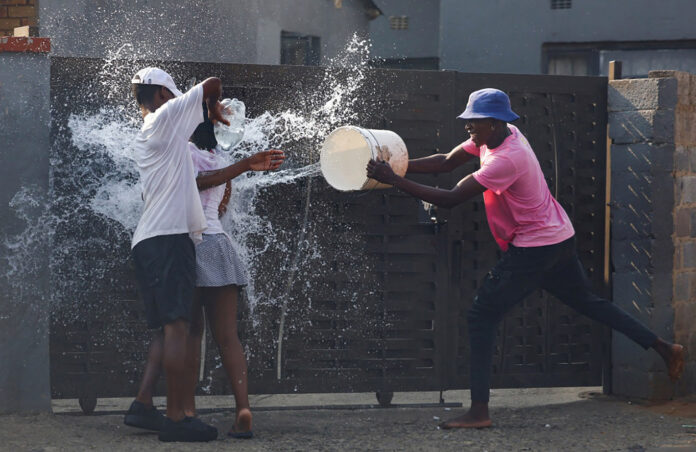
On September 1, a day township youth have dubbed “Spring Day,” a tradition of splashing unsuspecting people with buckets of water turned fatal.
What was meant to be a mischievous prank ended with the stabbing death of 20-year-old Tshepang Nyathi at the hands of a 53-year-old man who refused to accept being drenched.
READ: Hlabisa warns against political violence after IFP members attacked
Yes, the prank was disruptive. Yes, it was humiliating. But surely humiliation cannot justify death. Surely no affront to dignity warrants the extinguishing of a young life. Yet, disturbingly, many voices on social media have cheered Nyathi’s demise, declaring he “got what he deserved.”
This chilling chorus reveals something deeper than anger at unruly youth – it exposes a society so fractured, so consumed by self-loathing, that violence has become an acceptable response to irritation.
The Spring Day incidents – commuters soaked on buses, a child’s hearing aid destroyed, a scooter driver assaulted for being foreign, highlight the chaos festering in communities plagued by youth unemployment, drug abuse, and broken homes.
But the killing of Nyathi is not discipline; it is despair weaponised. It is the collapse of patience, of empathy, of the communal spirit that once bound South Africans together.
What is most alarming is the normalisation of death as punishment. When adults justify killing children as a lesson in respect, we cross into dangerous territory. We abandon the very essence of community – nurturing, guiding, and protecting, and instead embrace brutality as a solution.
This is not discipline; it is treason against our own humanity. As Cicero warned centuries ago: “A nation can survive its fools, and even the ambitious. But it cannot survive treason from within.”
The tragedy of Nyathi’s death forces us to confront uncomfortable truths about our society. We are living in communities where frustration simmers daily, where poverty and hopelessness gnaw at dignity, and where the smallest provocation can ignite violence.
The water prank, though reckless, was not an act of war. It was youthful mischief, misguided and inconsiderate, but not deserving of a death sentence. Yet the response – a knife plunged into a young man’s body, speaks volumes about how fragile our social fabric has become.
What is equally disturbing is the glee with which some celebrated his death online. Social media has become a mirror reflecting our collective psyche, and what it revealed in this case was chilling.
Instead of mourning, instead of compassion, there was applause for violence. There was a readiness to justify brutality as “discipline”. This is not discipline. It is cruelty masquerading as justice. It is the erosion of our humanity.
We must ask ourselves, how did we arrive here? How did we become a society where the death of a child is celebrated, where adults cheer the destruction of youth as though it were a moral victory? The answer lies in the collapse of community leadership, the abdication of parental responsibility, and the failure of social structures that once held us together.
There was a time when leaders in our communities rallied the youth into sports, arts, and cultural activities. Soccer tournaments, beauty pageants, and music festivals were organised not because they were profitable, but because they kept young people occupied, hopeful, and connected.
READ: Body of missing runner Elizabeth ‘Tsontso’ Moselakgomo positively identified
There was a time when parents, despite hardship, instilled discipline without resorting to violence. There was a time when communities protected their children, even from themselves. That time feels distant now.
Instead, we have folded our arms, waiting for government intervention that never comes. We point fingers at the state for failing to create jobs, for failing to provide opportunities, and for failing to rescue our youth from despair.
But deep down, we know the truth: nobody is coming to save us. If we do not act, if we do not rebuild the broken structures of our communities, we will perish.
Nyathi’s death is a mirror held up to us all. It forces us to confront the darkness within our communities, the despair that has turned us against our own children. It demands that we choose – will we continue down this path of self-hate and destruction, or will we reclaim our humanity and rebuild the bonds that once held us together?
The answer will determine not just the fate of our youth but the survival of our nation.
- Mbuyiselo Botha is a gender and human rights activist
- On September 1, during the "Spring Day" tradition of splashing people with water, 20-year-old Tshepang Nyathi was fatally stabbed by a 53-year-old man who refused to be drenched.
- Many social media users celebrated Nyathi's death, claiming he "got what he deserved," reflecting a societal acceptance of violence as a response to irritation.
- The Spring Day incidents have highlighted underlying community issues such as youth unemployment, drug abuse, and broken homes.
- The article argues that the killing of Nyathi represents a breakdown in community empathy and leadership, moving from discipline to cruelty.
- The author calls for rebuilding community structures and leadership to protect youth and prevent further violence, warning that failure to act threatens the nation's survival.


