


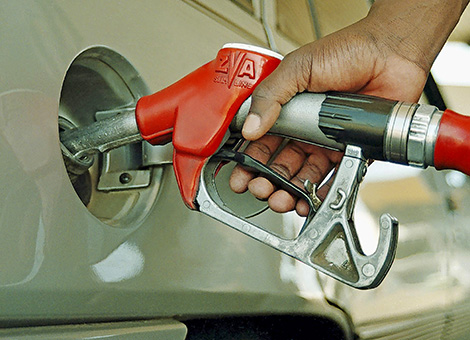
The majority of motorists will receive some welcome relief at the pumps in August after the Central Energy Fund (CEF) announced a substantial cut in petrol prices.
However, the good news is tempered by sharp increases in diesel and illuminating paraffin costs, which are expected to drive up transport and food prices, placing additional pressure on households already grappling with the rising cost of living.
Consumers may feel the pinch most at the tills, as higher road freight fuel costs could place further upward pressure on food prices.
Low-income households will also face an R1.52-per-litre increase in the price of illuminating paraffin, a widely used household fuel. The only respite comes from LP gas, which will decrease by R4.41 per kilogram.
The news comes as oil prices fell more than $4 (R65.94) a barrel on Monday after US President Donald Trump held off a fresh attack on Iran as he sought a quick deal that would halt Tehran’s nuclear ambitions and reopen the Strait of Hormuz.
Read more: Houthis pushing to model Iran’s Hormuz control in Red Sea, Yemen says
Brent crude futures fell $4.23, or 4.8%, to $83.70 by 12:11, having retraced some losses from a three-week low hit earlier in the session. US West Texas Intermediate crude was at $79.60 a barrel, down $5.07, or 6%. Both benchmarks marked their biggest daily falls in absolute and percentage terms since last Monday.
Both contracts had jumped more than 20% last month after fighting between the U.S. and Iran resumed and attacks on several tankers around Oman heightened security concerns, deterring shippers from entering the Gulf to load oil.
Uncertainty surrounds potential deal
In a sign of de-escalation, Trump said late on Saturday on his Truth Social platform that Iran and other Middle Eastern countries had asked for time to complete a deal that would lead to “the Immediate, Complete and Total” reopening of the Strait and “an end to Iran’s nuclear threat”.
Details remain unclear.
OPEC+ approves production increase
“The bigger focus is whether this week turns into a rinse and repeat of last week — with hopes of a deal collapsing as Iran digs in its heels and continues to leverage its control over the Strait,” IG market analyst Tony Sycamore said.
Two tankers laden with Saudi oil crossed the Bab el-Mandeb Strait out of the Red Sea over the weekend but traffic in both the Strait of Hormuz and Bab el-Mandeb slowed, shipping data showed.
Read more: Oil prices rise as Strait of Hormuz crisis rages
The United Kingdom Maritime Trade Operations has reported three more tanker attacks since Saturday.
On Sunday, the Organization of the Petroleum Exporting Countries and allies, known as OPEC+, approved an oil production quota increase of around 188,000 barrels per day from September.
Export disruptions from the Gulf, Russia and Kazakhstan, caused by the Iran and Ukraine wars, have meant successive monthly OPEC+ hikes over most of this year have failed to translate into extra oil on the market and have had little impact on prices.
- The Central Energy Fund announced a substantial cut in petrol prices for August, benefiting most motorists.
- Diesel and illuminating paraffin prices will sharply increase, leading to higher transport and food costs.
- Illuminating paraffin will rise by R1.52 per litre, while LP gas will decrease by R4.41 per kilogram.
- Brent crude and US West Texas Intermediate crude prices fell sharply, influenced by a potential deal to reopen the Strait of Hormuz.
- OPEC+ approved an increase of approximately 188,000 barrels per day in oil production starting September, despite ongoing export disruptions.
The majority of motorists will receive some welcome relief at the pumps in August after the Central Energy Fund (CEF) announced a substantial cut in petrol prices.
However, the good news is tempered by sharp increases in diesel and illuminating paraffin costs, which are expected to drive up transport and food prices, placing additional pressure on households already grappling with the rising cost of living.
Consumers may feel the pinch most at the tills, as higher road freight fuel costs could place further upward pressure on food prices.
Low-income households will also face an R1.52-per-litre increase in the price of illuminating paraffin, a widely used household fuel. The only respite comes from LP gas, which will decrease by R4.41 per kilogram.
The news comes as oil prices fell more than $4 (R65.94) a barrel on Monday after US President Donald Trump held off a fresh attack on Iran as he sought a quick deal that would halt Tehran's nuclear ambitions and reopen the Strait of Hormuz.
Read more: Houthis pushing to model Iran's Hormuz control in Red Sea, Yemen says
Brent crude futures fell $4.23, or 4.8%, to $83.70 by 12:11, having retraced some losses from a three-week low hit earlier in the session. US West Texas Intermediate crude was at $79.60 a barrel, down $5.07, or 6%. Both benchmarks marked their biggest daily falls in absolute and percentage terms since last Monday.
Both contracts had jumped more than 20% last month after fighting between the U.S. and Iran resumed and attacks on several tankers around Oman heightened security concerns, deterring shippers from entering the Gulf to load oil.
In a sign of de-escalation, Trump said late on Saturday on his Truth Social platform that Iran and other Middle Eastern countries had asked for time to complete a deal that would lead to "the Immediate, Complete and Total" reopening of the Strait and "an end to Iran's nuclear threat".
Details remain unclear.
"The bigger focus is whether this week turns into a rinse and repeat of last week — with hopes of a deal collapsing as Iran digs in its heels and continues to leverage its control over the Strait," IG market analyst Tony Sycamore said.
Two tankers laden with Saudi oil crossed the Bab el-Mandeb Strait out of the Red Sea over the weekend but traffic in both the Strait of Hormuz and Bab el-Mandeb slowed, shipping data showed.
Read more: Oil prices rise as Strait of Hormuz crisis rages
The United Kingdom Maritime Trade Operations has reported three more tanker attacks since Saturday.
On Sunday, the Organization of the Petroleum Exporting Countries and allies, known as OPEC+, approved an oil production quota increase of around 188,000 barrels per day from September.
Export disruptions from the Gulf, Russia and Kazakhstan, caused by the Iran and Ukraine wars, have meant successive monthly OPEC+ hikes over most of this year have failed to translate into extra oil on the market and have had little impact on prices.


