


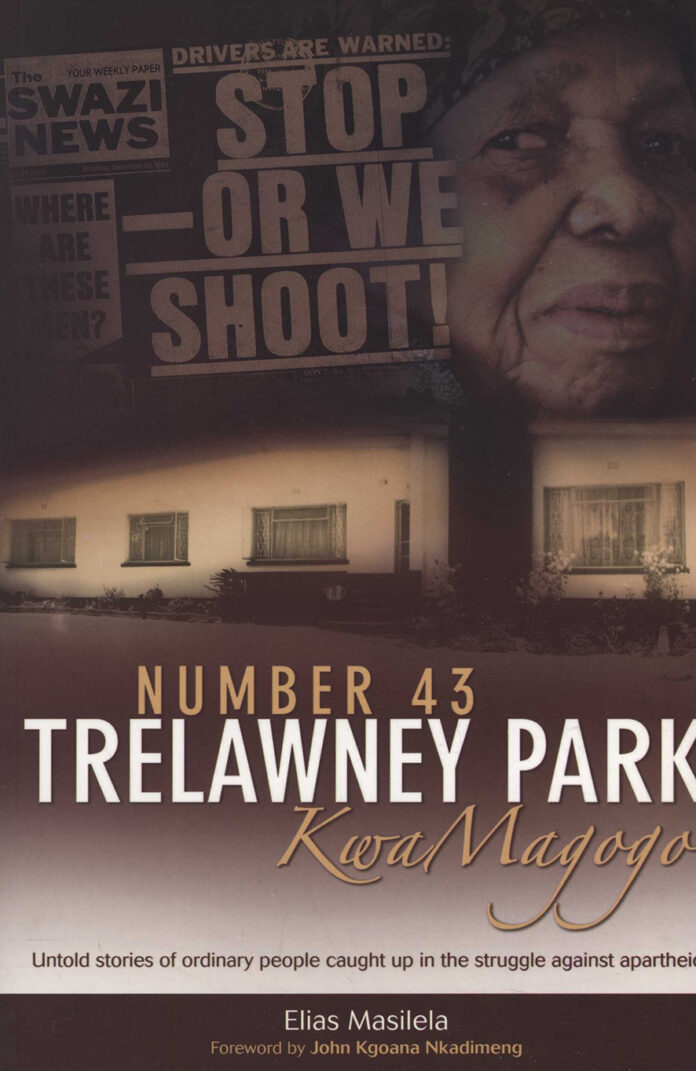
The No. 43 Trelawney Park, KwaMagogo book, first published in 2007, tells the story of the Masilela family home in Eswatini becoming an unexpected refuge for South African students fleeing apartheid after the 1976 youth uprising.
In 2015, the story was retold through a coffee-table book, using more photographs and fewer words.
Now, a musical stage production has brought the KwaMagogo story to life, as the 50th anniversary of the 1976 youth uprising approaches. While the dream and hope for a living museum remain alive.
The 18th Annual Number 43 Legacy Event in Eswatini next month will feature an evolving story, where author and businessman Elias Masilela will commemorate the milestone anniversary through lectures, performances, discussions and a theatrical production titled Magogo Courage.
However, for Masilela, the most exciting development is not necessarily the speeches or gala dinners. It is watching the KwaMagogo story transform into new forms that resonate with younger generations.
Exile history
The house, known as Number 43 KwaMagogo, was deeply associated with exile history in the region. Masilela told Sunday World that the family only later comprehended the reason behind the directive to “find the Masilelas” for so many young people arriving in exile.
“When students crossed into Swaziland after June 16, many arrived at our doorstep carrying the same message: ‘When you get there, find the Masilelas. They will know what to do.’
“At one point there would be 30 or 40 young people staying in the house. We became a reception point for exiles.”
Masilela said the family’s annual legacy events, running since 2007, were built around three ideas: preserving history, promoting education and reminding South Africans that the liberation struggle was supported by neighbouring countries and families beyond South Africa’s borders.
‘Magogo Courage’ production
After the success of No. 43 Trelawney Park, KwaMagogo and the coffee-table book, the story moves to the stage.
The Magogo Courage production was initiated by actor Dr Jerry Mofokeng-Makhetha after he read the book several times before the event.
Masilela had initially invited him to speak during the gala dinner, but the veteran actor proposed something different.
“He told me: ‘I’m not really a guest speaker. I’m an actor. Let me tell this story through theatre instead.’”
The production uses narration, music, poetry and sound to recount the emotional world of KwaMagogo and the experiences of students fleeing apartheid in South Africa.
Masilela said even members of the family had not yet fully seen the final production.
“He read the book three times and then decided this story belonged on stage,” he said. “If the audience responds well, the idea is to eventually grow it into a touring production.”
Keeping history alive
For Masilela, the transformation of the KwaMagogo story from printed pages into visual and performance formats reflects a broader challenge facing historical storytelling.
“How do you keep history alive when young people consume information differently?” he asked.
He believes the answer lies partly in adapting storytelling formats without losing the substance of the story.
That thinking also shapes the future vision for Kwa-Magogo.
Masilela said the family’s long-term goal was to convert the historic property into a living museum after the family patriarch died in 2023.
Unlike a traditional museum, the idea is for the house to remain active and inhabited.
“We want people there all the time,” he said.
“KwaMagogo was always alive with people coming and going. We want the museum to preserve that spirit.”
He said busloads of visitors continued arriving at the property decades later.
“The story of people arriving at Number 43 never stopped. The difference now is that they come to visit, not to escape into exile.”
This year’s legacy programme will also focus on education and technology, especially the challenges faced by young people in rural and disadvantaged communities.
Masilela said the organisers had encouraged companies to support youth-focused digital initiatives related to the June 16 commemoration.
- The book *No. 43 Trelawney Park, KwaMagogo* (2007) shares the story of the Masilela family home in Eswatini becoming a refuge for South African students fleeing apartheid after the 1976 youth uprising, later retold through a photo-rich coffee-table book in 2015.
- A new musical stage production, *Magogo Courage*, was created by actor Dr. Jerry Mofokeng-Makhetha to bring the KwaMagogo story to life for the approaching 50th anniversary of the 1976 uprising, blending narration, music, poetry, and sound.
- The annual Number 43 Legacy Event, starting in 2007 and continuing in Eswatini, commemorates the history of KwaMagogo through lectures, discussions, performances, and aims to preserve the legacy of exile support and liberation struggle solidarity.
- Elias Masilela, author and businessman, emphasizes evolving storytelling methods to engage younger generations and plans to transform the KwaMagogo family home into an active living museum, preserving its spirit of hospitality and history.
- The upcoming legacy programme will also focus on education and technology challenges in rural and disadvantaged youth communities, encouraging support for digital initiatives linked to the June 16 commemoration.


