


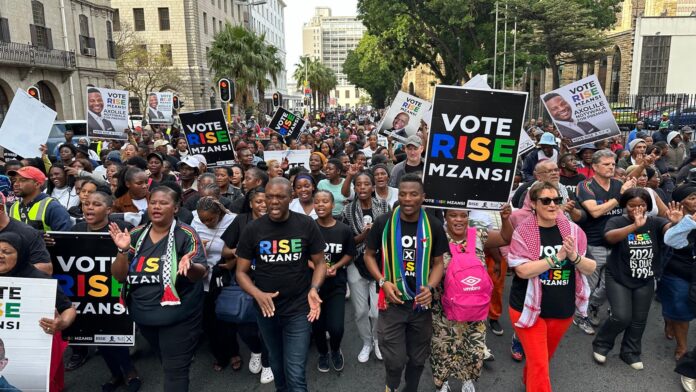
RISE Mzansi leader Songezo Zibi has defended the party’s disclosure of a R30 million loan write-off as a donation. He says the accounting treatment is fully in line with South Africa’s political funding legislation, even as the transaction draws attention from the Electoral Commission of South Africa and governance watchdogs.
Zibi explained that the amount originated from a loan extended by an organisation called We Are The People, which was used to finance the party’s 2024 election campaign. He said RISE Mzansi had initially intended to repay the debt and had already made repayments exceeding R1 million, but later struggled to keep up with its obligations after the election period.
According to Zibi, the outstanding balance was eventually written off by the lender, triggering a legal requirement under the Political Party Funding Act to declare the forgiven debt as a donation.
He said the law treats debt forgiveness as a financial benefit that must be disclosed, even where no cash changes hands.
“The Party Political Funding Act requires that if you owe somebody money and they say you don’t have to pay it anymore, you must declare that as a donation, because it is a financial benefit,” Zibi said.
No new transfer of funds
Zibi stressed that the declaration did not involve any new transfer of funds, arguing that the value lies in the cancellation of the obligation rather than a cash contribution.
The disclosure has since been flagged in the Electoral Commission’s latest political funding report, prompting the commission to seek further clarification from the party on aspects of the transaction. The R30 million entry ranked among the largest single donations recorded since the current funding disclosure system came into effect.
While Zibi maintained that RISE Mzansi had complied fully with the law, the transaction has also sparked broader debate in governance circles.
Civil society organisation My Vote Counts has argued that the case highlights gaps in the Political Party Funding Act, particularly around transparency and the public’s ability to understand the origins of funds flowing through intermediary organisations.
The group has also raised concern that recent changes increasing the annual donation limit to R30 million may weaken oversight by allowing larger contributions to be processed with less granular disclosure.
The Electoral Commission has not found wrongdoing but is continuing to engage the party for additional information.
RISE Mzansi says it remains confident that its disclosures meet all legal requirements and that the transaction reflects a lawful accounting obligation rather than an irregular donation.
- RISE Mzansi leader Songezo Zibi defended the party’s disclosure of a R30 million loan write-off as a donation, stating it complies with South African political funding law.
- The R30 million came from a loan by We Are The People to finance the party’s 2024 election campaign, with repayments made initially before the remaining debt was forgiven.
- Under the Political Party Funding Act, debt forgiveness is legally treated as a financial benefit and must be declared as a donation, even without a cash transfer.
- The Electoral Commission has flagged the large donation, seeking further clarification, while governance watchdogs raise concerns about transparency and the implications of increased donation limits.
- RISE Mzansi insists it fully complied with legal disclosure requirements and views the transaction as lawful accounting treatment rather than improper funding.


