


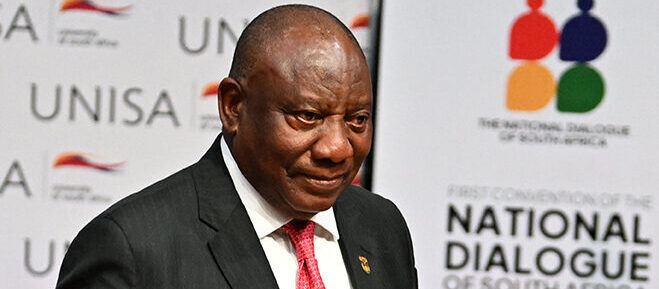
President Cyril Ramaphosa’s bid to slam the brakes on Parliament’s looming impeachment inquiry has run into stiff resistance, with the chairperson of the parliamentary committee tasked with investigating him arguing that the process cannot simply be switched off because the president is unhappy with the Constitutional Court’s ruling.
Makashule Gana, chair of Parliament’s Section 89 impeachment committee, has filed court papers opposing Ramaphosa’s urgent application to stop the inquiry from proceeding.
Won’t engage with ‘merits of review application’
“As I have stated already, the committee is opposing the application on legal grounds and will for that purpose not engage with the merits of the review application. The committee understands its duty to be independent and impartial and to conduct the impeachment process transparently, fairly, openly and without fear, favour or prejudice,” the 12-page affidavit reads.
The legal battle comes weeks after the Constitutional Court cleared the way for Parliament to move ahead with an impeachment process linked to the controversial Phala Phala farm scandal.
Ramaphosa approached the Western Cape High Court seeking an urgent interdict that would prevent the committee from continuing with its work while a separate review application challenging aspects of the process remains before the courts.
However, National Assembly Speaker Thoko Didiza has decided not to oppose the president’s application, but filed to abide by the Western Cape High Court.
‘ConCourt order not susceptible to alteration’
But Gana argues that Parliament is simply carrying out a constitutional obligation and that the committee cannot ignore a directive that effectively flows from the country’s highest court.
In his answering affidavit, Gana contends that the president’s application is based on a fundamental legal flaw because it asks the high court to suspend the practical effect of the Constitutional Court judgment.
According to Gana, only the Constitutional Court itself has the authority to interfere with or suspend its own orders. He argues that allowing a lower court to halt a process that has already received the blessing of the apex court would create a dangerous constitutional precedent.
“The committee has reservations as to the authority of the high court to entertain an application which seeks to halt the implementation of the order of the Constitutional Court. On the proper reading of the order of the Constitutional Court, it is not susceptible to alteration or stay by a lower court. It is final and binding and must be given effect to.”
The committee chairperson further maintains that Parliament has no discretion to abandon the process merely because litigation is ongoing.
He says the impeachment committee was established to fulfil constitutional duties assigned to the National Assembly and must therefore continue with its work unless directed otherwise by a competent court.
The affidavit reveals that committee members met earlier in June, and resolved to oppose Ramaphosa’s application after obtaining legal advice from senior counsel.
‘Irreparable harm’ argument dismissed
At the heart of the dispute is the president’s argument that allowing the inquiry to proceed while his review challenge is still pending could cause him irreparable harm.
However, Gana dismisses this contention, arguing that the committee has not reached any findings and has not prejudged the outcome of the inquiry.
He points out that the impeachment process includes multiple procedural safeguards designed to ensure fairness and to protect the rights of the president throughout the proceedings.
Gana also stresses that the committee itself does not possess the power to remove Ramaphosa from office.
Its role is limited to hearing evidence, considering submissions and making recommendations to the National Assembly.
Even if the committee were to conclude that there are grounds for impeachment, the matter would still have to be debated and voted on by Members of Parliament in the National Assembly, where a two-thirds majority would be required before a sitting president could be removed.
Ramaphosa’s fears premature, speculative
For that reason, Gana argues that Ramaphosa’s fears are premature and speculative.
He says the president will have ample opportunity to present his case and challenge evidence
The clash sets the stage for yet another dramatic chapter in the long-running Phala Phala saga, which has dogged Ramaphosa’s presidency since allegations first emerged about the theft of foreign currency concealed at his Limpopo game farm.
Read More: Inside legal opinion which parly speaker Didiza defied
- President Cyril Ramaphosa’s bid to slam the brakes on Parliament’s looming impeachment inquiry has run into stiff resistance, with the chairperson of the parliamentary committee tasked with investigating him arguing that the process cannot simply be switched off because the president is unhappy with the Constitutional Court’s ruling.
- Makashule Gana, chair of Parliament’s Section 89 impeachment committee, has filed court papers opposing Ramaphosa’s urgent application to stop the inquiry from proceeding.
- Won’t engage with ‘merits of review application’ “As I have stated already, the committee is opposing the application on legal grounds and will for that purpose not engage with the merits of the review application.
- The committee understands its duty to be independent and impartial and to conduct the impeachment process transparently, fairly, openly and without fear, favour or prejudice,” the 12-page affidavit reads.
- The legal battle comes weeks after the Constitutional Court cleared the way for Parliament to move ahead with an impeachment process linked to the controversial Phala Phala farm scandal.


