


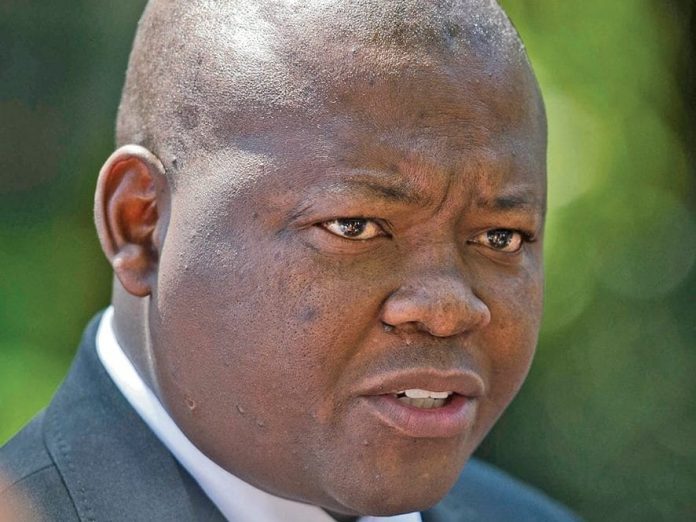
Attorney Barnabas Xulu is pressing ahead with his legal challenge to the appointment of Andy Mothibi as the National Director of Public Prosecutions (NDPP), arguing that a recent high court ruling has created a gap in oversight that leaves a key public appointment process beyond proper legal scrutiny.
In his application for leave to appeal, Xulu says the judgment does more than dismiss his case—it “precludes any meaningful accountability” by protecting the advisory process that guided Cyril Ramaphosa’s decision.
At the centre of the dispute is the advisory panel set up to assist the president in identifying a suitable candidate to lead the NPA.
The panel ultimately did not recommend any candidate. The high court treated that outcome as weakening the case for review. Xulu argues that the approach is wrong.
“A decision not to recommend is still a decision with legal consequences,” the application states.
Lack of proper oversight
He argues that even without a recommendation, the panel’s work shaped the context in which the president exercised his constitutional power.
For that reason, the process must still meet the basic standards of fairness and legality. “The failure to recommend does not render the process immune from review,” the papers say.
A key part of Xulu’s challenge is the court’s finding that he did not have standing to bring the case. He argues that this is too narrow and has wider consequences.
“The court a quo erred in finding that the applicant lacks standing,” the papers state, warning that this approach prevents anyone from testing how such processes are conducted.
According to Xulu, the result is that an important public process—one that feeds directly into a presidential appointment—lacks proper oversight.
Process shielded from scrutiny
He also argues that the court avoided dealing with the substance of the case. These include whether the panel followed a fair process, considered the right information, and reached a rational outcome.
“The court disposed of the matter without interrogating the merits,” the application states.
By deciding the case on standing alone, Xulu argues, the court effectively shielded the process from scrutiny.
He says this creates a risk that similar processes could escape review in the future.
The application further argues that the matter is of public importance. It raises broader questions about how far courts can go in reviewing processes that inform key executive decisions, especially appointments to critical institutions like the NPA.
“There are reasonable prospects that another court would reach a different conclusion,” the papers state.
- Attorney Barnabas Xulu is appealing a high court ruling that dismissed his challenge to Andy Mothibi’s appointment as NDPP, arguing it leaves the advisory panel’s role beyond legal scrutiny.
- Xulu contends the advisory panel’s failure to recommend a candidate still has legal consequences and requires proper oversight to ensure fairness and legality in the appointment process.
- The high court ruled Xulu lacked standing to challenge the appointment, a decision he claims is too narrow and prevents accountability in key public appointment processes.
- Xulu criticizes the court for deciding the case solely on standing without examining whether the advisory process was fair, thorough, or rational, effectively shielding it from judicial review.
- The appeal highlights broader public interest concerns about the limits of court oversight on executive appointments to critical institutions like the NPA.


