


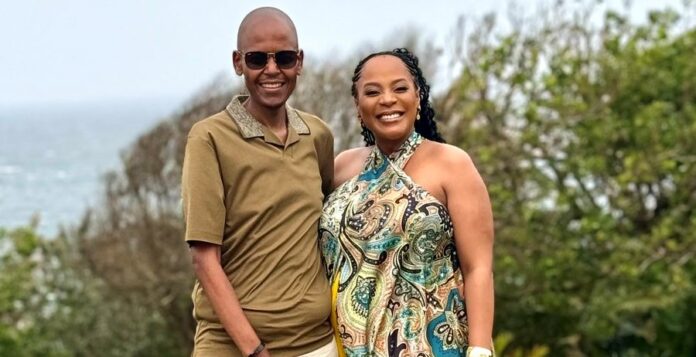
The United Democratic Movement (UDM) has landed a prominent political recruit ahead of the November 4 local government elections, with seasoned government communicator and former African National Congress Youth League (ANCYL) activist Prince Mlimandlela Ndamase quitting the ANC to join Bantu Holomisa’s party as it builds an ambitious Eastern Cape election offensive.
Holomisa announced the news in a statement on Tuesday:
“The UDM is pleased to welcome Prince Mlimandlela Ndamase as a member and volunteer.”
Ndamase’s move is emerging as more than an isolated defection. It comes as the UDM prepares for a major gathering in Mthatha on September 12, where the party will welcome a new generation of members and unveil its mayoral candidate for the King Sabata Dalindyebo Municipality.
Among those being welcomed is Princess Ndileka Dlamini (Dalindyebo), daughter of the late King Sabata Dalindyebo and Queen Nomoscow, and sister of reigning AbaThembu King Zwelibanzi Buyelekhaya Dalindyebo.
READ: Bantu Holomisa eyes military land to tackle SANDF housing crisis
A former senator in Eswatini, the UDM says she brings extensive public affairs and leadership experience. Her recruitment carries obvious symbolic weight in the political heartland bearing her father’s name, although her individual decision should not be conflated with an endorsement by the AbaThembu Royal House.
The UDM has already unveiled its second-in-command, Nqabayomzi Kwankwa, as it mayoral candidate in Buffalo City Metro which is currently under an ANC-led government.
Taken together, these developments suggest Holomisa is attempting something considerably bigger: rebuilding the UDM from its Eastern Cape roots while assembling political experience, professional expertise, community networks and figures associated with traditional leadership ahead of the November 4 poll.
Ndamase could prove particularly valuable to that project. His political formation stretches back to activism in the ANC Youth League in the Eastern Cape and leadership in the Eastern Cape Youth Commission. Throughout his political and professional career, the UDM says he has maintained a strong interest in rural development and communities that remain geographically and economically marginalised.
His subsequent career gave him a considerably wider footprint. Prince Ndamase served as a ministerial spokesperson at national and provincial level, including in Water and Sanitation, before working in the City of Johannesburg’s mayoral communications environment under several executive mayors. He has also established a sports marketing firm focused on positioning South Africa as an international sports-tourism destination.
READ: UDM accuses Hugo Broos of racism, sexism, lodges complaint with SAHRC
That combination — Eastern Cape political roots, a longstanding interest in rural development and networks accumulated through national, provincial and municipal public life — gives the UDM an opportunity to test whether Ndamase can help it reach beyond conventional urban party politics.
His move could resonate particularly in villages and rural communities where the ANC has historically enjoyed deep support, while his broader professional footprint potentially gives the defection political resonance beyond the Eastern Cape.
Whether that profile translates into votes remains untested. But for the ANC, the potential danger lies not simply in losing one experienced member. It is whether Ndamase and other recruits can help the UDM establish political bridges into constituencies and networks the ANC once regarded as overwhelmingly its own.
Holomisa has deliberately avoided demanding that Ndamase repudiate his political past, saying:
“The UDM respects Prince Ndamase’s political history. We do not ask him to erase it.”
“Experience acquired elsewhere does not disappear when political circumstances change. What matters now is what he brings to the future and how that experience can best serve the UDM and the people of South Africa.”
That language may reveal something about the UDM’s recruitment strategy: positioning itself as an alternative political home where experienced activists and public figures can redirect skills acquired elsewhere without being required to disown their histories; and the offensive extends beyond Mthatha.
The ANC nevertheless remains deeply entrenched across substantial parts of the province. Individual defections do not automatically transfer constituencies, and prominent personalities cannot substitute for functioning branches, credible candidates and sustained organisation on the ground.
Moreover, dominant political organisations are rarely eroded by one dramatic event. Political erosion can occur through accumulation: one councillor, one activist, one community network, one respected local figure and one constituency at a time.
That is what makes Ndamase’s move politically significant. With the UDM now combining Ndamase’s arrival, Kwankwa’s Buffalo City deployment, Princess Ndileka’s recruitment and the imminent unveiling of a KSD mayoral candidate, Holomisa appears determined to make the Eastern Cape one of the principal theatres of his party’s attempted revival.
The UDM has distilled that strategy into five words: “We are coming home to rebuild.”
For the ANC, the question heading towards November 4 is whether some of the voters, activists, professionals and community networks that once regarded it as their unquestioned political home are beginning to contemplate doing exactly the same thing, somewhere else.
- Prince Mlimandlela Ndamase, a former ANC Youth League activist and seasoned government communicator, has left the ANC to join the UDM ahead of the November 4 local government elections.
- The UDM will hold a major gathering in Mthatha on September 12 to welcome new members, including Princess Ndileka Dlamini, and unveil its mayoral candidate for the King Sabata Dalindyebo Municipality.
- Ndamase has experience as a ministerial spokesperson in national and provincial governments and has worked in Johannesburg's mayoral communications under several mayors.
- The UDM's strategy includes rebuilding its base in the Eastern Cape by recruiting experienced activists, professionals, and figures linked to traditional leadership.
- The UDM sees Ndamase’s arrival and other recruitments as part of a broader effort to establish political bridges into areas historically dominated by the ANC.


