


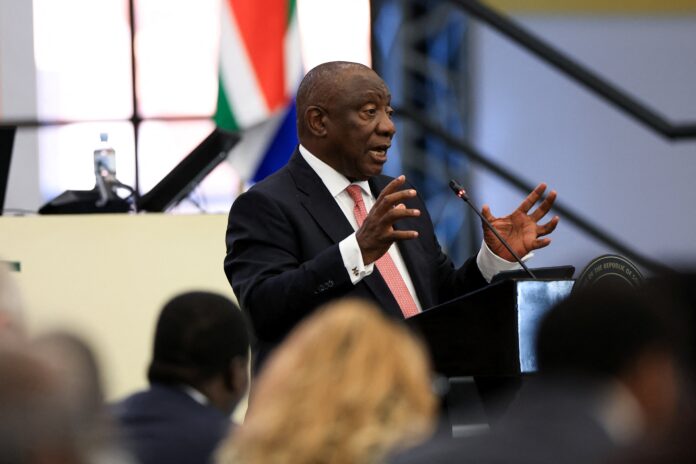
President Cyril Ramaphosa has cancelled his Tuesday-scheduled address at the NUM central committee meeting taking place at the Birchwood Hotel & OR Tambo Conference Centre in Boksburg, east of Gauteng.
NUM national spokesperson Livhuwani Mammburu confirmed this on Tuesday morning.
“He cancelled last night because of protest marches today (Tuesday),” Mammburu told Sunday World.
Marchers want Ramaphosa to receive memo
The anti-illegal-immigrants movement sweeping through the country had threatened to locate Ramaphosa’s whereabouts on Tuesday to personally hand him the memorandum of demands for undocumented foreigners to leave the country.
Insizwa Nobunsizwa Foundation leader Nkosikhona “Phakel’ umthakathi” Ndabandaba had said they would not accept any other politician to receive their memorandum, including Ramaphosa’s deputy, Paul Mashatile.
Ramaphosa’s cancellation and its legitimate reasons were in stark contrast to what the leader of the rainbow nation failed to share with his Southern African Development Community (SADC) contemporaries just 24 hours earlier.
No reference to Tuesday’s protests at SADC summit
On Monday, Ramaphosa chaired an extraordinary virtual SADC summit, where he spoke extensively about restoring constitutional order in Madagascar, political stability, reconciliation and democratic governance.
Yet his closing remarks contained no reference to South Africa’s looming anti-illegal immigration protests, despite many demonstrators directing their frustrations at undocumented foreign nationals from neighbouring SADC countries.
The omission is striking, as authorities had already widely publicised the demonstrations and were preparing for marches across several provinces. The issue directly affects citizens of countries represented at the summit, including Zimbabwe, Malawi and Mozambique, whose nationals have been prominently featured in recent immigration enforcement operations.
Instead, Ramaphosa focused on Madagascar’s political transition, urging dialogue, restraint and inclusive governance while stressing that SADC remained committed to constitutional order.
He also reiterated calls for the release of political prisoners, an end to arbitrary arrests and the return of political exiles.
Assurance sought
His silence on the protests comes as South Africans increasingly look to the presidency for reassurance over how demonstrations would unfold and how the government intended to balance citizens’ constitutional right to protest with the protection of foreign nationals living legally in the country.
Political observers had obviously expected the President, as both head of state and current SADC chair, to use the summit to reassure regional leaders that South Africa would safeguard lives, property and diplomatic relations while enforcing immigration laws within the framework of the Constitution.
Such assurances could have included commitments that law enforcement would act decisively against violence, intimidation, xenophobic attacks and vigilantism, while continuing operations against undocumented migration through lawful processes.
Equally, many expected a message acknowledging South Africans’ frustrations over illegal immigration and confirming that the government remained committed to enforcing immigration legislation without allowing communities to take the law into their hands.
Instead, Ramaphosa’s first public acknowledgement of the demonstrations came only when his office announced he would no longer attend the NUM congress because of the unfolding protests, leaving unanswered questions about his message to neighbouring states at a moment of heightened regional sensitivity.
Meanwhile, on Monday, Ramaphosa met with march leaders Phakel’ umthakathi and Ngizwe Mchunu, who assured him that Tuesday’s demonstrations will be peaceful.
Read More: 30 June: Approved march routes in Joburg, Tshwane, Durban
- President Cyril Ramaphosa cancelled his scheduled address at the NUM central committee meeting due to planned anti-illegal-immigrant protest marches targeting him personally.
- Protest leaders insisted on delivering their memorandum of demands directly to Ramaphosa, rejecting any substitute recipients, including his deputy.
- At a virtual SADC summit the previous day, Ramaphosa did not mention the upcoming protests in South Africa, despite their regional implications and public awareness.
- His summit focus was on Madagascar's political issues and constitutional order, neglecting to address South Africa's immigration tensions and regional diplomatic concerns.
- Ramaphosa's silence on the protests left South Africans and neighboring countries uncertain about the government's stance on balancing constitutional rights, immigration enforcement, and protection against xenophobic violence.


