


The presidency has strongly rejected claims that South Africa is becoming isolated from the rest of the African continent, describing reports to that effect as part of a misinformation campaign aimed at portraying the country as a “pariah state”.
President Cyril Ramaphosa’s spokesperson Vincent Magwenya made the remarks during a media briefing at the Union Buildings in Pretoria on Wednesday, saying recent efforts to suggest South Africa has been shunned by African countries were based on false narratives and deliberate misrepresentations.
According to Magwenya, the campaign emerged in the wake of anti-illegal migration protests that have taken place in parts of South Africa over the past two months.
“We have observed a sustained campaign that seeks to isolate South Africa from the rest of the African continent,” Magwenya said.
He said the campaign attempted to create the impression that South Africa should be referred to international courts despite repeated government statements condemning vigilantism against foreign nationals and reaffirming the state’s responsibility to enforce immigration laws within the framework of the Constitution.
Peddling of misinformation
Magwenya also accused a diplomatic representative of a foreign country of spreading misinformation and misrepresenting routine diplomatic engagements in a bid to portray South Africa as increasingly isolated.
“As the presidency, we firmly reject and caution against the peddling of false information against South Africa,” he said.
He argued that recent diplomatic engagements demonstrated that South Africa remained an active and respected player on both the African and global stages.
Among the examples cited was Ramaphosa’s visit to France on July 10, where he was received by French President Emmanuel Macron. The leaders discussed bilateral cooperation in areas including trade and investment, energy, defence, education and people-to-people exchanges.
On the same day, Ramaphosa co-chaired a high-level education meeting alongside UNESCO Director-General Audrey Azoulay and attended the Transforming Education Summit+4.
Magwenya said the engagements highlighted South Africa’s continued role in shaping global policy discussions and advancing international development goals.
“This demonstrates a South Africa and a president that are fully engaged with contributing towards a better Africa and a better world,” he said.
South Africa not isolated from Africa
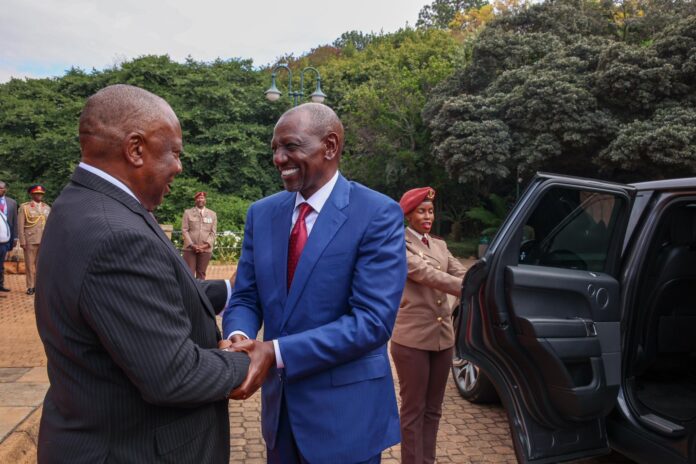
Magwenya also pointed to Ramaphosa’s engagements with several African leaders this year, including heads of state from Botswana, Kenya, Malawi, Mozambique and Zimbabwe, as well as his leadership role in the Southern African Development Community (SADC) and the Southern African Customs Union (Sacu).
He noted that Ramaphosa recently undertook a working visit to the Democratic Republic of Congo to express support for the country as it battles an Ebola outbreak.
South Africa has pledged financial assistance to support efforts to combat the disease and remains engaged with the Africa Centres for Disease Control and Prevention (Africa CDC), he said.
“This is a South Africa that is engaged with the African continent and that can never be isolated,” Magwenya said.
The presidency also highlighted South Africa’s involvement in peace-building efforts in South Sudan through the African Union’s Committee of Five (C5), which is chaired by Ramaphosa.
International Relations and Cooperation Minister Ronald Lamola recently visited South Sudan as part of efforts to oversee implementation of the country’s revitalised peace agreement.
According to Magwenya, Lamola reported back to the president with optimism that renewed efforts towards inclusive national dialogue could help secure lasting peace.
South Africa, he said, continues to advocate for inclusive, transparent and credible elections in South Sudan and remains committed to supporting peace and stability on the continent.
“Once again, we assert that South Africa is not isolated and can never be isolated from the rest of the African continent,” Magwenya said.
ALSO READ: Oupa Pilane: African countries silent on drivers of illegal migration
- The South African presidency rejects claims that the country is becoming isolated within Africa, calling such reports misinformation aimed at portraying South Africa as a pariah state.
- The misinformation campaign reportedly intensified following recent anti-illegal migration protests within South Africa.
- President Cyril Ramaphosa's diplomacy, including meetings with French President Emmanuel Macron and engagements with African leaders, demonstrates South Africa's active role in international and continental affairs.
- South Africa continues to support African nations through initiatives like combating the Ebola outbreak in the Democratic Republic of Congo and peace-building efforts in South Sudan.
- Government officials emphasize South Africa's ongoing commitment to continental cooperation, stability, and development, refuting any notion of isolation from the African continent.


