


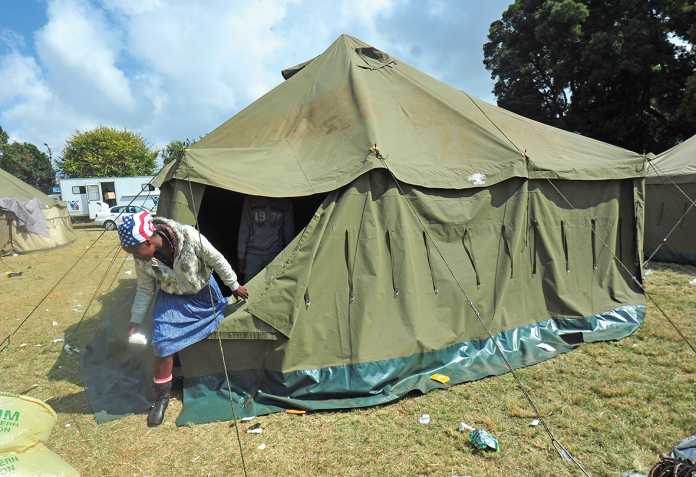
For Hircill Ngoie, South Africa is the only home he has ever known.
He arrived in the country from the Democratic Republic of Congo (DRC) as a young child with his mother and sibling after his father was forced to flee political violence.
More than two decades later, the country where he grew up, attended school and built his life became uncertain when the death of his father in 2020 left him without the documentation needed to remain in South Africa.
“I was approximately three years old at the time, which means I did not personally make the decision to migrate. South Africa is the country where I grew up, attended school, built relationships, and developed my understanding of the world,” says Ngoie, founder of the Umoya Youth Foundation, a youth empowerment initiative.
New struggles in South Africa
His experience reflects the challenges faced by many refugees and asylum seekers who, after fleeing violence and persecution, encounter new struggles in South Africa shaped by xenophobia, exclusion and administrative barriers.
“They leave one war and come and experience a different kind of war – xenophobia,” says Yeukai Chideya, a researcher at Stellenbosch University’s (SU) Institute for Life Course Health Research.
The issue was discussed at a recent symposium hosted by SU’s Division of Health Systems and Public Health and the Institute for Life Course Health Research, in collaboration with researchers from the University of Cape Town, the University of the Western Cape and Wits. The event, titled “Showing Courage and Solidarity with Refugees and Migrants in South Africa”, was held at SU’s Tygerberg campus ahead of World Refugee Day on 20 June.
Factors that drive discourse around migration
Researchers, civil society organisations and asylum seekers gathered to discuss the realities faced by migrants and refugees and how stronger relationships can be built between migrants and the communities that receive them.
Prof René English, head of SU’s Division of Health Systems and Public Health, highlighted the importance of recognising the universal right to healthcare and other services.
“It is important to understand the factors that drive the discourse around migration,” she said, referring to reports of migrants being prevented from accessing healthcare. A podcast facilitated by Sunday World further explored these issues, with experts discussing the challenges faced by migrants and refugees in South Africa.
Prof Hassan Mahomed, a public health medicine specialist at the Western Cape Government’s Department of Health and SU’s Department of Global Health, said xenophobic attitudes towards African migrants are often fuelled by perceptions that migrants are responsible for unemployment and pressure on public services.
“Migrants and refugees make up less than 5% of our population. To claim that they are stealing jobs or displacing South Africans is a myth,” he said.
Delays in South Africa’s migration system
During the symposium, speakers highlighted how delays in South Africa’s migration system can leave people undocumented while awaiting the processing of applications and renewals. Ngoie said these delays have a lasting impact on young people who have spent most of their lives in South Africa but continue to face uncertainty.
“There is an important conversation to be had about documentation stability, legal identity, access to opportunities, and the long-term realities faced by refugee youth growing up in the country,” he said.
Neva Smith, a social worker from the Trauma Centre for Survivors of Violence and Torture, said refugees and asylum seekers also face economic uncertainty, housing challenges, safety concerns and social isolation.
“There is ongoing fear, social isolation and loneliness,” she said, adding that restricted access to services can reinforce feelings of exclusion. “Every denied service reinforces the message that ‘I am not safe; I am not welcome’.”
Chideya warned that xenophobia among young people must be addressed, particularly in schools where it can add another layer to bullying and violence. “If we don’t deal with the xenophobic rhetoric that’s now happening in schools, we will end up raising children who will only know that conflict or disagreements are dealt with violence,” she said.
Participants called for greater collaboration between government, civil society and communities, saying conversations about migration must be informed by evidence and include the voices of those most affected.
“This is one step on a path (to finding solutions). We need to involve more young people in these discussions,” said Mahomed.
- Hircill Ngoie's story highlights the difficult reality for many refugees and asylum seekers in South Africa who face xenophobia and administrative barriers despite having grown up in the country.
- A symposium at Stellenbosch University brought together experts, civil society, and migrants to discuss challenges around migration, focusing on rights, social inclusion, and healthcare access.
- Xenophobic attitudes are fueled by misconceptions that migrants disproportionately burden public services and steal jobs, though migrants constitute less than 5% of South Africa's population.
- Delays in the migration system leave many refugees undocumented for extended periods, exacerbating issues related to legal identity, access to opportunities, economic stability, and social isolation.
- Participants emphasized the need for evidence-based dialogue involving young people, government, and communities to combat xenophobia, especially in schools, and foster solidarity with refugees and migrants.


