


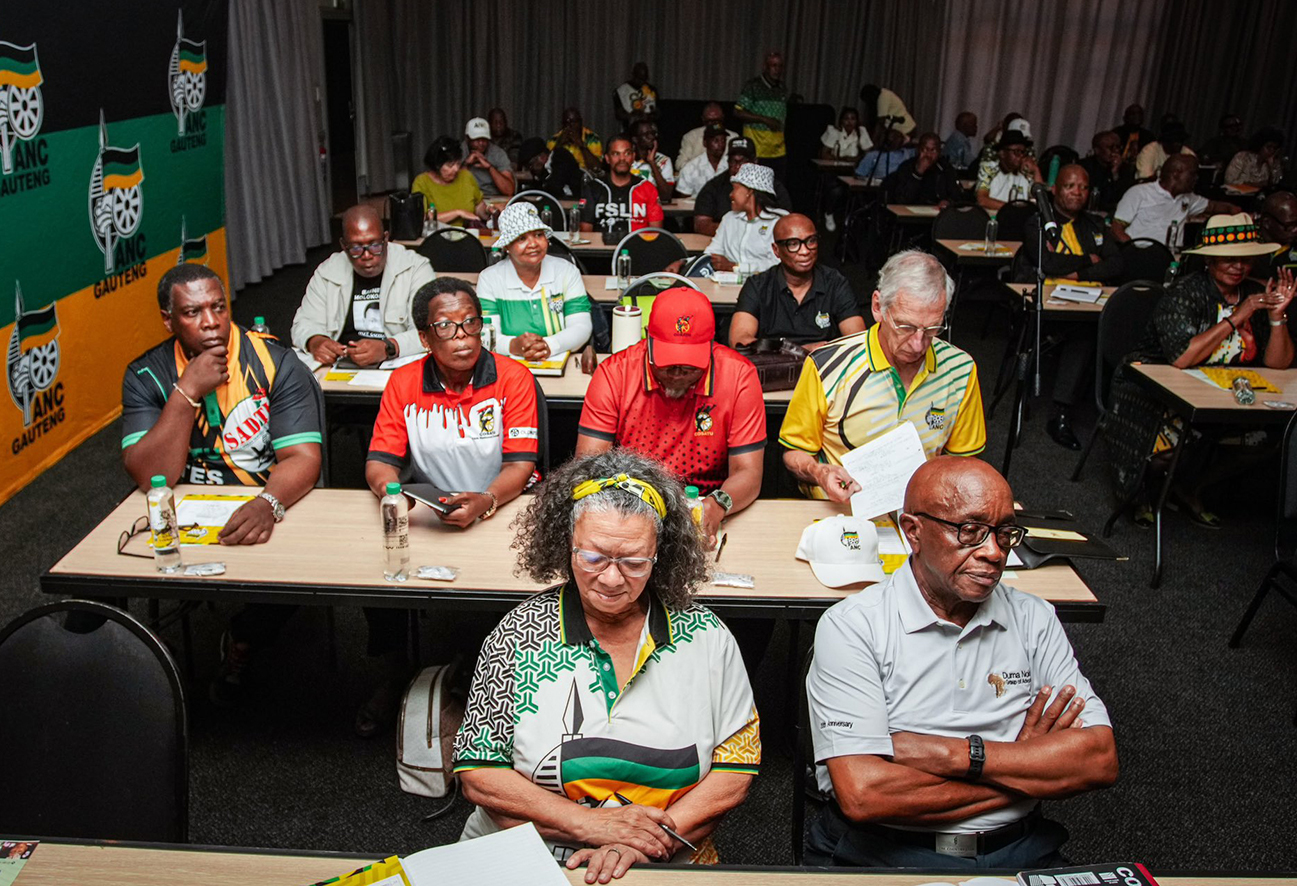
African National Congress (ANC) leaders left last week’s National Executive Committee (NEC) meeting counting down to a more confrontational sitting – expected in just over a week – to examine the party’s electoral decline.
Members and invited guests require seven days’ notice for an extended NEC meeting, which the secretary-general, Fikile Mbalula, had yet to issue.
Those demanding consequences for the ANC’s catastrophic election defeat are banking on the sitting to place President Cyril Ramaphosa’s collective leadership under scrutiny.
The meeting will examine how the ANC crashed from about 45% in the 2021 municipal elections to roughly 30% this month.
READ MORE: Phosa sounds alarm as ANC vote share crashes to record low
Insiders said this week’s special NEC did not consider why the party suffered the historic decline. It dealt with the immediate battle to constitute governments in hung councils.
“Another NEC meeting is coming. That one is going to be hot,” said a source who attended the sitting, adding that the second NEC meeting would confront “how we got here” and ask difficult questions about responsibility for the defeat.
Former president Thabo Mbeki’s call for the ANC’s top leadership to account would also find its proper forum there.
“The issue of how we performed in the elections was not discussed,” the source said.
Leadership reckoning postponed
“The main issue on the agenda was how we should constitute governments in the next 14 days in municipalities.”
The ANC would give the election outcome “its own attention” at the extended NEC meeting.
READ MORE: From Fikile Mbalula’s report: Six signs the ANC is ailing
Those pushing for consequences believe the review cannot confine blame to weak branches, poor campaigning or voters who stayed away. They want the NEC to examine the political decisions, government failures and leadership weaknesses that preceded the collapse.
A source said Mbalula had not organised the special meeting properly enough to accommodate a wider electoral reckoning.
Members reportedly challenged how Mbalula constituted the meeting, including the participation of alliance partners. Some leaders cited the administrative blunder as another reason to assess the current leadership against the election result.
READ MORE: Mbalula tightens his grip on ANC coalition talks by centralising negotiations
The sitting took place under pressure from statutory deadlines for councils to elect mayors, speakers and chief whips.
Members concentrated on coalition scenarios, negotiating authority and the circumstances under which the ANC should accept opposition.
“The meeting’s failure to discuss accountability did not clear Ramaphosa or his leadership collective,” another source said. “It merely postponed the confrontation.”
READ MORE: ANC rejects blanket DA coalition deal, adopts ‘tactical flexibility’ for hung municipalities
Mantashe rejects calls to step down
However, ANC national chairperson Gwede Mantashe has rejected calls for the leadership to resign.
“If we want to play to the gallery, we can step down,” he said in a podcast. “But if we deal with the reality, there’s no need for stepping down.”
The ANC recorded Mantashe’s podcast interview before the special NEC meeting but broadcast it after the sitting.
Mantashe accepted that the ANC suffered a “catastrophic” defeat. But his diagnosis shifted much of the responsibility away from Ramaphosa’s leadership.
“What I want to encourage people to analyse as well is the fragmentation of the black voter base,” he said.
Mantashe argued that hundreds of parties competed for constituencies that previously gathered behind the ANC.
READ MORE: Phosa predicts ANC could sink to 26% as coalition era deepens
“When the white vote consolidates, the black vote fragments,” he said.
He argued that this fragmentation weakened both the ANC and the collective political influence of black voters.
Mantashe also blamed poor township turnout partly on voters failing to understand the importance of the elections. “They have not appreciated the value of voting,” he said.
However, he conceded that the ANC had failed to listen and change how it communicated with different constituencies, saying:
“Our people are sending a message to us that we should listen to them more.”
Only ANC structures can remove leaders
Mantashe said the party had neglected loyal rural communities and failed to develop an effective approach to the black middle class. But he resisted placing the top leadership in the dock and instead criticised members who demanded resignations after allegedly failing to campaign.
“You find people who never campaigned calling for us to step down,” he said.
Mantashe maintained that only an ANC structure could remove the leadership.
“If the NEC, for example, says to us the leadership must go, we’ll go,” he said.
- The ANC's National Executive Committee (NEC) postponed addressing the party's electoral decline in a recent special meeting, focusing instead on forming governments in hung councils.
- A more confrontational NEC meeting is expected soon to scrutinize President Cyril Ramaphosa's leadership following the ANC's drop from about 45% in the 2021 municipal elections to around 30% this month.
- ANC secretary-general Fikile Mbalula has not issued the required seven days' notice for the extended NEC meeting and faced criticism for how the special meeting was constituted, including alliance partner participation.
- ANC national chairperson Gwede Mantashe rejected calls for top leadership to resign, attributing the electoral defeat partly to the fragmentation of the black voter base and voter apathy.
- Mantashe stated that only ANC structures have the authority to remove leaders and emphasized that both leadership accountability and party communication issues must be addressed.


