


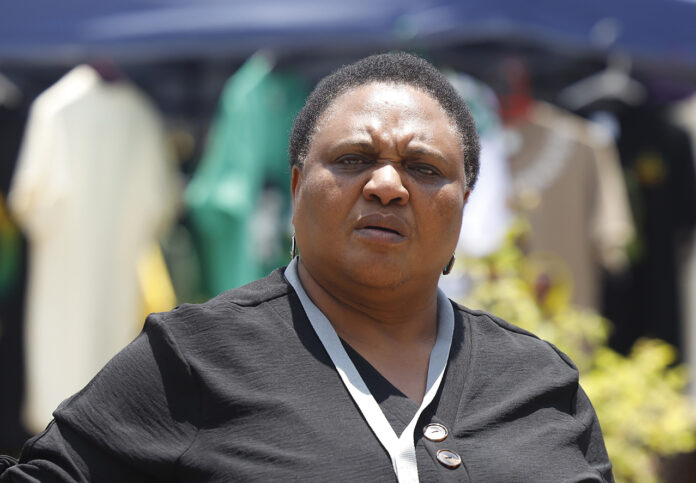
National Assembly (NA) Speaker Thoko Didiza has revealed why she chose not to join President Cyril Ramaphosa’s legal battle to halt Parliament’s Phala Phala impeachment process, saying the matter now rests with the impeachment committee established to investigate the scandal.
Court papers filed in the Western Cape High Court on Monday show that Didiza’s decision was guided by legal advice that once the committee had been established and begun its work, responsibility for handling matters relating to the inquiry shifted away from the Speaker’s office.
‘Allow committee latitude to deal with matter’
“Given that the Impeachment Committee (IC) is seized with the matter, and given further that the IC will ultimately report to the National Assembly on the outcome of its process, it is necessary that at this stage of the proceedings I allow the IC the latitude to deal with the matter in accordance with its mandate,” Didiza says in her affidavit.
Her explanation comes as Ramaphosa seeks an urgent court order to stop the committee from proceeding while he challenges the legality of the process in a separate review application.
Although Didiza is cited as a respondent in the case, she has opted not to oppose the president’s application, leaving the task to the impeachment committee itself.
She notes that the committee had already made up its own mind about how to respond to the president’s court challenge.
“I note in this regard that the IC has elected to oppose this application.”
The court papers reveal that Ramaphosa’s legal team had approached Parliament requesting that the impeachment committee suspend its activities pending the outcome of his review application.
However, Didiza’s office took the view that the request could not simply be granted by the Speaker because parliamentary committees are empowered to regulate their own affairs in accordance with National Assembly rules.
Decision in committee’s hands
That legal position effectively placed the decision in the hands of the committee chaired by Rise Mzansi Member of Parliament (MP) Makashule Gana.
The Speaker’s affidavit also highlights the difficult position Parliament finds itself in following May’s Constitutional Court judgment, which cleared the way for the impeachment process to proceed.
Didiza argues that Parliament remains bound by that ruling unless another court orders otherwise.
“Absent a court order either interdicting the National Assembly from proceeding or setting aside the Panel’s report, the National Assembly remains legally obliged to continue with the section 89 process,” she says.
The statement suggests that, in Didiza’s view, Parliament cannot simply put the process on ice because of pending litigation. Instead, it must continue fulfilling its constitutional.
The Speaker’s decision to stay out of the litigation stands in sharp contrast to the position adopted by the impeachment committee itself.
Process cannot be suspended
Gana has filed opposing papers arguing that Parliament cannot simply suspend a process ordered by the Constitutional Court because the president has launched a separate legal challenge.
Gana maintains that the committee has a constitutional obligation to continue with its work and that delaying the inquiry could undermine both Parliament’s accountability role and the Constitutional Court’s judgment that revived the impeachment process.
According to court papers filed on behalf of the committee, members resolved to oppose Ramaphosa’s urgent application after obtaining senior legal advice on their constitutional duties.
The committee argues that the Constitutional Court’s order remains binding unless it is overturned by a competent court and that Parliament is required to carry out its constitutional responsibilities without unnecessary delay.
Dismiss president’s application
Gana has asked the court to dismiss the president’s application and allow the Section 89 inquiry to continue.
The Economic Freedom Fighters, MK Party and African Transformation Movement and its leader Vuyo Zungula are yet to file their responding affidavits opposing the president’s application.
The clash sets the stage for yet another dramatic chapter in the long-running Phala Phala saga, which has dogged Ramaphosa’s presidency since allegations first emerged about the theft of foreign currency concealed at his Limpopo game farm.
Read More: Phosa defends National Assembly speaker over Phala Phala
- National Assembly Speaker Thoko Didiza opted not to join President Cyril Ramaphosa's legal bid to halt Parliament's Phala Phala impeachment process, deferring to the impeachment committee now handling the inquiry.
- Didiza cited legal advice stating the Speaker's responsibility ends once the impeachment committee starts its work, and she granted the committee authority to manage the investigation.
- Ramaphosa's legal team sought a suspension of the committee's activities pending a court review, but Didiza emphasized that committees regulate their own affairs and the decision lies with the committee chaired by Makashule Gana.
- The impeachment committee opposes Ramaphosa’s suspension request, arguing Parliament must proceed with the inquiry per the Constitutional Court's earlier ruling, maintaining constitutional accountability without delay.
- The ongoing legal clash highlights tensions around the Phala Phala scandal inquiry, with key parties like the EFF and other political groups yet to respond to the president's court application.


