


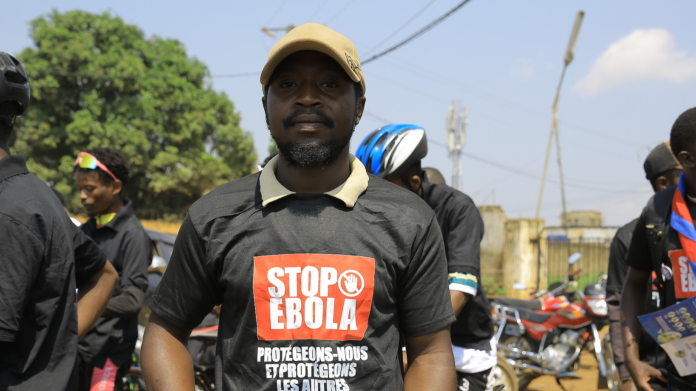
The Democratic Republic of the Congo (DRC) and its partners have unveiled an updated 180-day multi-sectoral response plan to intensify efforts against the Ebola outbreak, with funding needs estimated at $1.3 billion (R21bn).
With support from the World Health Organisation (WHO), the Africa Centers for Disease Control and Prevention and other partners, the plan intends to serve as the operational roadmap for the response over the next six months.
According to the WHO Regional Office for Africa, the outbreak caused by the Bundibugyo virus had reached 6 342 reported cases and 3 072 deaths as of September 2. It has spread to 60 health zones across six provinces.
Health authorities are particularly concerned that a large proportion of deaths continue to occur in communities, often among people who had not previously been identified as contacts and had not reached health facilities before dying.
“Every case detected too late, every contact missed and every delay in mobilising resources translates into lives lost,” Anne Ancia, the acting WHO representative in the DRC, said, calling for rapid and coordinated action on a larger scale.
DRC Health Minister Roger Kamba said containing the outbreak required efforts beyond the health sector, involving communities, government agencies, partners and donors.
“The government is fully mobilised to protect every Congolese,” Kamba said.
According to the WHO, full implementation of the revised plan would require an estimated $1.3bn.
Damien Mama, the United Nations resident coordinator in the DRC, said the Ebola response needed to be integrated into the broader humanitarian effort and supported by sufficient, flexible and predictable funding.
The Africa CDC also pledged continued support for national response efforts, including resource mobilisation, coordination with partners and greater involvement of communities.
The outbreak, declared in May, has become the fastest-growing Ebola outbreak recorded in the DRC to date.
- The Democratic Republic of the Congo and partners have launched a 180-day multi-sectoral response plan against the Ebola outbreak, requiring $1.3 billion in funding.
- The outbreak, caused by the Bundibugyo virus, has resulted in 6,342 reported cases and 3,072 deaths as of September 2, spreading to 60 health zones across six provinces.
- Many deaths occur in communities before patients are identified as contacts or reach health facilities.
- DRC Health Minister Roger Kamba emphasized the need for coordinated efforts beyond the health sector, including community and government involvement.
- The World Health Organisation and Africa CDC are supporting the response, with calls for integrated humanitarian efforts and flexible, sufficient funding.


