


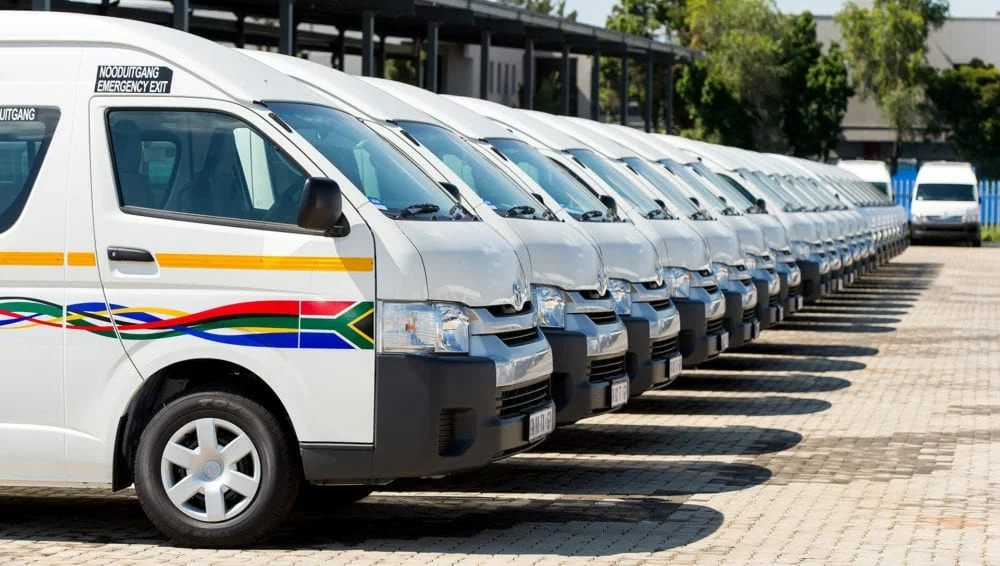
The South African National Taxi Council (Santaco) is exploring ways to shield taxi operators and commuters from the impact of rising fuel prices.
National office bearers resolved at a meeting in Kempton Park to assess the impact of the increases on the industry and investigate whether its collective buying power could be used to secure cushioning measures from fuel suppliers and business partners.
This comes as fuel prices reach a high in October after the announcement that petrol will increase by R3.33 per litre, while diesel will see an increase R3.24 per litre. This means that 95 unleaded will be R30.25 inland and R29.38 coastal, while diesel will be R32.80 inland and R32.03 coastal.
READ: Fuel price shock: Petrol price to top R30 per litre on Wednesday
The surge in fuel prices has been pushed by the rising global oil prices due to constrained supply through the Strait of Hormuz, as it is affected by the Middle East conflict.
Taxi owners pressured by high fuel prices
Rebecca Phala, Santaco spokesperson, said they would consult taxi operators, fuel companies and government as the fuel puts pressure on the operating expenses of taxi owners.
The costs would potentially need to be carried by the commuters who rely on minibus taxis on a daily.
“Santaco will further engage the National Department of Transport and other relevant government stakeholders on possible solutions to mitigate the impact of rising fuel costs on the taxi industry and the travelling public.
“At this stage, Santaco is making no announcement regarding possible taxi fare increases. The council recognises that any adjustment to fares has a direct impact on commuters and therefore believes that all possible options must first be explored before a position is reached,” said Phala.
Between April and July, government had cut the general fuel levy to protect motorists, households and businesses from severe price shocks. R3 per litre was cut between April and May, and this was reduced to R1.50 per litre for petrol and R1.97 per litre for diesel. However, the relief expired in July and levies were reinstated.
READ: Fuel shock pushes inflation to 5% ahead of rate decision
Further discussions at Santaco NEC
Phala said the objective was to find a sustainable solution that considered the financial realities of taxi operators and their employees, while also protecting commuters from further economic pressure.
The matter will now be taken to Santaco National Executive Committee (NEC), which is scheduled to meet on Wednesday.
“Santaco therefore appeals to the public and commuters to remain calm and not act on speculation regarding possible fare increases. No decision to increase taxi fares has been announced by Santaco at this stage,” said Phala.
‘Repurpose funds to cushion motorists’
Matthew Parks, Cosatu parliamentary coordinator, said the fuel increases were more than a fuel issue but that it would deepen the cost-of-living crisis by raising transport and food costs.
He said government’s earlier R18-billion relief had assisted in cushioning workers and the economy but called for the R10-billion allocated to the Central Energy Fund’s Equalisation Fund in the Second Special Appropriation Bill to be used to provide further relief for commuters, workers and small businesses.
“Increases in the fuel price over the past few months as a result of the war have pushed inflation beyond the Reserve Bank’s target range, thus sparking repo rate hikes.
“This has further plunged millions of workers deeper into debt and suffocated already weak economic growth. It has been a major cause of the rise in unemployment over the past two quarters,” said Parks.
- The South African National Taxi Council (Santaco) is assessing the impact of rising fuel prices and exploring collective buying options to shield taxi operators and commuters.
- Petrol prices will increase by R3.33 per litre, reaching R30.25 inland and R29.38 coastal, while diesel will increase by R3.24 per litre, costing R32.80 inland and R32.03 coastal.
- The fuel price surge is attributed to rising global oil prices due to constrained supply in the Strait of Hormuz amid the Middle East conflict.
- Santaco has not announced any taxi fare increases and is engaging with government and industry stakeholders to explore solutions before making decisions.
- Cosatu proposes reallocating R10 billion from the Central Energy Fund’s Equalisation Fund to provide relief for commuters, workers, and small businesses amid the cost-of-living crisis.


