


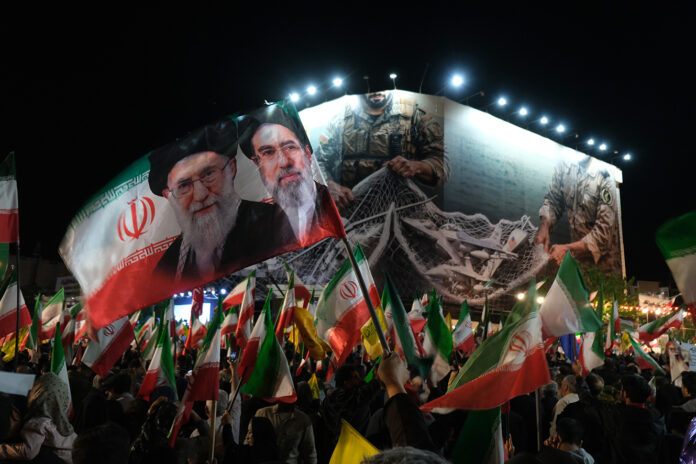
With attempts to restart peace negotiations with Iran, the Trump administration seems reluctant to find a lasting solution, and the question we must ask is why.
Is it because there’s a bigger plan at play and therefore the US cannot afford peace with Iran? And if that’s the case, what is this bigger plan? Could it be that the US is systematically busy executing its plan to weaken the so-called “axis of evil” in order to maintain its own hegemony in global politics? Keep Russia busy in the proxy war with Ukraine, then the unexplained illegal act of aggression against Iran, and soon, perhaps a conflict with China.
Can the USA afford such an ambitious plan? Its economy is in tatters, with a ballooning debt, and the cost of living for the ordinary citizens already unbearable.
This is, after all, by and large why Americans voted for Trump. He said he would end forever wars and redirect money to their pockets, and yet, here we are with two wars underway and a possible third on the way.
And whilst this might be the plan for some in America, it is evidently not Israel’s plan.
Israel’s current government is dominated by those who subscribe to eschatology, a “branch of theology and study concerned with ‘last things’, specifically the end of the world, final judgment, the afterlife, and ultimate human destiny. It covers topics like death, heaven, hell and the second coming of Christ.” It focuses on the return of Christ, the resurrection of the dead, and the last judgment.
And if you think this is far-fetched, this is what the likes of Bezalel Smotrich (finance minister) and Itamar Ben Gvir (national security minister) believe in, and hence they see this big conflict associated with the return of Christ.
For those of you who still don’t get me, I’m talking about people who subscribe to the scriptures in the holy Bible. It’s about Armageddon, which is the prophesied final battle between forces of good and evil, originating from the Book of Revelation (16:16) as a location (Mount Megiddo) where armies gather. It symbolises the end of the world, often interpreted as a catastrophic, worldwide or nuclear war or a total societal collapse.
How does the world respond to such obvious madness? Already we observe that “moral panic” has taken hold of many Jews (Zionists) and Western Europeans, as they simply cannot bring themselves to admit the horrors being perpetrated by the Israeli state in Gaza or the West Bank and now Lebanon.
For admitting these atrocities would mean questioning the state of Israel and its moral authority, and they cannot bring themselves to do this.
It’s like the many whites during apartheid, who also simply could not admit to themselves, let alone the world, the wrongs being committed against blacks in South Africa. For doing so would mean ending the very state that is providing you with privileges and bountiful wealth. Even if it’s ill-gotten.
It reminds me of an Afrikaans radio series written by NP van Wyk Louw called “Die Held” (The Hero). While Die Held was originally written to address the Afrikaner’s cultural and political crises in the mid-20th century, the insights transcend that era. It serves as a timeless treatise on moral courage, the burden of leadership, and the necessity of maintaining personal integrity when a society is undergoing extreme political or ideological pressure.”
It’s about survival in justice, meaning, “this concept is deeply tied to Louw’s ideas of heroism”. He argued that a nation must naturally do everything in its power to defend its survival. However, it faces a final, ultimate temptation: the belief that mere survival is preferable to survival in justice.
Louw’s ultimate hero refuses to compromise on justice – they would rather perish than survive by doing or condoning evil.
So, in the end, Israelis, Zionist, Judaean Christians and those complicit in these wrongs, including genocide, must decide whether they will protest against injustice or simply allow their “moral panic” and, by extension, their choices to prevail. All this of course, at the expense of the innocents.
- Dr Van Heerden is a senior research fellow at the Centre for African Diplomacy and Leadership at UJ
- The Trump administration appears reluctant to genuinely pursue lasting peace with Iran, possibly due to a broader geopolitical strategy focused on weakening the “axis of evil” (Iran, Russia, China) to maintain US global dominance.
- Despite economic struggles and public discontent with prolonged wars, the US continues engaging in conflicts, contradicting Trump’s initial promise to end “forever wars.”
- Israel’s current government, influenced by religious eschatology, views conflict in the Middle East through a prophetic lens tied to the end times, potentially fueling ongoing regional violence.
- There is widespread denial among some Jewish and Western communities regarding the atrocities committed by Israel in Gaza, the West Bank, and Lebanon, driven by fear of losing Israel’s moral and political authority.
- Drawing parallels to apartheid South Africa, the article stresses the moral imperative to choose justice over mere survival, urging individuals and nations complicit in injustice to confront and resist wrongdoing rather than accept ongoing oppression and violence.


