


Home Affairs has withdrawn a directive that told refugee offices to accept asylum applications from anyone who walked in, saying the department will begin “a fresh process” to work out how to comply with the Constitutional Court’s 7 July order which instructed a rules change in the Refugees Act.
The Concourt’s ruling came in the wake of a matter brought by The Scalabrini Centre of Cape Town against the Home Affairs Minister, and found that the Act was flawed in several ways.
- The court found that sections 4(1)(f), 4(1)(h), 4(1)(i), and 21(1B) created unjustified thresholds which would bar asylum seekers on procedural basis before the merits of their case could even be heard, which the court found to be unconstitutional.
- The struck-down sections violated the international and statutory principle which bars states from forcing refugees or asylum seekers to return to a country where they are likely to be subjected to persecution.
- The provisions gave officials unguided and vague discretion using undefined standards like “valid reasons,” “good cause,” and “compelling reasons,” which the court found were irrational.
READ: Court rejects call to keep asylum seekers locked up
The ruling prompted Home Affairs’ acting Director-General Thulani Mavuso to sign a directive on 28 September which instructed Refugee Reception Offices (RROs) to receive anyone who reports in person asking for asylum, and to issue appearance receipts to people who could not be helped that day. In practice, it restated what the court had ordered.
The ruling in plain terms
Before 2020, anyone who reached a Refugee Reception Office (RRO) could apply for asylum, but amendments that took effect on 1 January 2020 added several hurdles.
An official could turn asylum-seekers away if they had entered the country anywhere but at an official border post, took more than five days to report to an office, or had no asylum transit visa, unless they gave “compelling reasons.”
The court essentially found these provisions invalid, saying the hurdles stopped people before anyone even asked whether they faced danger at home. This is in violation of South African and international law which forbid sending someone back to persecution before their claim gets a proper decision.
The judges also found that the tests were never defined. An applicant could face the same questions two or three times, from different officials, each applying their own set of standards.
The court ordered changes to these rules, but instead of asking for time to fix the law, Home Affairs responded with the now-withdrawn directive, which had serious unintended consequences in recent days.
The directive and the week that followed
In practice, Acting DG Mavuso’s directive simply restated what the court had ordered.
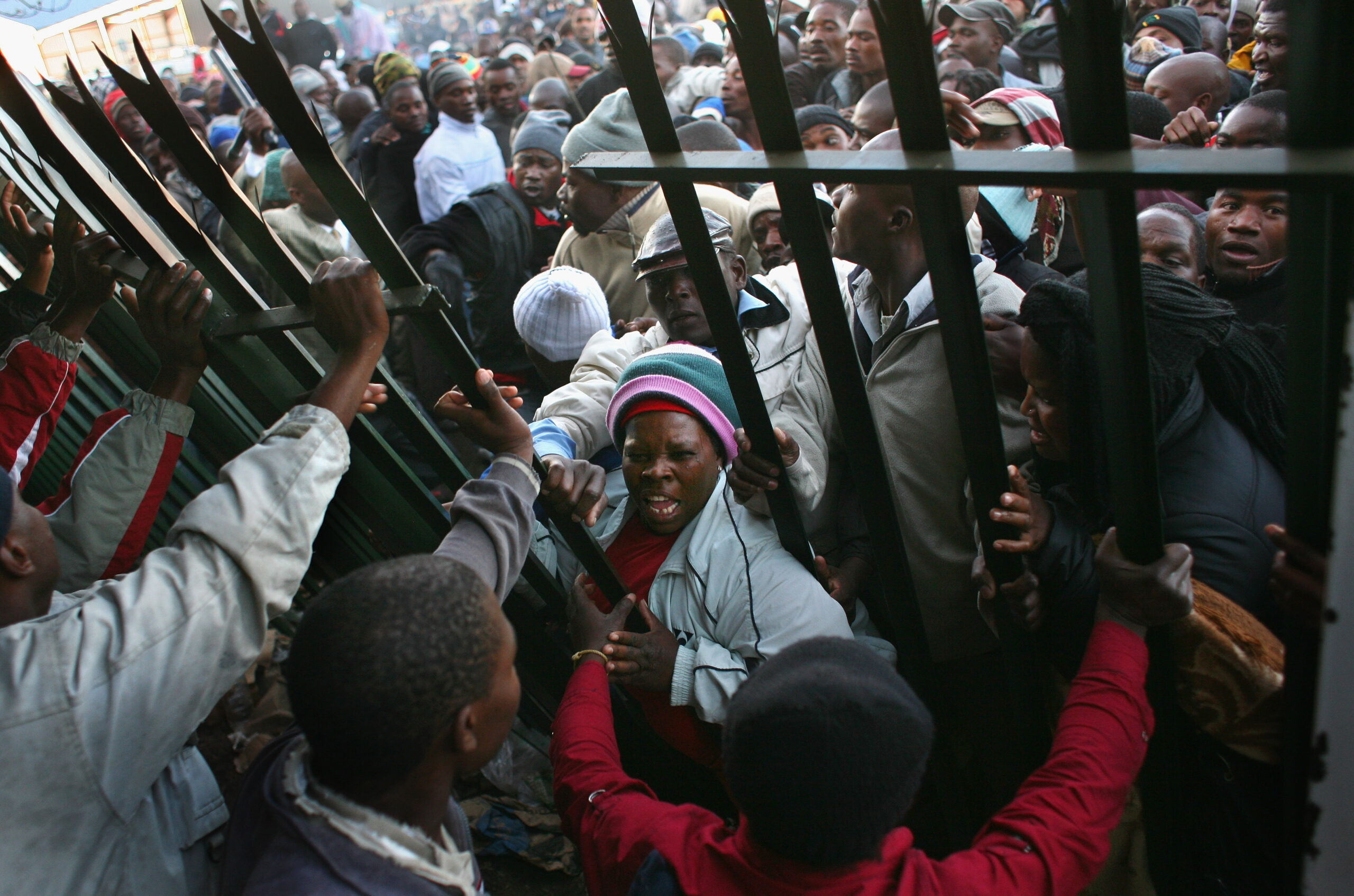
Only five offices process asylum claims: Gqeberha, eThekwini, Epping, Tshwane and Musina. According to the Inter-Ministerial Committee on Migration, all five were overwhelmed after the directive.
Social media posts showed long queues outside the centres, and the court order from July was reported by some as a new development, fomenting anger.
Tensions were high as police used stun grenades to disperse community members gathered outside the Gqeberha Home Affairs refugee offices in the Eastern Cape on Thursday, to disrupt the hundreds of asylum seekers applying for permits following the Constitutional Court ruling. The asylum seekers claim that they fled their countries due to internal conflicts and wars. Meanwhile, some South African community members expressed dissatisfaction towards the court ruling and picketed outside the premises. Credit : Mcebisi Slengile
— SABC News (@SABCNews) October 8, 2026
On Thursday, Justice Minister Mmamoloko Kubayi said part of the panic came from that confusion and from ‘misinformation’. She also said other branches of Home Affairs continued to serve South Africans as usual.
READ: Govt blames ‘misunderstanding’ of Concourt ruling for asylum disaster
The anger turned violent. On Thursday, residents and foreign shop owners clashed in Orlando West, Soweto. Police used stun grenades in Gqeberha and rubber bullets in Durban.
Acting National Police Commissioner Puleng Dimpane said 10 vehicles were torched in Soweto and 14 in Durban, and that three foreign nationals were arrested in KwaZulu-Natal. She called the burnings criminality and said police will pursue those responsible.
[WATCH] “We are here tonight to indicate that SAPS will not tolerate lawlessness, will not allow violence, the torching of vehicles we have seen here today, destruction of property or attacks on people to continue… Those who are behind the torching of these vehicles will be pursued and captured.” – Acting Police Commissioner Puleng Dimpane #Newzroom405
— Newzroom Afrika (@Newzroom405) October 8, 2026
She acknowledged that communities have concerns, but said no grievance justifies violence. Police have reinforced public order units in the affected areas.
The misunderstanding of the Concourt asylum ruling
The Concourt’s ruling does not make anyone a refugee.
It simply means that anyone who says they want asylum can now lodge a claim, and an officer still has to apply reasonable standards to decide if it is granted, based on the merits.
READ: ConCourt closes door on repeat asylum claims after final rejection
Delay and irregular entry can still count against an applicant’s credibility, and importantly, people who are security risks or have been convicted of serious crimes remain excluded.
Kubayi told Thursday’s briefing that fraudulent, abusive and unfounded applications will still be rejected. The court decided who may apply, and Home Affairs still decides who qualifies.
What the withdrawal of the directive means
The department explained the withdrawal of the directive in a press statement on Friday morning.
It calls the directive purely operational, issued without the knowledge of the Minister or any other political office-bearer, and rejects claims of political motivation, pointing out that the directive flowed from a case the department opposed. It says the consequences of immediate implementation could not have been foreseen in the court order.
On the law, the withdrawal changes less than the headlines suggest though, as it was essentially an internal instruction on how to comply with the Concourt’s ruling.
Pulling it does not revive the sections the court struck down or the regulations that went with them.
The decision also leaves a gap, which could lead to groups such as Lawyers for Human Rights or the Scalabrini Centre going back to court if RRO officials go back to turning people away for entering irregularly or reporting late.
Home Affairs now has to plan for complying with the court’s ruling, and in the meantime it may need to manage access to RROs with more staff, appointment systems and the receipts the very withdrawn directive provided for.
It must also take new legislation to Parliament, provided it passes constitutional scrutiny.
- Home Affairs withdrew a directive that required refugee offices to accept asylum applications from anyone who walked in, planning to initiate a fresh process to comply with the Constitutional Court’s 7 July order on the Refugees Act.
- The Constitutional Court ruled that sections 4(1)(f), 4(1)(h), 4(1)(i), and 21(1B) of the Refugees Act were unconstitutional because they created unjustified procedural thresholds preventing asylum seekers from having their cases heard on merit.
- The court found that the provisions allowing officials to reject applicants based on vague criteria like "valid reasons" and "compelling reasons" were irrational and violated international principles protecting refugees from being returned to persecution.
- The directive signed on 28 September overwhelmed five Refugee Reception Offices, leading to long queues, public tensions, violence, and clashes in places like Gqeberha and Soweto, with police using stun grenades and rubber bullets to restore order.
- The withdrawal of the directive leaves a temporary gap in asylum processing procedures, requiring Home Affairs to develop compliant operational plans and submit new legislation for constitutional approval while managing access to refugee offices.


