


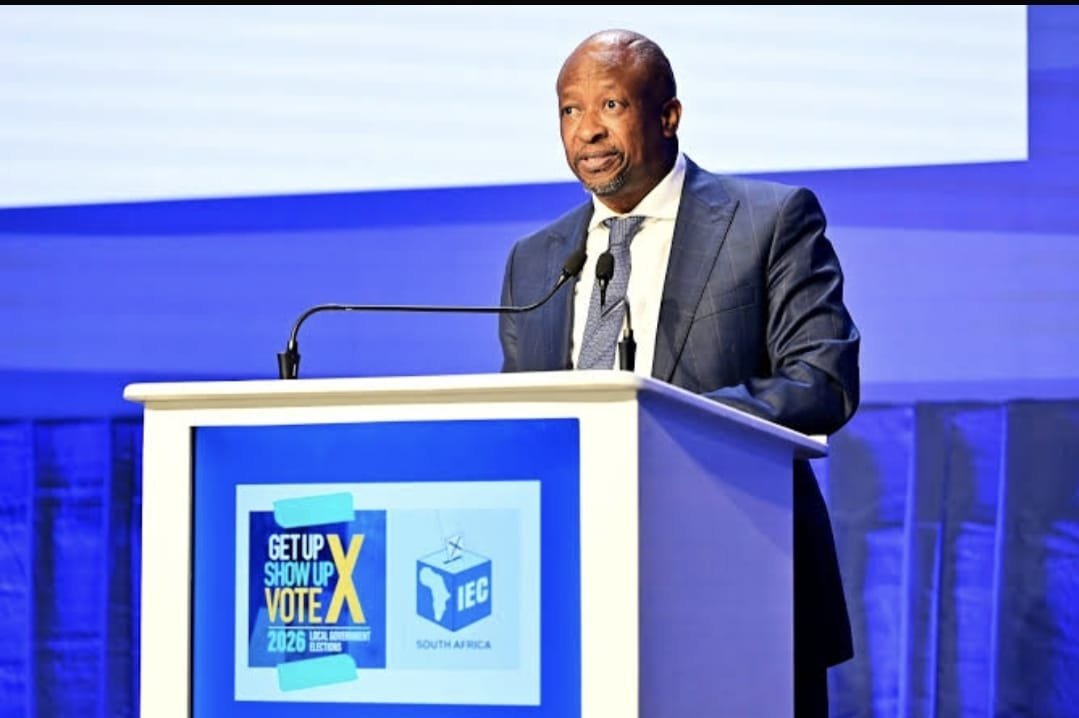
The Electoral Commission of South Africa (IEC) is racing to finalise the counting and verification of votes following the closure of voting stations in the 2026 local government elections, with only 7% of municipalities having completed their results by Thursday morning.
The commission said voting stations closed at 9pm on Wednesday, with voters who were still in queues at the closing time given an opportunity to cast their ballots.
Counting, tallying and verification continued throughout the night in the presence of political party agents, independent candidate representatives and accredited observers.
READ: Elections 2026 | Penny Penny blames empty coffers as ANC leads Giyani count
In an update issued on Thursday at the IEC national results operations centre at Gallagher Estate in Midrand, the IEC said 18 local municipalities had completed their results, representing 7% of municipalities.
However, the commission expressed confidence in the pace of the process, pointing out that the performance was an improvement on the 2021 local government elections, when only seven municipalities had completed their results by the same time.
More than 66 000 results slips expected
IEC Chief Electoral Officer Sy Mamabolo said the commission was expecting 66 073 results slips from local municipality, metropolitan and district council elections across the country’s 23 696 voting stations.
Of these, 23 444 results slips, representing 35.5%, had been scanned into the results system, while 22 983, or 34.8%, had been captured by 9am.
READ: IEC prepares for ballot counting as voting enters final hours
A further 16 791 results slips, representing 25.4% of the expected total, had already undergone independent auditing.
Mamabolo also attributed the improved capturing rate to the IEC’s strengthened results management processes, despite longer ballot papers, an increased number of political contestants and higher voter participation.
IEC defends transparency of counting process
The commission emphasised that ballot counting takes place at the voting station where votes are cast, ensuring that every ballot paper is accounted for and recorded.
“It is important to underscore the procedural tenet of the counting of ballots, which is that counting happens at the voting station where the ballots were cast to ensure that every single ballot paper is accounted for at every station and duly recorded. This is an important watermark of free and fairness of elections.
After counting, a result slip is captured in duplicate in front of party and independent agents, as well as observers. The agents can record and make photographic images of the results slips,” said Mamabolo.
READ: Elections 2026 | DA leads in key metros, ActionSA takes early Tshwane lead
Mamabolo added that following the counting process, results slips are produced in duplicate in the presence of party agents, independent candidate representatives and observers.
“Political contestants are permitted to record and photograph the results slips, while the IEC also keeps images of the documents to allow parties and candidates to retrieve them when necessary. The results slips are then transported in tamper-evident envelopes to local capturing sites, where they undergo several verification procedures. These include double-blind capturing, scanning into the results management system and independent auditing of the entire population of results slips,” he said.
The IEC said the audit covered every captured result rather than a sample, adding another layer of assurance to the credibility of the process.
An automated system is also used to flag possible anomalies, including unusually high voter turnout and discrepancies in the number of votes received by a political party at the same voting station.
Parties warned against spreading misinformation
With political parties and independent candidates anxiously awaiting the outcome, the IEC has urged contestants and their supporters to exercise patience and allow the counting and verification processes to run their course.
The commission also warned against circulating unverified election results and disinformation, saying such conduct could heighten political tensions and potentially trigger violence, injuries and damage to property.
READ: ELECTIONS: How the IEC counts, captures and verifies votes
The IEC encouraged members of the public, political parties and the media to follow the official results through its website and mobile application, as well as its WhatsApp channel.
Mamabolo on behalf of the commission also thanked millions of South Africans who responded to its call to participate in the elections, saying the counting process was continuing as part of efforts to ensure free, fair and credible polls.
- The IEC reported that by Thursday morning, only 7% of municipalities, or 18 local municipalities, had completed their 2026 election results, showing an improvement from 2021 when only seven had finished by the same time.
- Voting stations closed at 9pm on Wednesday, with voters still in line allowed to cast their ballots, and counting proceeded overnight with party agents, independent candidate representatives, and observers present.
- IEC Chief Electoral Officer Sy Mamabolo stated that 66,073 results slips were expected from voting stations, with 35.5% scanned and 34.8% captured by 9am, and 25.4% having undergone independent auditing.
- The IEC emphasized the transparency of the counting process, noting all ballots are counted at the voting station, results slips are produced in duplicate and verified through double-blind capturing, independent auditing, and automated anomaly detection.
- The IEC warned against spreading unverified election results or misinformation, urging patience from political parties and the public, and encouraged following official results via the IEC's website, app, and WhatsApp channel.


