


In Britain, when Boris Johnson shut down Parliament during the Brexit crisis, Speaker John Bercow did not reach for polite neutrality.
After the UK Supreme Court ruled in 2019 that the prorogation was unlawful, Bercow moved quickly to bring Members of Parliament (MPs) back. His message was simple: Parliament had a duty to sit, scrutinise the executive and hold ministers to account.
He paid a political price.
Bercow’s critics called him partisan and theatrical. His supporters called him brave. But nobody was left wondering whether the Speaker of the House of Commons would defend the right of Parliament to do its work.
In Ghana, Speaker Alban Bagbin chose the opposite kind of boldness. He declared four parliamentary seats vacant after MPs made moves linked to contesting future elections under different political arrangements. The ruling shifted the balance of power in Parliament.
The Supreme Court later overturned him and restored the ruling party’s majority.
Bagbin was bruised. His authority was checked. Parliament was plunged into a damaging standoff. But again, there was no confusion about the speaker’s position. He acted, he was challenged, and the court cut him down.
South Africa now faces a quieter but more dangerous moment.
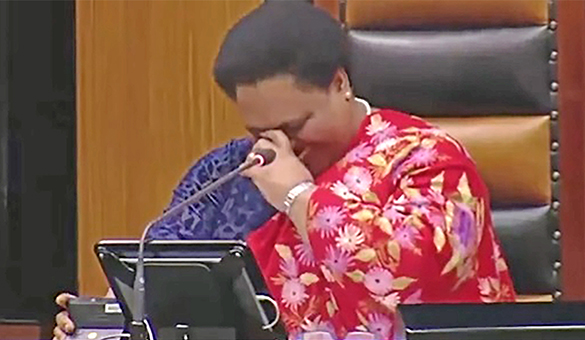
Here, the Speaker of the National Assembly, Thoko Didiza, has not overreached. She has stepped back.
President Cyril Ramaphosa has gone to court to stop the impeachment inquiry against him pending his review of the Phala Phala panel report. The speaker has decided to abide by the court’s decision. She will not oppose him.
That sounds neat. It sounds restrained. It sounds properly institutional.
It is also the problem.
Legal advice to Didiza straightforward
The legal advice given to the speaker was not gentle. It said the Constitutional Court had already referred the panel report to the impeachment committee. It said the Section 89 process had been triggered. It said Ramaphosa’s review did not suspend Parliament’s duty to proceed.
Most importantly, it said the speaker had a legal duty to ensure that the National Assembly complied with its constitutional obligations. That duty, the opinion said, “necessitates opposition” to Ramaphosa’s urgent interdict.
The speaker has chosen not to follow that advice.
She has not sided with Ramaphosa. A notice to abide does not mean she supports his application. But it does mean she will not stand in court and argue the case her own lawyers said must be argued.
That case is straightforward: Parliament must not be stopped from doing its constitutional work merely because the president has filed a review.
This is not an ordinary court fight. It is not a quarrel over diary dates or procedure. It goes to the question of whether a sitting president can freeze an impeachment process before Parliament has tested the allegations against him.
The opinion warned that the effect of the interdict would be to stall the impeachment committee. The review may be heard later in the year.
Judgment may come later still. Appeals could follow. Finality may come only at the end of the year or in the first quarter of 2027.
By then, the urgency of accountability may have been buried under process.
Institutions weaken through caution, silence
That is how institutions weaken. Not always through coups, defiance or open contempt. Sometimes they weaken through caution. Through silence. Through leaders who convince themselves that retreat is wisdom.
For the African National Congress (ANC), the Speaker’s decision is convenient. It avoids the spectacle of an ANC Speaker opposing an ANC President in court. It keeps the governing party’s family quarrel from becoming a full constitutional confrontation.
But Parliament does not belong to the ANC. The Speaker does not preside over Luthuli House. She presides over the National Assembly.
Her duty is not to protect the president from embarrassment. It is not to manage the ruling party’s discomfort. It is to protect the authority of Parliament when that authority is challenged.
Ramaphosa is entitled to go to court. He is entitled to argue that the panel report is flawed. He is entitled to say public impeachment hearings may damage him unfairly before his review is heard.
Parliament is obliged to answer
But Parliament is entitled to answer.
More than that, Parliament is obliged to answer.
The speaker’s choice to abide leaves that answer to others. It makes the court the only active guardian of a parliamentary power that Parliament itself should be defending.
Bercow was accused of doing too much. Bagbin was overruled for going too far.
South Africa’s speaker may face a different judgment: that when Parliament’s power was placed on trial, she chose not to fight for it.
Read More: ANC withdraws notice to intervene in Phala Phala review application
- In Britain, Speaker John Bercow boldly defended Parliament’s right to sit during Brexit, despite political backlash.
- In Ghana, Speaker Alban Bagbin’s decision to declare parliamentary seats vacant unsettled the balance of power, later overturned by the Supreme Court.
- South Africa’s Speaker Thoko Didiza chose to abide by the court’s decision, not opposing President Ramaphosa’s attempt to halt the impeachment inquiry against him.
- Legal advice urged Didiza to oppose Ramaphosa’s interdict to uphold parliamentary constitutional duties, but she refrained, risking parliamentary authority.
- The article warns that institutional strength erodes not just through defiance but through cautious silence, urging that Parliament must defend its powers actively.


