


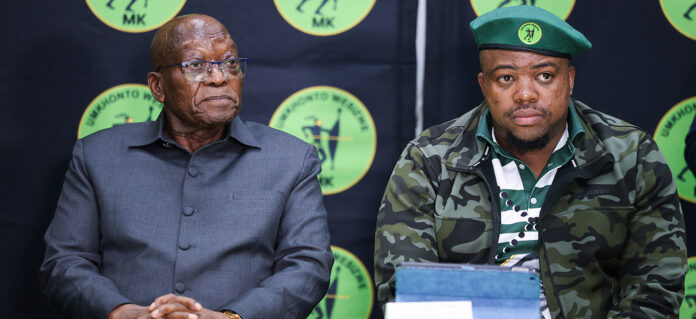
The Cape Town High Court has turned tables on MK Party leader Jacob Zuma after it has overturned the expulsion of the two senior party members.
Zuma expelled Pumlani Kubukeli and Khanyisile Litchfield-Tshabalala from MKP and also from parliament last month.
However, Zuma’s sweeping powers as president of the MKP came under judicial scrutiny after the court overturned the expulsion of the MPs, ruling that he must respect the principles of natural justice.
Expulsions set aside
In a judgment delivered on Friday, Judge Daniel Thulare set aside the decisions terminating the membership of Kubukeli and Litchfield-Tshabalala, ordering that both automatically return to the party and their positions in the National Assembly.
The ruling followed an urgent application challenging Zuma’s decision to expel the pair, which was communicated to them by party secretary-general Sibonelo Nomvalo on August 27.
The court found that although Zuma had the authority under the MKP constitution to terminate their membership, he could not exercise that power without giving them a fair opportunity to respond to the case against them.
READ: MK Party expels Litchfield-Tshabalala, Pumlani Kubukeli ‘as per presidential decree’
Thulare ordered Zuma, the MKP and Nomvalo to pay the applicants’ legal costs, including the costs of two counsel.
The judgment does not prevent Zuma from reconsidering the matter. Instead, it directs him to deal with the applicants’ cases afresh, in accordance with proper legal and procedural rules.
Zuma’s presidential decree challenged
At the centre of the dispute was section 7(2)(h) of the MKP constitution, which gives the party president ultimate power to issue presidential decrees on matters concerning the organisation’s operations, administration and policy direction.
The provision states that such decrees are binding at every level of the party.

The MKP relied on this clause to defend Zuma’s decision to terminate the membership of Kubukeli and Litchfield-Tshabalala, arguing that he had acted within his constitutional powers.
But the applicants maintained that their expulsion was unlawful because they were not subjected to the party’s disciplinary processes and were not afforded an opportunity to state their case before the decision was taken.
Sunday World reported about the expulsion of the duo last month. However, the pair took the matter to court on urgent basis to challenge Zuma and his company.
READ: Expelled MK Party MPs set lawyers on Zuma, Parliament
Procedural fairness ‘a necessity’
Thulare said that he acknowledged the extensive powers conferred on Zuma by the party’s constitution, including his authority over the appointment, removal and deployment of senior officials. However, the judge drew a distinction between the existence of presidential power and the manner in which it is exercised.
“Even for a Supreme Leader, ultimate power and presidential decree should not prevail over the rules of natural justice especially but not limited to procedural fairness,” he said.
The court stressed that its role was not to determine whether the two members deserved to remain in the party, but whether the decision to terminate their membership was lawful and procedurally fair.
No hearing before expulsion
One of the central problems identified in the judgment was the absence of evidence that the applicants had been given an opportunity to answer allegations against them before Zuma made his decision.
Nomvalo, in his answering affidavit, maintained that the president had exercised his powers under the party constitution and that the decision had been communicated through the secretary-general’s office.
He also argued that the constitution did not require a presidential decree to be contained in a separate, signed document.
The judge noted that no standalone written decree signed by Zuma had been produced in the proceedings.
But the absence of a separate document was not the decisive issue, instead, Thulare focused on the failure to demonstrate that the applicants had been informed of the case against them, allowed to make representations or given a reasonable opportunity to prepare a defence.
The judge said Nomvalo’s affidavit did not explain how their rights to procedural fairness had been observed.
“The SG [Nomvalo] did not tell if JZ [Zuma] himself was the complainant in the matter in which he judged and issued the Presidential decree,” Thulare said.
READ: Expelled MK Party MPs challenge Zuma’s powers in the high court
The court found that the applicants were entitled to know the allegations against them and to respond before a final decision affecting their membership was made.
It said the failure to provide that opportunity rendered the termination unfair.
Media statement not enough
The MKP also sought to rely on a media statement issued on the day the expulsions were announced as an explanation for the decision, however, Thulare rejected the suggestion that the statement cured the procedural shortcomings.
The statement had been issued by the party’s national spokesperson, Sifiso Mahlangu, and it was directed at the media and the public, rather than the two affected members.
The judge said it was not issued by Zuma as part of a presidential decree and was not a formal statement of reasons addressed to the applicants.
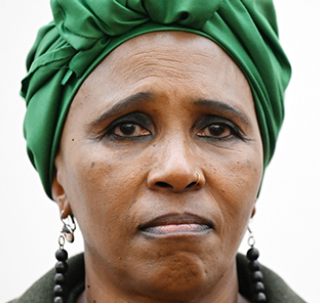
“The decision he communicated to the applicants did not provide any reasons, to which the applicants were entitled,” the judgment states.
Thulare said the applicants should have been given sufficient information to understand the case against them and a reasonable opportunity to prepare and present their responses.
The court emphasised that this did not necessarily require a full disciplinary hearing involving the cross-examination of witnesses.
What was required was a fair process that allowed the affected members to make meaningful representations before an adverse decision was taken.
Court rejects argument over internal remedies
The MKP also argued that the applicants should have exhausted internal party remedies before approaching the courts.
Thulare rejected that argument, pointing to the party’s own position that the presidential decree was final and could be issued without a preceding disciplinary process.
The judge said it was contradictory to expect the applicants to pursue internal remedies after they had been told their membership had been terminated and the decision was final.
READ: Police probe MK Party fraud complaint naming Nomvalo and Molefe
He questioned how they could be expected to pursue internal processes when the party’s position was that they were no longer members.
The judgment reaffirmed that political parties are voluntary associations whose constitutions form the basis of the contractual relationship between the organisation and its members.
While courts should exercise restraint in political disputes, they can intervene when a party’s decisions breach its constitution, the common law or the principles of natural justice.
Thulare said the courts were not there to decide whether the applicants remained political assets or liabilities to the MKP.
Those political judgments belonged to Zuma and the party.
But the exercise of that authority had to comply with the law.
Parliament seats restored
The consequences of the expulsions extended beyond the internal affairs of the MKP.
Under section 47(3)(c) of the Constitution, a member of the National Assembly loses their seat if they cease to be a member of the party that nominated them.
The termination of Kubukeli and Litchfield-Tshabalala’s party membership therefore threatened their parliamentary positions.
The judge said the loss of the two MPs also had implications for Parliament, particularly given Litchfield-Tshabalala’s experience on several parliamentary committees.
He warned that allowing the process to continue could create uncertainty over the composition of the National Assembly and prejudice the applicants if replacement members were sworn in.
The court consequently ordered that both be restored to their parliamentary positions, alongside their reinstatement as MKP members.
Thulare said the appropriate remedy was to restore the position that existed before the contested decision.
The judgment makes clear that the ruling does not strip Zuma of his constitutional authority within the party.
Rather, it requires that the power be exercised through rational and procedurally proper processes.
“Unlawful use of power by a party leader or political party, in our democratic scheme, poses a threat to democratic governance,” the judge said.
He added that the courts were concerned with legality, rationality and procedural propriety, rather than the substantive political reasons for terminating membership.
The matter has now been referred back to Zuma to reconsider the cases in light of the judgment.
For the two reinstated MPs, the ruling restores their party membership and parliamentary positions. For the MKP leadership, it establishes that even a presidential decree backed by the party constitution cannot override the basic requirement that those facing adverse decisions must be given a fair opportunity to be heard.
On Friday, MKP’s spin doctor, Mahlangu said that the party has noted the judgement and stated that it will lodge an application for leave to appeal.
“The legal effect of doing so will be that the judgment will be suspended, and not operational until the appeal is heard. Their expulsion remains in effect,” said Mahlangu.
- The Cape Town High Court overturned Jacob Zuma's expulsion of MK Party members Pumlani Kubukeli and Khanyisile Litchfield-Tshabalala, ordering their reinstatement to the party and Parliament.
- The court ruled that Zuma must respect natural justice principles and procedural fairness before terminating party membership, requiring a fair opportunity for the expelled MPs to respond to allegations.
- The court found Zuma's presidential decree lawful in authority but unlawful in procedure due to the absence of prior notification or a chance for the MPs to defend themselves.
- MKP's argument that internal party remedies should precede legal action was rejected as contradictory since the presidential decree was deemed final by the party.
- MKP stated it will seek leave to appeal the judgment, which suspends the ruling during the appeal process, meaning the MPs' expulsions remain in effect for now.
The Cape Town High Court has turned tables on MK Party leader Jacob Zuma after it has overturned the expulsion of the two senior party members.
Zuma expelled Pumlani Kubukeli and Khanyisile Litchfield-Tshabalala from MKP and also from parliament last month.
However, Zuma’s sweeping powers as president of the MKP came under judicial scrutiny after the court overturned the expulsion of the MPs, ruling that he must respect the principles of natural justice.
In a judgment delivered on Friday, Judge Daniel Thulare set aside the decisions terminating the membership of Kubukeli and Litchfield-Tshabalala, ordering that both automatically return to the party and their positions in the National Assembly.
The ruling followed an urgent application challenging Zuma’s decision to expel the pair, which was communicated to them by party secretary-general Sibonelo Nomvalo on August 27.
The court found that although Zuma had the authority under the MKP constitution to terminate their membership, he could not exercise that power without giving them a fair opportunity to respond to the case against them.
Thulare ordered Zuma, the MKP and Nomvalo to pay the applicants’ legal costs, including the costs of two counsel.
The judgment does not prevent Zuma from reconsidering the matter. Instead, it directs him to deal with the applicants’ cases afresh, in accordance with proper legal and procedural rules.
At the centre of the dispute was section 7(2)(h) of the MKP constitution, which gives the party president ultimate power to issue presidential decrees on matters concerning the organisation’s operations, administration and policy direction.
The provision states that such decrees are binding at every level of the party.
The MKP relied on this clause to defend Zuma’s decision to terminate the membership of Kubukeli and Litchfield-Tshabalala, arguing that he had acted within his constitutional powers.
But the applicants maintained that their expulsion was unlawful because they were not subjected to the party’s disciplinary processes and were not afforded an opportunity to state their case before the decision was taken.
Sunday World reported about the expulsion of the duo last month. However, the pair took the matter to court on urgent basis to challenge Zuma and his company.
READ: Expelled MK Party MPs set lawyers on Zuma, Parliament
Thulare said that he acknowledged the extensive powers conferred on Zuma by the party’s constitution, including his authority over the appointment, removal and deployment of senior officials. However, the judge drew a distinction between the existence of presidential power and the manner in which it is exercised.
“Even for a Supreme Leader, ultimate power and presidential decree should not prevail over the rules of natural justice especially but not limited to procedural fairness,” he said.
The court stressed that its role was not to determine whether the two members deserved to remain in the party, but whether the decision to terminate their membership was lawful and procedurally fair.
One of the central problems identified in the judgment was the absence of evidence that the applicants had been given an opportunity to answer allegations against them before Zuma made his decision.
Nomvalo, in his answering affidavit, maintained that the president had exercised his powers under the party constitution and that the decision had been communicated through the secretary-general’s office.
He also argued that the constitution did not require a presidential decree to be contained in a separate, signed document.
The judge noted that no standalone written decree signed by Zuma had been produced in the proceedings.
But the absence of a separate document was not the decisive issue, instead, Thulare focused on the failure to demonstrate that the applicants had been informed of the case against them, allowed to make representations or given a reasonable opportunity to prepare a defence.
The judge said Nomvalo’s affidavit did not explain how their rights to procedural fairness had been observed.
“The SG [Nomvalo] did not tell if JZ [Zuma] himself was the complainant in the matter in which he judged and issued the Presidential decree,” Thulare said.
READ: Expelled MK Party MPs challenge Zuma’s powers in the high court
The court found that the applicants were entitled to know the allegations against them and to respond before a final decision affecting their membership was made.
It said the failure to provide that opportunity rendered the termination unfair.
The MKP also sought to rely on a media statement issued on the day the expulsions were announced as an explanation for the decision, however, Thulare rejected the suggestion that the statement cured the procedural shortcomings.
The statement had been issued by the party’s national spokesperson, Sifiso Mahlangu, and it was directed at the media and the public, rather than the two affected members.
The judge said it was not issued by Zuma as part of a presidential decree and was not a formal statement of reasons addressed to the applicants.
“The decision he communicated to the applicants did not provide any reasons, to which the applicants were entitled,” the judgment states.
Thulare said the applicants should have been given sufficient information to understand the case against them and a reasonable opportunity to prepare and present their responses.
The court emphasised that this did not necessarily require a full disciplinary hearing involving the cross-examination of witnesses.
What was required was a fair process that allowed the affected members to make meaningful representations before an adverse decision was taken.
The MKP also argued that the applicants should have exhausted internal party remedies before approaching the courts.
Thulare rejected that argument, pointing to the party’s own position that the presidential decree was final and could be issued without a preceding disciplinary process.
The judge said it was contradictory to expect the applicants to pursue internal remedies after they had been told their membership had been terminated and the decision was final.
READ: Police probe MK Party fraud complaint naming Nomvalo and Molefe
He questioned how they could be expected to pursue internal processes when the party’s position was that they were no longer members.
The judgment reaffirmed that political parties are voluntary associations whose constitutions form the basis of the contractual relationship between the organisation and its members.
While courts should exercise restraint in political disputes, they can intervene when a party’s decisions breach its constitution, the common law or the principles of natural justice.
Thulare said the courts were not there to decide whether the applicants remained political assets or liabilities to the MKP.
Those political judgments belonged to Zuma and the party.
But the exercise of that authority had to comply with the law.
The consequences of the expulsions extended beyond the internal affairs of the MKP.
Under section 47(3)(c) of the Constitution, a member of the National Assembly loses their seat if they cease to be a member of the party that nominated them.
The termination of Kubukeli and Litchfield-Tshabalala’s party membership therefore threatened their parliamentary positions.
The judge said the loss of the two MPs also had implications for Parliament, particularly given Litchfield-Tshabalala’s experience on several parliamentary committees.
He warned that allowing the process to continue could create uncertainty over the composition of the National Assembly and prejudice the applicants if replacement members were sworn in.
The court consequently ordered that both be restored to their parliamentary positions, alongside their reinstatement as MKP members.
Thulare said the appropriate remedy was to restore the position that existed before the contested decision.
The judgment makes clear that the ruling does not strip Zuma of his constitutional authority within the party.
Rather, it requires that the power be exercised through rational and procedurally proper processes.
“Unlawful use of power by a party leader or political party, in our democratic scheme, poses a threat to democratic governance,” the judge said.
He added that the courts were concerned with legality, rationality and procedural propriety, rather than the substantive political reasons for terminating membership.
The matter has now been referred back to Zuma to reconsider the cases in light of the judgment.
For the two reinstated MPs, the ruling restores their party membership and parliamentary positions. For the MKP leadership, it establishes that even a presidential decree backed by the party constitution cannot override the basic requirement that those facing adverse decisions must be given a fair opportunity to be heard.
On Friday, MKP's spin doctor, Mahlangu said that the party has noted the judgement and stated that it will lodge an application for leave to appeal.
"The legal effect of doing so will be that the judgment will be suspended, and not operational until the appeal is heard. Their expulsion remains in effect," said Mahlangu.


