


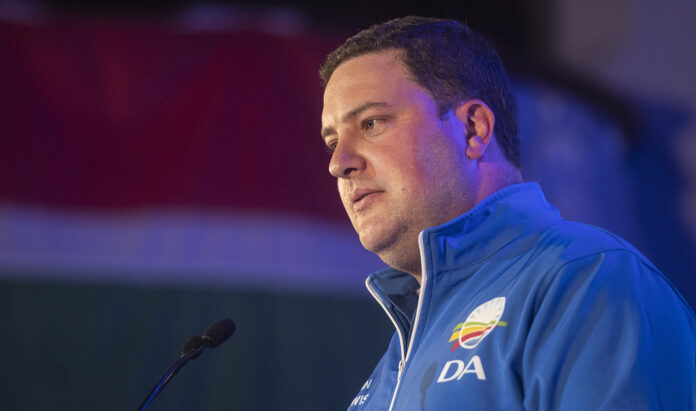
The Democratic Alliance (DA) has turned to the Electoral Court in a move that could affect the ability of ActionSA, the Economic Freedom Fighters (EFF), uMkhonto weSizwe (MK) Party and GOOD to fill proportional representation (PR) seats after the 2026 local government elections.
In a founding affidavit, DA Federal Council chairperson Ashor Sarupen accuses the four parties of deliberately submitting only one PR candidate in most, or all, of the municipalities they are contesting, despite the possibility of winning multiple seats.
“Deliberate attempts to undermine the right to vote and fair elections should not be without consequence. The parties made their bed, and they should lie in it,” Sarupen says.
The DA argues that this approach allows the parties to determine who will take up additional PR positions only after the election results reveal how many seats, they have secured.
READ: Democratic Alliance’s race baiting is a threat to our constitution
It wants the Electoral Court to declare the practice unlawful and unconstitutional and to review the Electoral Commission’s decision to certify the affected candidate lists. The party’s preferred remedy is to exclude the four parties from the PR ballot, leaving them eligible to contest ward seats.
The DA acknowledges that this would be “a harsh consequence” but argues that there should be consequences for what it regards as a deliberate attempt to circumvent the electoral system.
If removing the parties from the PR ballot is no longer practically possible, the DA has proposed an alternative. It wants the parties barred from adding candidates to their PR lists until after the first meeting of the newly elected councils.
The DA argues that this could leave some PR seats vacant during inaugural council meetings, when mayors, speakers and other office-bearers are elected. It further contends that if the vacancies prevent a council from reaching a quorum, the affected seats should be distributed among other parties.
The affidavit sets out the extent of the alleged practice.
The EFF is contesting all 257 municipalities and has submitted one PR candidate in each. MK is contesting 229 municipalities and has done the same. ActionSA is contesting 102 municipalities and has submitted one candidate in all but one, while GOOD is contesting 25 municipalities and has listed one candidate in each.
The DA says the decision to submit limited lists was deliberate. It quotes ActionSA’s response in Johannesburg as acknowledging that the party intentionally submitted only one name.
“ActionSA took a deliberate decision to submit only one name, and that’s the name of Herman Mashaba, so that the party can then supplement the list based on how many seats it has won,” the response quoted by the DA reads.
READ: Ramaphosa impeachment process further tears at ANC-DA alliance
Sarupen argues that the strategy means voters may not know which individuals could ultimately represent a party in council.
“The four parties seek to undermine this basic democratic principle, and the structure of our election. They do not want voters to know who they are voting for. They do not want a fair competition with other political parties where both sides know who the other’s candidates are,” he says.
The DA maintains that voters should be able to scrutinise candidates before casting their ballots.
“If parties do not disclose their candidates, voters will not know what they are voting for,” Sarupen says.
- The Democratic Alliance (DA) has turned to the Electoral Court in a move that could affect the ability of ActionSA, the Economic Freedom Fighters (EFF), uMkhonto weSizwe (MK) Party and GOOD to fill proportional representation (PR) seats after the 2026 local government elections.
- In a founding affidavit, DA Federal Council chairperson Ashor Sarupen accuses the four parties of deliberately submitting only one PR candidate in most, or all, of the municipalities they are contesting, despite the possibility of winning multiple seats.
- The parties made their bed, and they should lie in it,” Sarupen says.
- The DA argues that this approach allows the parties to determine who will take up additional PR positions only after the election results reveal how many seats, they have secured.
The Democratic Alliance (DA) has turned to the Electoral Court in a move that could affect the ability of ActionSA, the Economic Freedom Fighters (EFF), uMkhonto weSizwe (MK) Party and GOOD to fill proportional representation (PR) seats after the 2026 local government elections.
In a founding affidavit, DA Federal Council chairperson Ashor Sarupen accuses the four parties of deliberately submitting only one PR candidate in most, or all, of the municipalities they are contesting, despite the possibility of winning multiple seats.
“Deliberate attempts to undermine the right to vote and fair elections should not be without consequence. The parties made their bed, and they should lie in it,” Sarupen says.
The DA argues that this approach allows the parties to determine who will take up additional PR positions only after the election results reveal how many seats, they have secured.
READ: Democratic Alliance’s race baiting is a threat to our constitution
It wants the Electoral Court to declare the practice unlawful and unconstitutional and to review the Electoral Commission’s decision to certify the affected candidate lists. The party’s preferred remedy is to exclude the four parties from the PR ballot, leaving them eligible to contest ward seats.
The DA acknowledges that this would be “a harsh consequence” but argues that there should be consequences for what it regards as a deliberate attempt to circumvent the electoral system.
If removing the parties from the PR ballot is no longer practically possible, the DA has proposed an alternative. It wants the parties barred from adding candidates to their PR lists until after the first meeting of the newly elected councils.
The DA argues that this could leave some PR seats vacant during inaugural council meetings, when mayors, speakers and other office-bearers are elected. It further contends that if the vacancies prevent a council from reaching a quorum, the affected seats should be distributed among other parties.
The affidavit sets out the extent of the alleged practice.
The EFF is contesting all 257 municipalities and has submitted one PR candidate in each. MK is contesting 229 municipalities and has done the same. ActionSA is contesting 102 municipalities and has submitted one candidate in all but one, while GOOD is contesting 25 municipalities and has listed one candidate in each.
The DA says the decision to submit limited lists was deliberate. It quotes ActionSA’s response in Johannesburg as acknowledging that the party intentionally submitted only one name.
“ActionSA took a deliberate decision to submit only one name, and that’s the name of Herman Mashaba, so that the party can then supplement the list based on how many seats it has won,” the response quoted by the DA reads.
READ: Ramaphosa impeachment process further tears at ANC-DA alliance
Sarupen argues that the strategy means voters may not know which individuals could ultimately represent a party in council.
“The four parties seek to undermine this basic democratic principle, and the structure of our election. They do not want voters to know who they are voting for. They do not want a fair competition with other political parties where both sides know who the other’s candidates are,” he says.
The DA maintains that voters should be able to scrutinise candidates before casting their ballots.
“If parties do not disclose their candidates, voters will not know what they are voting for,” Sarupen says.


